
⚠️ This page connects you to Atovia’s partners and affiliate markets. We may receive a commission from affiliate partners for activities made through these links. Discount offers may change at any time according to policy! Rest assured, there are no additional costs to you! We hope this saves you time in finding the right items!
Many mornings begin the same way: the alarm goes off, the phone comes out, and within a minute you are reading messages and reacting to other people’s priorities. Morning meditation gives you a few minutes of quiet before that starts. You do not need experience, a special cushion, or a free hour. This guide shows you a simple 5-minute routine, how to build it up gradually, and what to do when your mind wanders, you feel sleepy, or you miss a day. If you want to start right away, jump to the step-by-step routine.
- Why Morning Is a Good Time to Meditate
- What You Need Before You Start
- Step-by-Step Morning Meditation Routine
- How Long Should You Meditate in the Morning?
- Comparing Common Morning Meditation Techniques
- Simple Techniques to Try
- Common Mistakes Beginners Make
- Troubleshooting: Wandering Mind, Sleepiness, and Restlessness
- How to Build a Habit That Lasts
- Beginner Checklist for Your First Week
- Frequently Asked Questions
- Final Thoughts and Next Steps
- Start with about 5 minutes a day. Three minutes is fine if that is what fits.
- Pick one anchor for your attention, such as the breath.
- Use the same time and place each day to make it easier to remember.
- A wandering mind is normal. Noticing it and returning is the practice.
- Consistency matters more than session length.
Why Morning Is a Good Time to Meditate
There is no single best time to meditate. One expert quoted in a beginner guide puts it simply: the best time is whenever you will actually do it. Still, many people find mornings convenient for a few practical reasons.
- Fewer interruptions. Before work, messages, and household demands begin, it is often easier to protect a few quiet minutes.
- A calmer starting point. Many people find that sitting quietly before checking email, news, or notifications changes how the first hour feels.
- Easy habit stacking. You can attach meditation to something you already do, such as waking up, brushing your teeth, or making tea.
If your mornings are truly impossible, a midday or evening session is still a good practice. The aim is a routine you can repeat.

What You Need Before You Start
Meditation needs very little equipment. A quiet space that you can return to each day is enough.
- A quiet corner. It does not need to be a dedicated room. A spot on the sofa or by a window works.
- A chair or cushion. Choose a seat that lets you sit upright without strain. Posture matters less than attention, so you can sit in a chair.
- A timer. A phone timer works, but set it to do not disturb first so notifications do not break the session.
- Comfortable clothing. Avoid anything tight around the waist or chest.
- A glass of water. Useful if you wake up thirsty.
- Optional extras. A guided meditation app or soft ambient sound can help at first, but neither is required.
Step-by-Step Morning Meditation Routine
This routine takes about 5 minutes. Follow it as written for your first week, then adjust.

- Wake up and stretch lightly (1 minute). Drink some water if you like, roll your shoulders, and stretch your arms overhead.
- Settle into a seat. Sit with your back comfortably upright, hands resting on your thighs, and feet flat on the floor.
- Set a timer for 5 minutes. Knowing the session has an end lets you stop watching the clock.
- Close your eyes or soften your gaze. If closing your eyes makes you sleepy, rest your gaze on a spot on the floor a few feet ahead.
- Follow your breath. Notice the air at the nostrils or the rise and fall of your belly. Pick one spot and stay with it. Do not change your breathing.
- Return when the mind wanders. When you notice you are thinking about your day, gently bring attention back to the breath. Do this as many times as needed.
- Close with a slow breath and an intention. Take one deeper breath, open your eyes, and set a small intention such as “Today I will move at a steady pace.”
The core skill is not keeping your mind clear. It is noticing that it has wandered and coming back, again and again.

How Long Should You Meditate in the Morning?
Many beginner guides suggest starting with about 3 to 5 minutes a day and adding time as it starts to feel comfortable. Some expert advice points the same way: five to ten minutes every day tends to serve beginners better than a long session once a week. Here is a sample plan you can adapt.
- Week 1: 3 to 5 minutes a day.
- Weeks 2 to 3: 5 to 10 minutes a day.
- Later: 10 to 20 minutes if it feels natural.
This is not a requirement. If 5 minutes feels right for months, stay there. Consistency matters more than length, and sitting for too long too soon is a common way to burn out.

Comparing Common Morning Meditation Techniques
There are many ways to meditate. The table below is a general guide with typical estimates, not a rule. Your experience may differ.
| Technique | Best For | Typical Time | Typical Difficulty |
|---|---|---|---|
| Breath awareness | Building a basic focus skill | 3 to 10 minutes | Easy to moderate |
| Guided meditation | People who prefer a voice to follow | 5 to 15 minutes | Easy |
| Body scan | Noticing tension and settling the body | 3 to 15 minutes | Easy to moderate |
| Gratitude meditation | Starting the day with a positive focus | 3 to 5 minutes | Easy |
| Walking meditation | People who find sitting still hard | 5 to 10 minutes | Easy to moderate |

Quick pick for beginners: choose breath awareness if you want the simplest start, guided meditation if you want a voice to lean on, and walking meditation if sitting still is a struggle. Try one for a week before switching.
Simple Techniques to Try
Breath counting from 1 to 10
Breathe in, then breathe out and silently count “one.” Breathe in again, out again, and count “two.” Continue to ten, then start over. If you lose count, simply begin again at one without judgment.

🛒 Recommended Product
A 3-minute body scan
Starting at your feet, notice any sensation: warmth, pressure, tingling, or nothing at all. Move slowly up through your legs, hips, belly, chest, hands, arms, shoulders, neck, face, and the top of your head. You do not need to relax anything. Just notice.
Three gratitude thoughts
Sit quietly and bring to mind three specific things you appreciate. They can be small, such as a warm shower or a message from a friend. Spend about a minute on each.
A mindful tea or coffee moment
Before your first sip, notice the warmth of the cup, the smell, and the first taste. Take a few sips with your full attention. This works well on mornings when sitting still is not possible.

Common Mistakes Beginners Make
- Trying to stop thoughts completely. Nobody can. Meditation is noticing thoughts and returning your attention, not emptying your mind.
- Sitting too long too soon. Long sessions can feel discouraging. Start small and build.
- Checking the phone first. Once the phone is in your hand, the quiet window often closes. Try meditating before you open any app.
- Judging a session as good or bad. A restless session where you returned to the breath fifty times is still a session of practice.
Troubleshooting: Wandering Mind, Sleepiness, and Restlessness
Wandering mind
What it feels like: You realize you have been planning your day for two minutes. Why it happens: Minds wander, especially first thing in the morning. Try this tomorrow: silently label it “thinking,” then return to the breath. That is the practice working, not failing.

Sleepiness
What it feels like: Your head drops or your eyes will not stay open. Why it happens: You may not be fully awake yet, and closed eyes make it easier to drift off. Try this tomorrow: sit upright rather than lying down, splash water on your face first, and keep your eyes slightly open with a soft gaze.
Restlessness
What it feels like: You feel fidgety and keep shifting. Why it happens: Your body may need movement after sleep. Try this tomorrow: do one minute of gentle stretching before you sit, and let small adjustments of posture happen without fuss.
How to Build a Habit That Lasts
Habit research suggests there is no fixed number of days after which a new behavior becomes automatic. In one widely cited study from University College London, the time to near-automaticity varied enormously between people and habits. The same study found that missing a single day did not materially affect the process. So treat the habit as something you build gradually, not a countdown.
- Same time and same place. A consistent context makes it easier to remember.
- A habit-stacking cue. For example: “After I brush my teeth, I sit down and set my timer.”
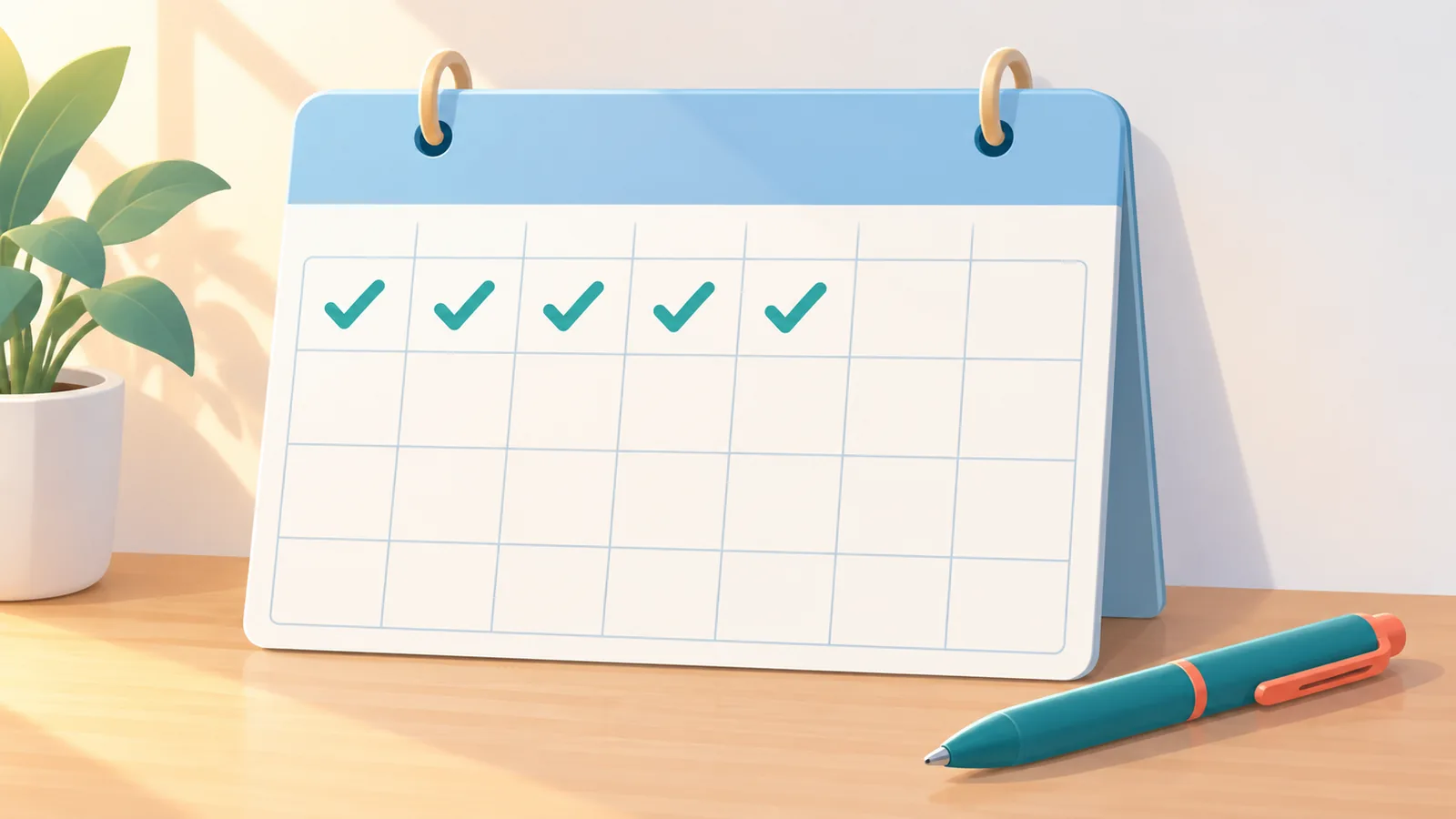
- Track your sessions. A simple calendar mark makes progress visible.
- Start smaller on busy days. One minute of breathing counts and keeps the routine alive.
- Forgive missed days. Pick up again the next morning without making up for it.
Beginner Checklist for Your First Week
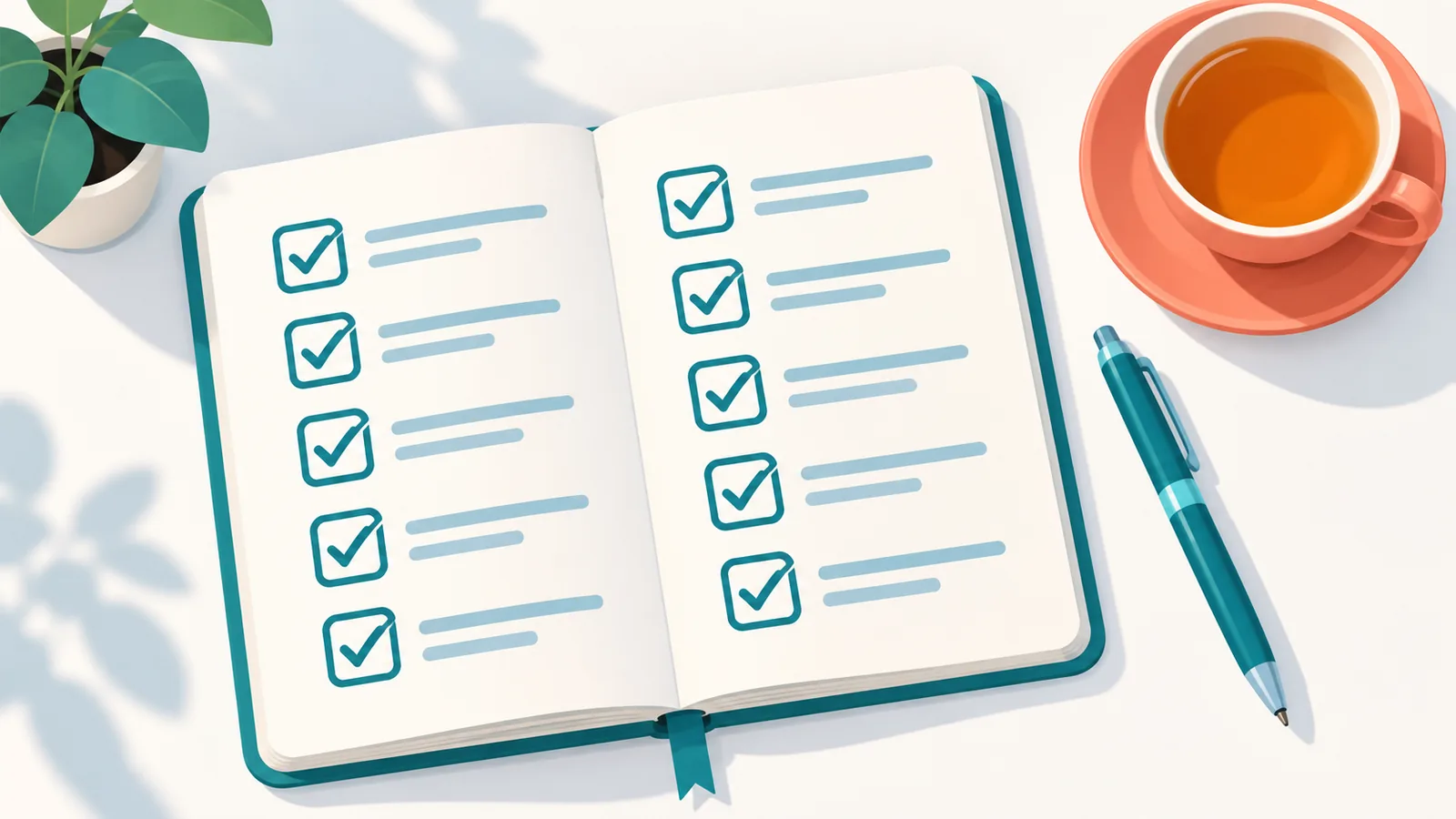
- Space: I picked a quiet spot and a seat.
- Timer: I set a timer and silenced notifications.
- Time of day: I chose a morning time I can repeat.
- Technique: I chose one technique, such as breath awareness.
- Duration: I will sit for 3 to 5 minutes.
- Cue: I attached it to an existing routine.
- Reflection: I noted one thing I noticed after each session.
Frequently Asked Questions
Do I need to meditate before or after coffee?
Either works. There is no clear evidence that favors one, so choose what you will stick with. Some people like to meditate first, and others make the coffee itself a mindful moment.
Can I meditate lying down in bed?
You can, but many people fall asleep. For a morning practice, sitting upright in a chair or on the edge of the bed usually helps you stay alert.

What if I only have 2 minutes?
Take them. Even one to two minutes of slow breathing keeps the habit going on busy mornings. You can return to your regular length the next day.
How long until I notice benefits?
It varies from person to person, so there is no reliable timeline. Structured programs such as Mindfulness-Based Stress Reduction (MBSR) run for 8 weeks, but that is a course format, not a promise of results. Pay attention to how you feel over several weeks rather than judging a single session.
Is guided or silent meditation better for beginners?
Neither is clearly better. Many beginners find a guided session easier at first because a voice keeps them company. You can move to silent practice later, or alternate between the two.

Final Thoughts and Next Steps
The core routine is simple: sit comfortably, set a timer for about 5 minutes, follow your breath, and gently return when your mind wanders. Keep the time and place consistent, start smaller than you think you need to, and let go of the idea of doing it perfectly. Tomorrow morning, try 5 minutes before you pick up your phone.
Note: Meditation does not replace medical or mental health care. If you find meditation distressing, or you have a history of trauma, consider speaking with a qualified teacher or health professional before continuing. Some programs, including MBSR, note that they are not appropriate for everyone.
Ready to begin? Try a 7-day morning meditation challenge: 5 minutes a day, same time and place, starting tomorrow.
- Lally, P., et al. Study on habit formation, European Journal of Social Psychology, University College London.
- University of Minnesota Center for Spirituality and Healing. Mindfulness-Based Stress Reduction (MBSR) program overview. https://csh.umn.edu/for-community/mindfulness-programs/mindfulness-based-stress-reduction
- Balance. How long should I meditate? https://support.balanceapp.com/hc/en-us/articles/4407834521755-How-long-should-I-meditate
Want more comparisons and buying guides?
Citing this article
Source: Atovia (Atovia). https://atovia.kr