
⚠️ This page connects you to Atovia’s partners and affiliate markets. We may receive a commission from affiliate partners for activities made through these links. Discount offers may change at any time according to policy! Rest assured, there are no additional costs to you! We hope this saves you time in finding the right items!
Cardio does not automatically erase muscle. What matters is how much you do, how hard you do it, how you fit it around lifting, and whether you eat enough to support both.
If you lift a few days a week and want a stronger heart without watching your numbers on the bar slip, this guide is for you. You will learn how much cardio is reasonable, which kind to choose, how to arrange your week, and how much protein research suggests for people who train.
- Does cardio really cost you muscle?
- How much cardio is too much for muscle?
- Which cardio is best when you also lift?
- How do you schedule cardio around lifting?
- How much protein do you need to keep muscle?
- What mistakes cost lifters muscle, and what do people ask most?
- Your muscle-friendly cardio plan
- Cardio combined with lifting does not automatically block muscle or strength gains, though results differ between studies.
- Lifting at least 2 days a week is the anchor that protects muscle.
- Most people who exercise are advised to eat about 1.4 to 2.0 g of protein per kg of body weight daily.
- Stalled or falling lifts can be a sign your total training load is too high.
Does cardio really cost you muscle?
Not automatically. A 2022 meta-analysis in Sports Medicine by Lundberg and colleagues found that doing cardio alongside strength training does not necessarily block gains in muscle size or strength, although the outcome depends on who was studied and what was measured.
That same analysis looked at muscle fibers specifically. It found that combined training may slightly reduce the growth of individual fibers, and that running showed a difference in type 1 fibers (the slower, endurance-oriented kind). This does not prove that your whole muscle ends up smaller, so it is best read as a small signal, not a verdict.
In real life, muscle loss usually comes from several things working together: a calorie deficit, too little strength training, a heavy overall training load, poor recovery, and low protein. Cardio is one piece of that picture and rarely the only one.
How much cardio is too much for muscle?
There is no single number that fits everyone, but the U.S. adult physical activity guidelines give a useful baseline: 150 to 300 minutes of moderate cardio or 75 to 150 minutes of vigorous cardio per week, plus muscle-strengthening work on 2 or more days (U.S. Department of Health and Human Services, ODPHP, 2025). These are general health targets, not a plan designed to preserve muscle.

Intensity and session length may matter too. Healthline summarizes a meta-analysis in which moderate-to-high intensity cardio and sessions longer than 30 minutes had a larger negative effect on strength than easier, shorter sessions (Healthline, 2026).
Read that finding with care. It covered men only, it concerned strength rather than long-term muscle size, and it does not mean 31 minutes of cardio will cost you muscle. Treat it as a reason to keep hard cardio modest, not as a hard cutoff.
Which cardio is best when you also lift?
The best cardio for a lifter is the kind you can repeat consistently and recover from, because the research does not crown one mode as best for everyone. The only mode-specific signal in our sources is the fiber-level finding that running showed a type 1 fiber difference, and that evidence is limited.
So the practical choice comes down to how each option feels in your legs and joints, and how easily it fits around leg day. The table below uses general, qualitative labels. Your own body matters more than any label.

| Factor | Walking | Cycling | Running |
|---|---|---|---|
| Leg fatigue | Low | Moderate | Higher |
| Joint impact | Low | Low | Higher |
| Fit around lifting | Very easy | Easy, but plan around heavy leg days | Needs more planning |
| Best use | Daily activity and easy recovery days | Steady cardio with less pounding | Time-efficient cardio if your joints tolerate it |
How do you schedule cardio around lifting?
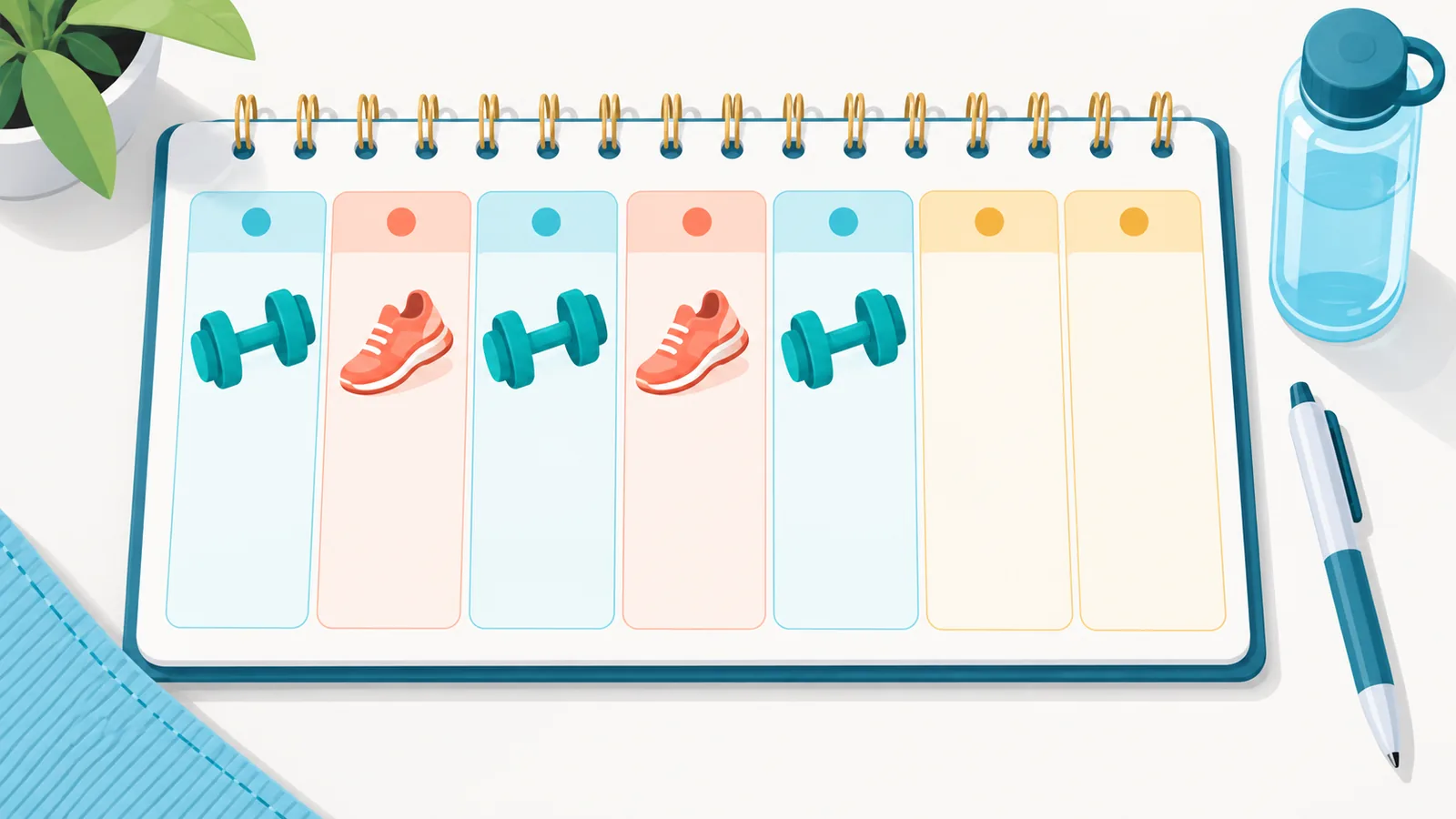
A simple approach is three lifting days plus two or three cardio sessions, with hard cardio kept away from your heaviest leg day. This is one example week, not a proven rule, and recovery differs from person to person.
Here is a layout that may suit many people. Lift Monday, Wednesday, and Friday. Do easy cardio such as brisk walking or cycling on Tuesday and Saturday. If you add a third session, keep it light and place it on a day that does not follow a hard leg workout. When cardio and lifting must share a day, lifting first is a practical option, though no verified rule says so.
Lifting itself deserves the priority. A review of older adults with obesity, reported by Healthline (2026), found that strength training 2 to 3 times per week for up to 6 months accompanied weight and fat loss without muscle loss. That group is not the same as every lifter, but it supports keeping strength work as the anchor of your week.

Use this quick self-check to see whether your total load is too high:
- Your lifts have stalled or are slipping for two or more weeks.
- Your muscles feel constantly sore rather than recovered.
- Your sleep has gotten worse.
If these signs persist, scale back cardio volume first and consider talking with a qualified coach or clinician. This checklist is a personal guide, not a diagnostic test.
How much protein do you need to keep muscle?
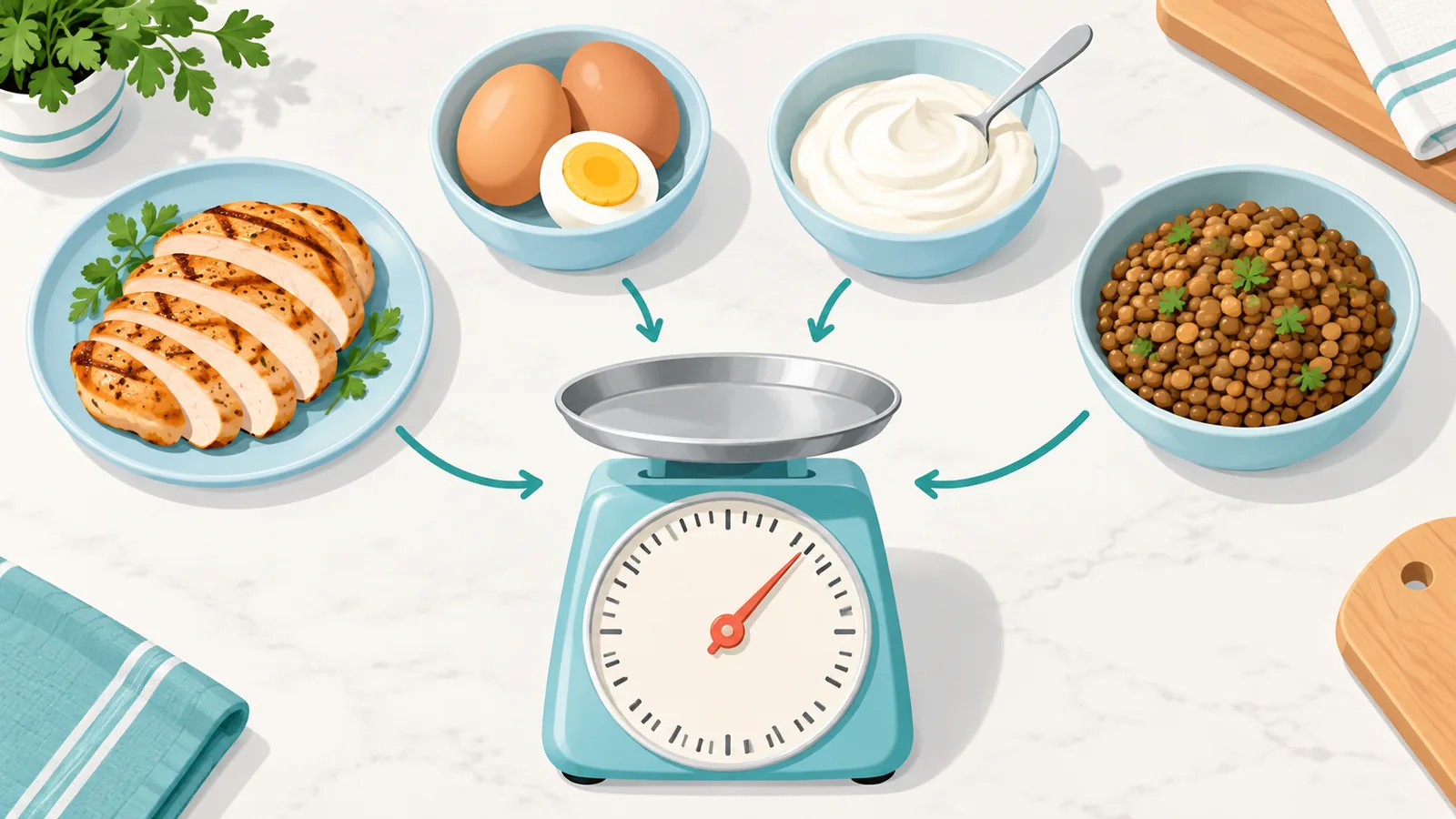
Most people who exercise are advised to eat 1.4 to 2.0 grams of protein per kilogram of body weight per day, according to the International Society of Sports Nutrition position stand (Jäger et al., 2017). People who are restricting calories while lifting may need more to hold on to lean mass.
As an example of the arithmetic, a 75 kg (about 165 lb) person would land at roughly 105 to 150 grams per day. This is a calculation from the published range, not a prescription.
The same position stand describes spreading protein across the day at roughly 3 to 4 hour intervals as one approach. The best timing varies by person, so choose a pattern that fits your meals.
Pace matters as well. The CDC advises that steady loss of about 1 to 2 pounds per week is more likely to be maintained than faster loss (CDC, “Steps for Losing Weight,” 2025). That is weight-management guidance and does not guarantee you will keep muscle.
If you have kidney disease or another medical condition, talk with a clinician or registered dietitian before raising your protein intake. The ISSN range is based on healthy exercisers.
What mistakes cost lifters muscle, and what do people ask most?
The most common mistake is stacking a lot of cardio on top of a steep calorie cut while lifting less. That combination removes both the fuel and the strength signal your muscles rely on.
Other mistakes include skipping lifting entirely during a cut, sleeping too little, and treating every kind of cardio as equal. A long, hard run and an easy walk place very different demands on your recovery.
Can I do cardio and lifting on the same day?
Yes, it can work, and it depends on your schedule and recovery. If you do both in one session, doing lifting first is a workable option, though no verified rule settles the order.
Is walking enough?
Walking can be a good fit because it adds activity with low leg fatigue and low joint impact. Whether it is enough depends on your goal, so compare it with the weekly guideline range in the second section.

Do I need to stop cardio to build muscle?
Not necessarily. The evidence suggests combined training does not automatically block gains, so many people keep moderate cardio while they lift. If your lifts stall, trimming cardio volume is a reasonable first adjustment.
Health note: this article is general education and does not replace professional advice. Results differ from person to person. If you have a medical condition or injury, or you have kidney disease, check with a doctor or registered dietitian before changing your exercise or protein intake.
Your muscle-friendly cardio plan
Keep lifting at least twice a week, keep cardio at a dose you can recover from, and pick a mode you will actually repeat. Eat enough protein, and lose weight gradually if fat loss is your goal.
Your next step can be small: choose two cardio slots in your week and note how your lifts respond over the next few weeks. What does your current week look like?
Want help turning this into a weekly routine you can stick with?
References
- Lundberg et al., Sports Medicine, “The Effects of Concurrent Aerobic and Strength Training on Muscle Fiber Hypertrophy,” 2022 – confirmed that combined training does not automatically block gains and that fiber growth may be slightly reduced.
- U.S. Department of Health and Human Services, ODPHP, “Top 10 Things to Know About the Second Edition of the Physical Activity Guidelines for Americans,” 2025 – confirmed weekly cardio minutes and strength training on 2 or more days.
- Healthline, “How to Lose Fat Without Losing Muscle,” 2026 – confirmed the strength training frequency review and the intensity and duration findings with their limits.
- Jäger et al., International Society of Sports Nutrition, “International Society of Sports Nutrition Position Stand: protein and exercise,” 2017 – confirmed the protein range and the spacing suggestion.
- CDC, “Steps for Losing Weight,” 2025 – confirmed the gradual weight loss pace of about 1 to 2 pounds per week.
Try Atovia’s free tool for this topic →
Citing this article
Source: Atovia (Atovia). https://atovia.kr