
⚠️ This page connects you to Atovia’s partners and affiliate markets. We may receive a commission from affiliate partners for activities made through these links. Discount offers may change at any time according to policy! Rest assured, there are no additional costs to you! We hope this saves you time in finding the right items!
- Is there one best cardio machine for weight loss?
- How do you choose a cardio machine for weight loss?
- How do the treadmill, elliptical, recumbent bike, and rower compare?
- Which cardio machine fits which person?
- How long and how hard should you work out to lose weight?
- What mistakes should you avoid on gym cardio machines?
- So which machine should you start with?
If you have ever stood in a gym wondering whether the treadmill, the elliptical, the bike, or the rower is the “right” one for weight loss, you are in good company. The short answer is that no single machine has been shown to win, so the best pick is the one that suits your joints and fitness level and that you will actually keep using. This guide shows you how to choose, compares four common machine types side by side, and explains how much activity health agencies suggest. Results differ from person to person, so treat everything here as general information.
As an Amazon Associate I earn from qualifying purchases.
If you want a quick look first, the comparison table in the third section puts the four machines next to each other.
Is there one best cardio machine for weight loss?
No single machine has been shown to be the best for weight loss. A 2024 consensus statement from the American College of Sports Medicine (ACSM) reported no evidence that one type of exercise is better than another for controlling body weight.
What seems to matter more is the total amount of activity you do over a week and how long you can keep it up. The same ACSM statement describes weight-loss and weight-gain-prevention benefits as clearer when moderate activity is gradually built up to 150 minutes or more per week.
Food matters too. The CDC explains that weight loss comes from a calorie deficit (using more energy than you take in), and that it is driven largely by eating less, while regular physical activity helps people maintain the loss. Exercise is a strong partner in that process, but it is rarely the whole story.
You may also see claims that one machine is the top “fat burner.” Those claims usually depend on a specific study with specific conditions (intensity, duration, body weight, experience), and they do not match the broader ACSM conclusion. The calorie number on a machine’s screen is also only an estimate. It can differ from what your own body actually uses, so it is not a reliable way to crown one machine.

How do you choose a cardio machine for weight loss?
Choose the machine by matching it to your joints, your starting fitness, and how much you enjoy it, because consistency tends to matter more than the machine itself. A machine you dread will not get used, and a machine you like can become a habit.
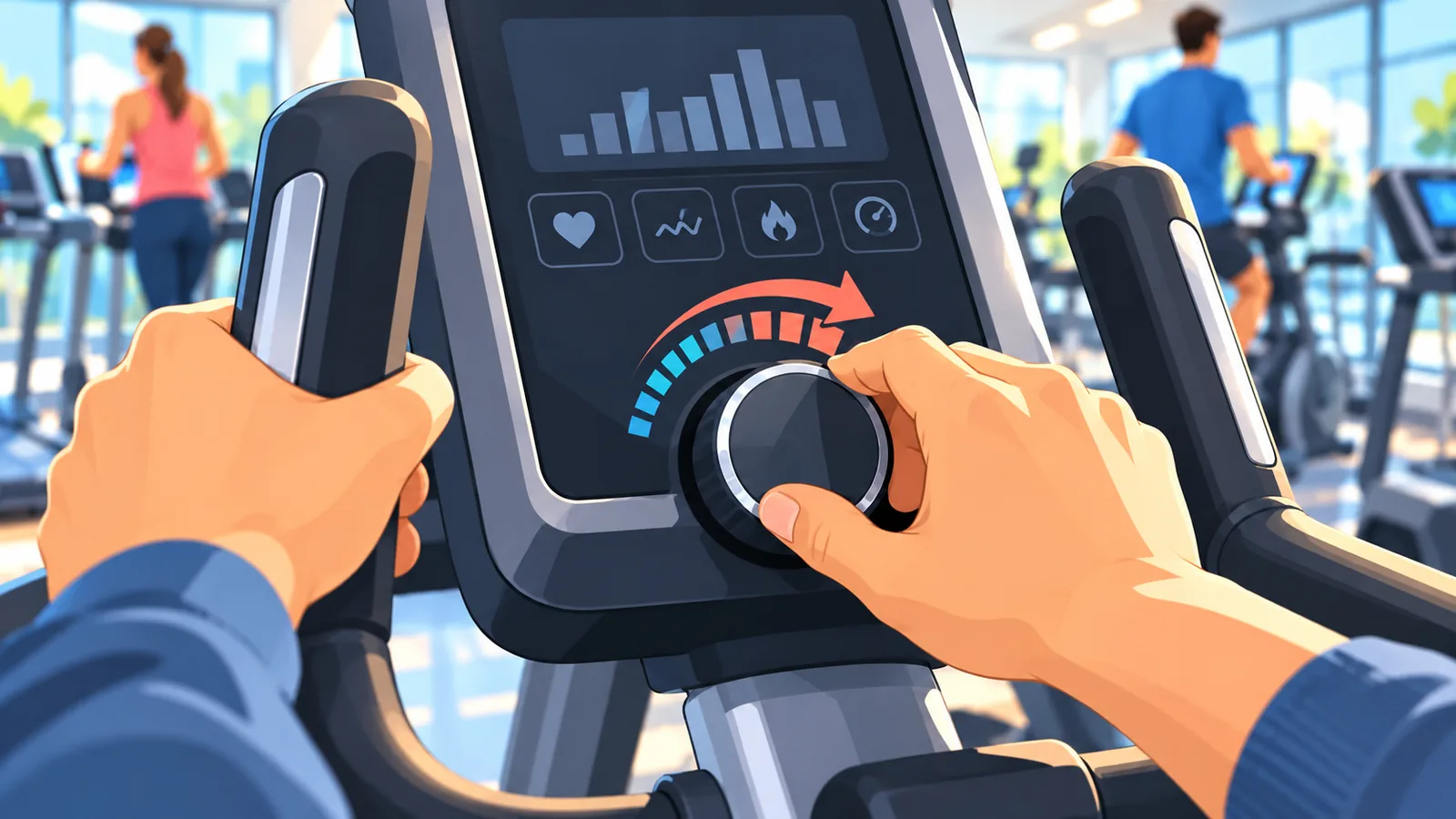
Start with impact level (how hard each step or stroke lands on your joints). Treadmills involve footstrike, while ellipticals, recumbent bikes, and rowers keep your feet supported or planted, which many people find gentler. Next, think about your starting fitness. If you are new to exercise, a machine with easy settings you can adjust in small steps is a better fit than one that feels intimidating.
Then look at the practical features: the range of resistance or speed, whether the console can track your heart rate, and how much space the machine needs. In a commercial gym, you do not buy the machine, but these details still tell you how comfortable and useful it will be for the way you train.
- No single machine has been shown to be best for weight loss.
- The CDC baseline for adults is 150 minutes of moderate activity per week, or 75 minutes of vigorous activity, plus strength work on 2 or more days.
- Choose by joint comfort, current fitness, and enjoyment.
- Start slowly and build time or difficulty gradually.
- If you have a chronic condition, pain, or dizziness, talk with a clinician first.
How do the treadmill, elliptical, recumbent bike, and rower compare?
The four machines differ mainly in how they load your joints, how much of your body they use, and how much floor space they need. The table below uses details from each manufacturer’s product page, so treat them as manufacturer statements rather than proof of results.
| Feature | Life Fitness Aspire Treadmill | Life Fitness Atmos Elliptical | Life Fitness Atmos Recumbent Bike | Concept2 RowErg |
|---|---|---|---|---|
| Motion | Walking, jogging, running | Low-impact gliding motion | Seated, reclined pedaling | Seated rowing, full body |
| Key features (manufacturer-stated) | Cushioned deck that the manufacturer says reduces joint stress by 30% | Moving and fixed handles | Reclined seat with low step-through | Air resistance, PM5 performance monitor |
| Speed or resistance range | 0.8 to 20 km/h, up to 15% incline | Resistance levels 0 to 25 | Resistance levels 0 to 25 | Air resistance adjusts with your effort |
| Best for | People who like walking or running and want incline options | People who want low-impact cardio with arm involvement | People who prefer a supported, seated position | People who want a full-body option |
| Watch-outs | Check space and dedicated power needs if you consider owning one | Product page lists no contact heart rate sensing | Product page lists no contact heart rate sensing | Needs about 274 x 122 cm of use space; no interactive touchscreen confirmed |
The treadmill’s 30% figure comes from the manufacturer’s specifications, and it may not apply equally to every user. For the rower, the manufacturer lists a seat height of 36 cm and a length of 244 cm, and describes it as a full-body, low-impact option. Details for the recumbent bike are limited to what the manufacturer’s product page states.
Which cardio machine fits which person?
The best fit depends on your starting point and what you enjoy, not on a ranking. These pairings are practical starting ideas, not medical advice.
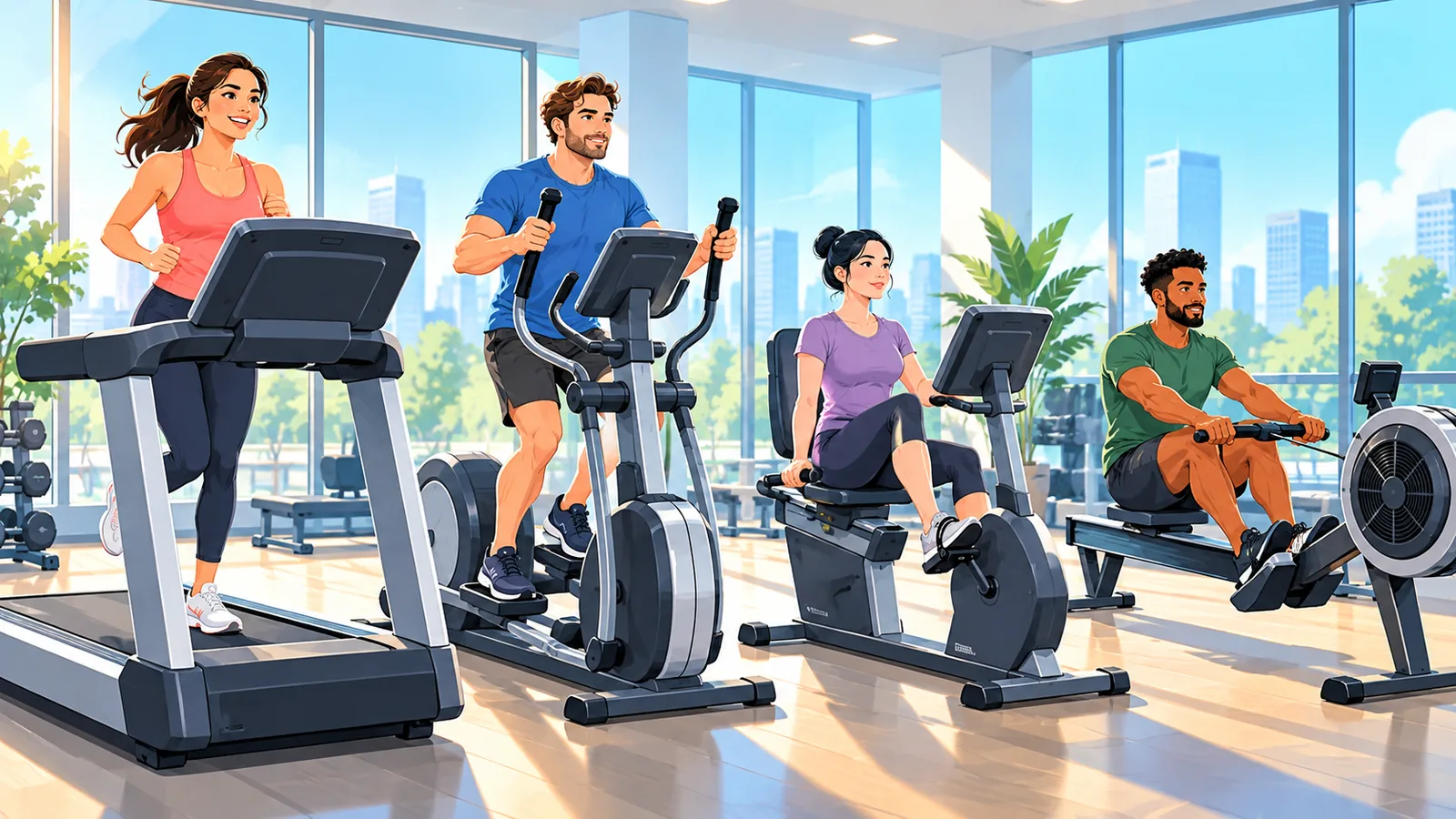
If you are new to exercise, a machine with small adjustment steps lets you begin at an easy effort. The treadmill (walking at a comfortable pace, with a slight incline added later) and the recumbent bike (a supported seat and an easy step-in) are both common starting points.
If your joints feel sensitive, you may prefer machines where your feet stay on the pedals or footplates, such as the elliptical, the recumbent bike, or the rower. People often choose a seated, supported position for comfort. That is a comfort consideration, not a proven benefit, so ease in slowly and stop if something hurts.
If you enjoy walking or running, the treadmill is a versatile choice because you can switch between walking, jogging, and running and change the incline. If you want a full-body option, the rower works your legs, back, and arms in one motion, and the elliptical’s moving handles bring in your upper body.
🛒 Recommended Product
If your gym time is short, pick the machine with the least waiting and the one you will happily use for the full session. Showing up regularly usually beats choosing the perfect machine and skipping workouts.
How long and how hard should you work out to lose weight?
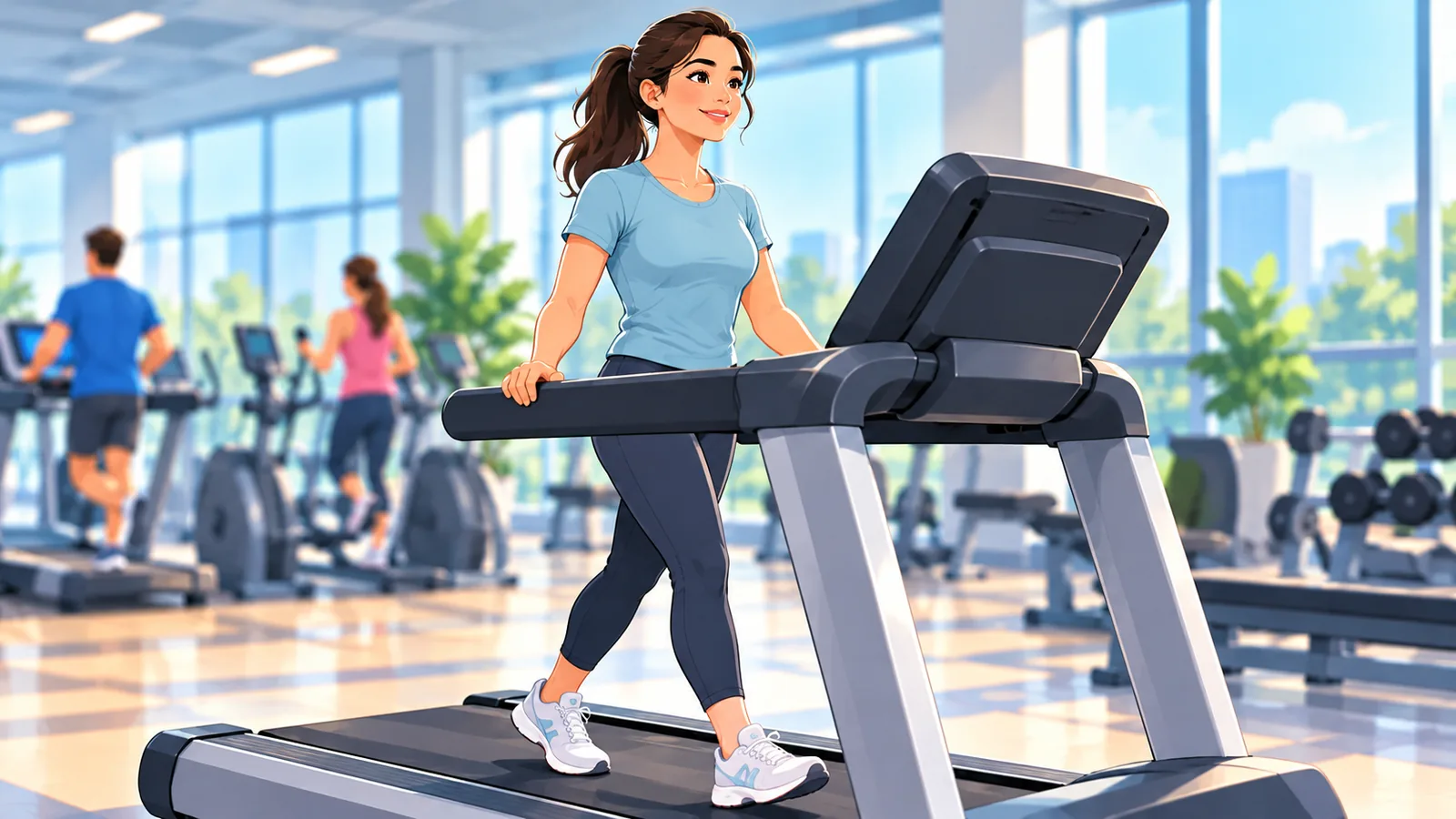
The CDC suggests adults aim for at least 150 minutes of moderate aerobic activity per week, or 75 minutes of vigorous activity, plus muscle-strengthening activity on 2 or more days. That works out to about 30 minutes on five days if you choose the moderate route.
Moderate intensity means you can talk but not sing, and your breathing and heart rate are clearly higher than at rest. This “talk test” works on any machine, so you do not need to compare screen numbers to know if you are in the right range.
Intervals (short hard efforts mixed with easier recovery) are optional. The ACSM consensus statement did not find high-intensity intervals superior to moderate or vigorous continuous activity for weight control. If you enjoy them, they are a fine choice, and if you do not, steady effort is just as reasonable.
Start slowly, then increase time or difficulty gradually, as the CDC advises for people beginning an activity routine. Pair your sessions with a sensible eating pattern and strength training, since the CDC describes weight loss as largely driven by reduced calorie intake and regular activity as important for keeping weight off.
What mistakes should you avoid on gym cardio machines?
The most common mistake is trusting the calorie readout as an exact number. It is an estimate and may not match your own energy use, so use it to track your own progress over time rather than to compare machines.
Another mistake is switching machines constantly in search of a “better” one. Since no single machine is proven superior, it helps to stay with a choice long enough to build the habit, then rotate for variety if you get bored.
Going too hard too soon is a third trap. Jumping straight into long, intense sessions can leave you sore and discouraged, so build up gradually. Skipping strength work is a fourth, because the CDC baseline includes muscle-strengthening activity on 2 or more days each week.

Finally, avoid expecting any machine to reduce fat in one body area. Weight loss does not work that way, and no machine on this list claims it. If you feel pain, dizziness, or anything unusual, stop and speak with a healthcare professional.
So which machine should you start with?
Start with the machine you find most comfortable and most enjoyable, then give it two to three weeks before judging it. For most people, that means the treadmill if you like walking, the elliptical or recumbent bike if you want a gentler feel, and the rower if you want a full-body workout.
For your first week, try this: pick one machine, work at a pace where you can still talk, and aim for sessions you can finish without dreading the next one. Add a little time as it gets easier, and fit in two short strength sessions. Results differ from person to person, so judge progress over weeks rather than days. How about you: which machine will you try first?
Health disclaimer: This article is general information and does not replace professional medical advice, diagnosis, or treatment. If you have a chronic condition, pain, dizziness, or any exercise restriction, consult your doctor before changing your activity level.
Ready to build a routine around the machine you like best? Explore more fitness resources and plan your next step.
References
- ACSM, “Physical Activity and Excess Body Weight and Adiposity for Adults. American College of Sports Medicine Consensus Statement,” 2024 – confirmed that no single exercise type is superior for weight control, that benefits look clearer at 150 or more minutes of moderate activity per week, and that high-intensity intervals do not appear superior. https://pubmed.ncbi.nlm.nih.gov/39277776/
- CDC, “Physical Activity and Your Weight and Health,” n.d. – confirmed the calorie-deficit explanation, the 150-minute moderate or 75-minute vigorous weekly baseline, strength work on 2 or more days, and the talk test. https://www.cdc.gov/healthy-weight-growth/physical-activity/
- CDC, “Steps for Getting Started With Physical Activity,” n.d. – confirmed the advice to start slowly, build gradually, and consult a clinician with chronic conditions. https://www.cdc.gov/healthy-weight-growth/physical-activity/getting-started.html
- Life Fitness, “Aspire Treadmill,” n.d. (manufacturer product page) – source for speed, incline, and the manufacturer’s joint-stress claim. https://www.lifefitness.com/en-us/catalog/cardio/treadmills/aspire
- Life Fitness, “Atmos Elliptical,” n.d. (manufacturer product page) – source for low-impact motion, handle types, and resistance range. https://www.lifefitness.com/en-us/catalog/cardio/ellipticals/atmos-elliptical
- Life Fitness, “Atmos Recumbent Bike,” n.d. (manufacturer product page) – source for the basic descriptors of the recumbent bike. https://www.lifefitness.com/en-us/catalog/cardio/bikes-indoor-cycles/atmos-recumbent-bike
- Concept2, “Concept2 RowErg Rowing Machine,” n.d. (manufacturer product page) – source for the monitor, dimensions, and use-space details. https://www.concept2.com/ergs/rowerg
Try Atovia’s free tool for this topic →
Citing this article
Source: Atovia (Atovia). https://atovia.kr