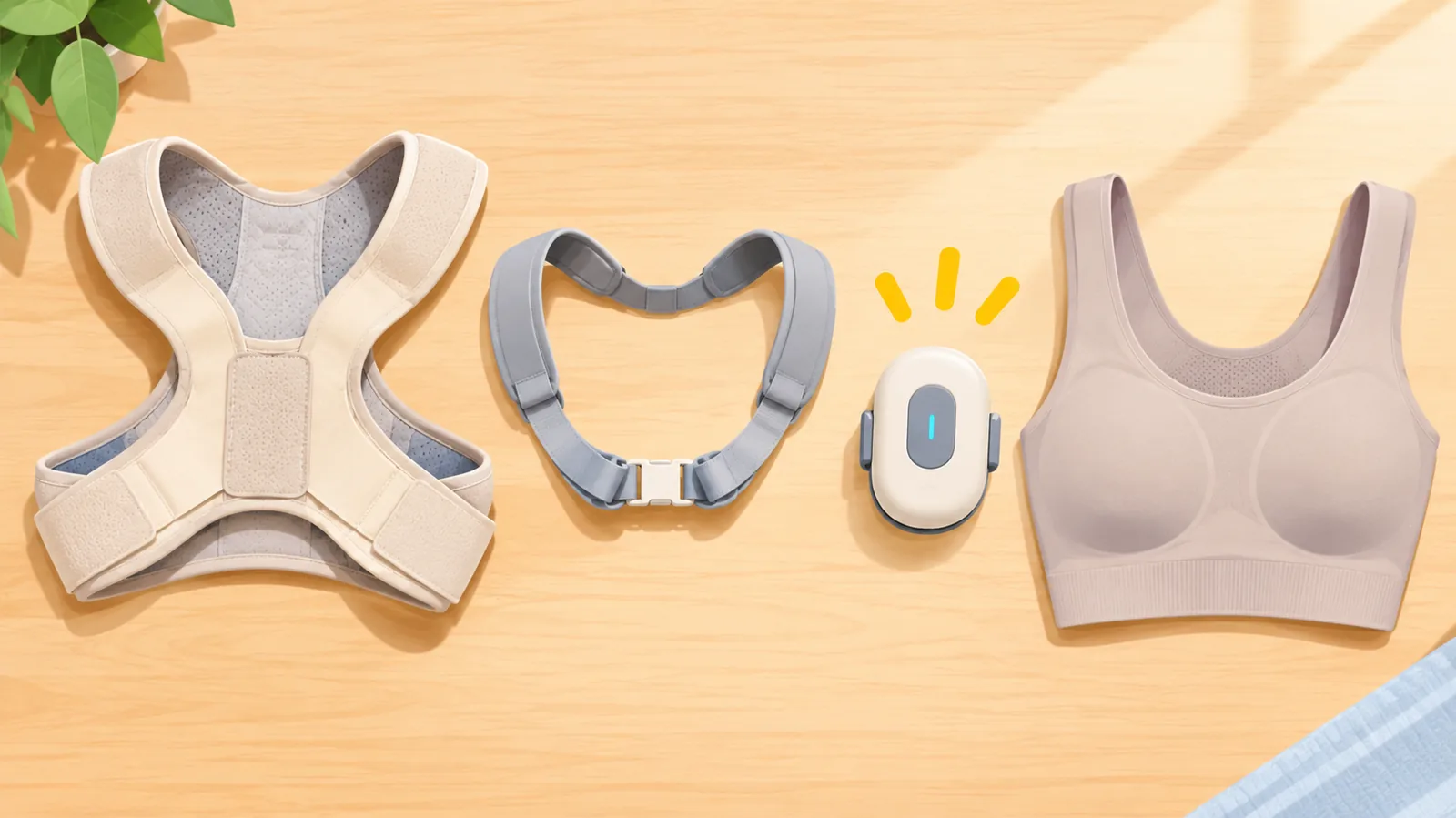
⚠️ This page connects you to Atovia’s partners and affiliate markets. We may receive a commission from affiliate partners for activities made through these links. Discount offers may change at any time according to policy! Rest assured, there are no additional costs to you! We hope this saves you time in finding the right items!
If you have ever slumped over a laptop until your upper back ached, you have probably also eyed a posture corrector. Then you may have worried it would dig into your underarms, bulge under your top, or end up in a drawer after two days. Those worries are reasonable, and they are why the “best” posture corrector for women is the one that suits your body, your clothes, and your daily routine.
As an Amazon Associate I earn from qualifying purchases.
🛒 Recommended Product
The quick answer: for desk work, start with a low-profile back brace or a smart trainer that gives gentle cues. For discreet wear, look at thin, seamless, bra-style designs. For postpartum or nursing, put soft fabric, bust support, and nursing access first, and check with your healthcare provider before you buy. For active days, choose lightweight, sweat-wicking, flexible designs. Whatever you pick, no device fixes posture on its own. Evidence for posture correctors is limited, so they work best as a reminder alongside movement and strengthening.
- Quick Picks: Which Type of Posture Corrector Fits Which Woman
- How Posture Correctors Work and What They Can Realistically Do
- The Main Types Compared: Back Braces, Clavicle Straps, Smart Trainers, and Bra-Style Correctors
- Selection Criteria: Fit, Fabric, Adjustability, and Support Level
- Best for Desk Workers and Long Hours Sitting
- Best for Discreet Wear Under Clothing
- Best for Postpartum, Nursing, and Bust-Related Comfort
- Best for Active Days, Workouts, and Commuting
- Sizing, Wear Time, and Safe Use
- Frequently Asked Questions
- Match the device type to your daily situation before you compare brands.
- Fit and comfort decide whether you will actually wear it.
- Start with short sessions, and pair any device with strengthening and movement habits.
- Stop using it if you notice pain, numbness, tingling, skin irritation, or restricted breathing.
- See a clinician for persistent pain, numbness, a diagnosed spinal condition, pregnancy or postpartum questions, or recent surgery.
Quick Picks: Which Type of Posture Corrector Fits Which Woman
These are editorial “best fit for” suggestions based on how each type is built. They are not tested rankings, and no brand is endorsed here. Find your situation, then read the matching section for the details.
- Office worker with long sitting hours: a low-profile back brace or a smart posture trainer that gives a gentle cue when you slouch. See section 5.
- Wants it hidden under work clothes: a thin, seamless, bra-integrated corrector. See section 6.
- Postpartum or nursing: a soft, gently supportive style with bust support and nursing access, after checking with your healthcare provider. See section 7.
- Gym, sports, and active days: a lightweight, sweat-wicking, flexible design. See section 8.
- Travel and commuting: a compact clavicle strap or a small smart trainer that packs easily and goes on quickly.
How Posture Correctors Work and What They Can Realistically Do
A posture corrector is best understood as a device that makes you more aware of how you are sitting or standing. Braces, straps, and garments do this by gently drawing the shoulders back. Smart trainers do it by vibrating when you slouch.
Be cautious about bigger promises. Health references describe the scientific evidence for posture correctors as limited, and some of the research has been funded by manufacturers. It is also unclear whether these devices improve posture over the long term. There is little evidence linking slouching to back pain, so a corrector should not be treated as a pain treatment.
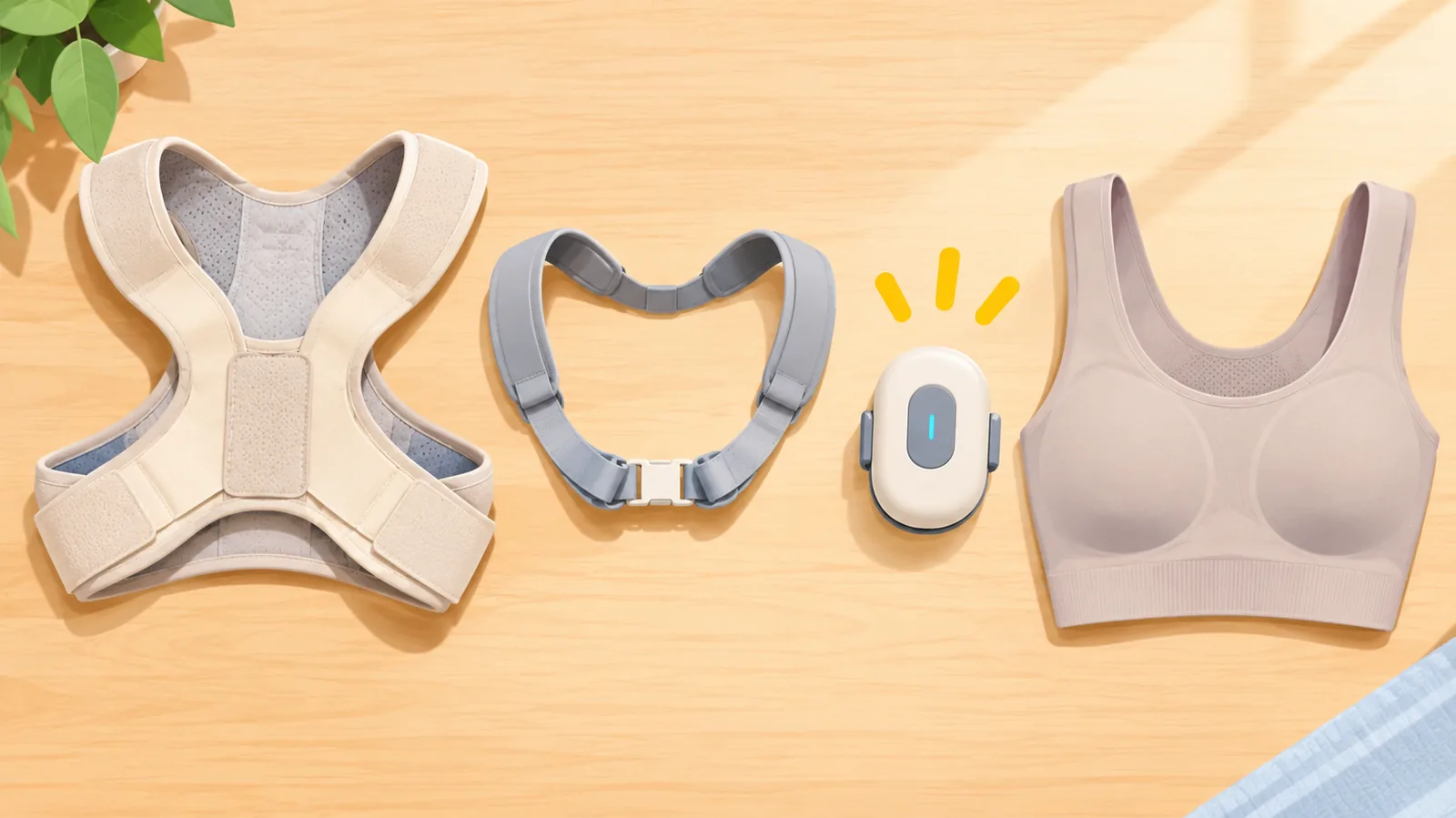
Physical therapists commonly point out that a brace cannot replace exercise. A realistic goal is to use a corrector as a reminder while you build strength and change your habits.
The Main Types Compared: Back Braces, Clavicle Straps, Smart Trainers, and Bra-Style Correctors
The table below describes typical characteristics for each category. Individual products vary, so use it as a starting point, not a guarantee.
| Type | Best For | Support Level | Visibility Under Clothes | Comfort for Long Wear | Typical Drawbacks |
|---|---|---|---|---|---|
| Back brace (figure-eight or full-back) | Desk work, home use | Moderate to firm cueing | Can show under fitted tops | Varies; padding and strap fit matter | Underarm rubbing, bulk, can feel restrictive |
| Clavicle strap | Travel, commuting, short sessions | Light to moderate | Often low, but lines can show | Moderate; can press on the shoulder area | Strap slippage, less upper back coverage |
| Smart trainer (vibration feedback) | Building awareness at a desk | Light (cue only, no physical pull) | Usually very low | Generally comfortable | Needs charging or setup, feedback may feel annoying |
| Bra-style corrector | Discreet wear, postpartum, daily use | Light to moderate | Low when seamless | Often comfortable if sized well | Sizing is harder, and the support claims are unproven |
Back braces
Pros: a clear physical cue and usually easy to adjust. Cons: underarm padding and strap placement make or break comfort, and the shape can show under clothes.
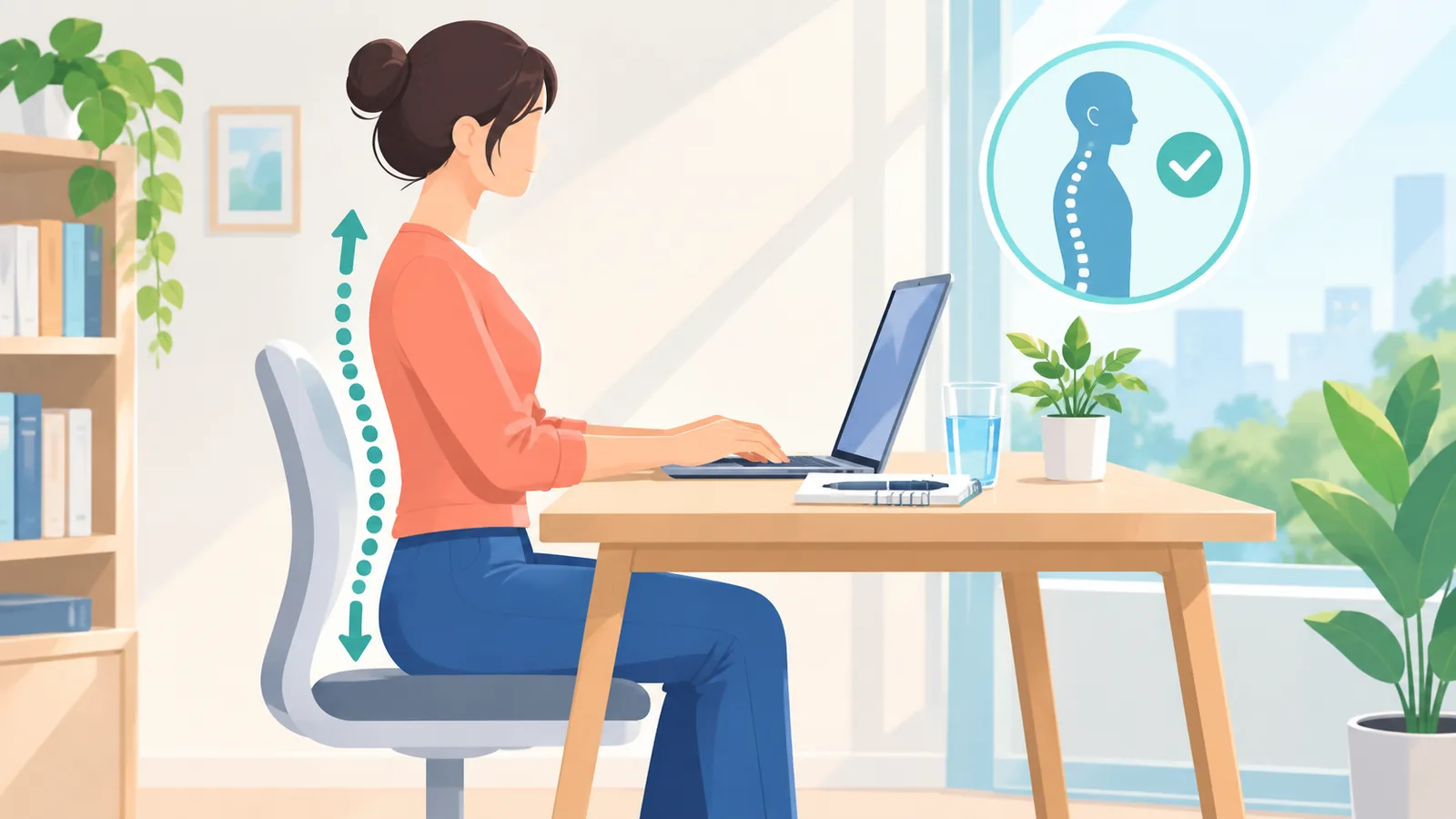
Clavicle straps
Pros: compact, quick to put on, and good for short sessions. Cons: they cover less of the upper back, and straps can slip if they do not match your shoulder width.
Smart trainers
Pros: nothing pulls on your shoulders, and the device is small. Cons: it only reminds you, so you still have to act on the cue.
Bra-style correctors
Pros: integrated into something you already wear, and often the most discreet. Cons: getting both the bust fit and the back panel right can take trial and error. One physical therapist who tested several posture bras said she remained skeptical about adding them to a daily routine, so treat them as a comfort option, not a proven fix.
Selection Criteria: Fit, Fabric, Adjustability, and Support Level
Before you compare styles, run any candidate through this checklist:
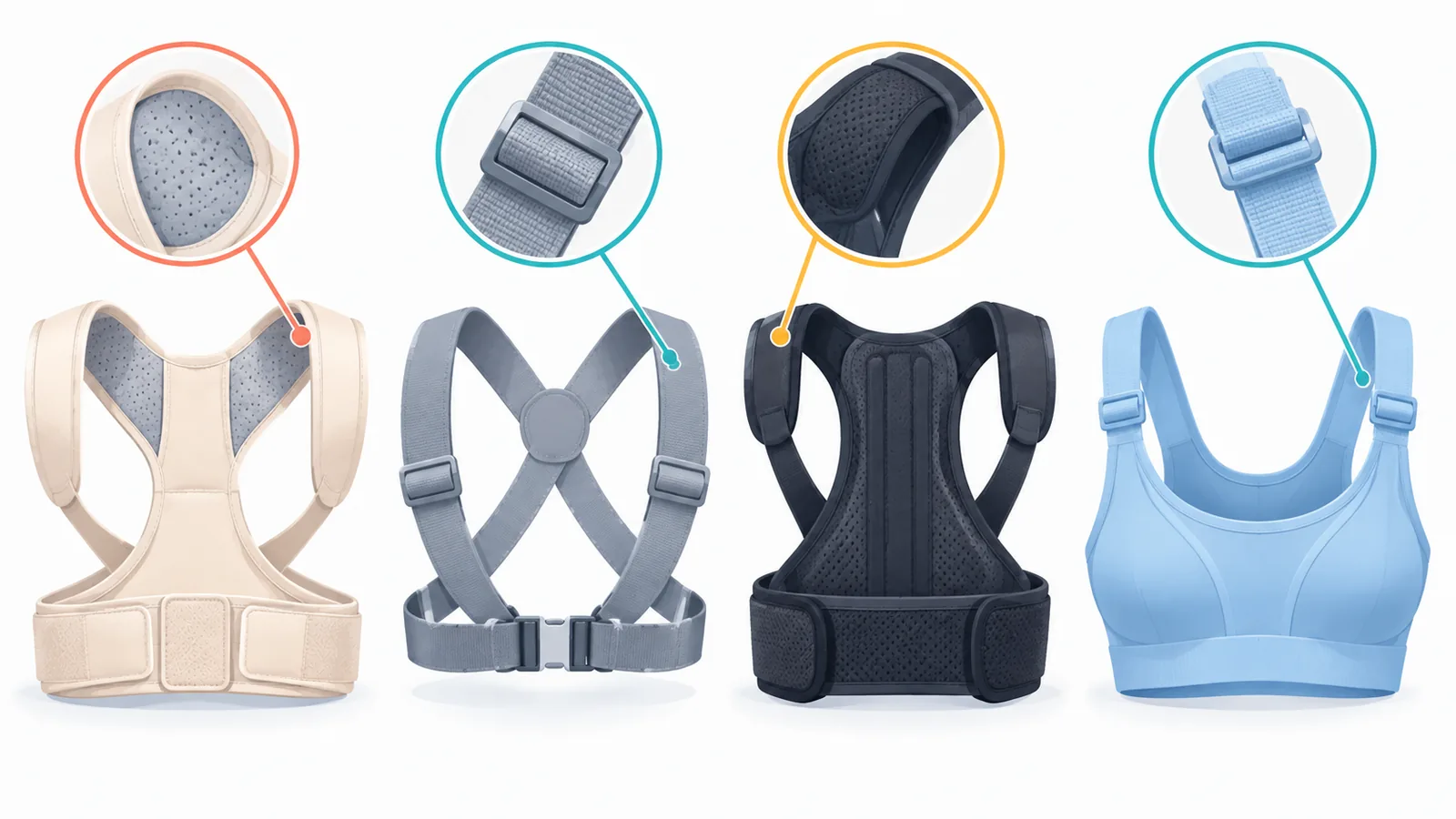
- Adjustable straps: you should be able to loosen and tighten them without help from another person.
- Breathable, skin-friendly fabric: look for soft, moisture-managing materials, especially if you wear it for hours.
- Underarm padding: this is where most braces cause rubbing.
- Chest comfort: nothing should press on or flatten the bust uncomfortably.
- No restriction of breathing: you should be able to take a full breath at any setting.
- Easy on and off: if it is a hassle, you will not wear it.
- Gentle support level: a moderate cue is easier to tolerate than a rigid pull.
Women-specific fit factors
- Bust size: check that straps and bands sit around the bust, not on it.
- Narrower shoulder width: straps made for broader frames can slip or dig in, so look for a shoulder-width guide.
- Band placement versus your bra line: a band that sits right on the bra band can bunch or rub, so test the two together.
Best for Desk Workers and Long Hours Sitting
Who it suits: anyone who works at a computer for long stretches and notices herself drifting forward.
What to look for:
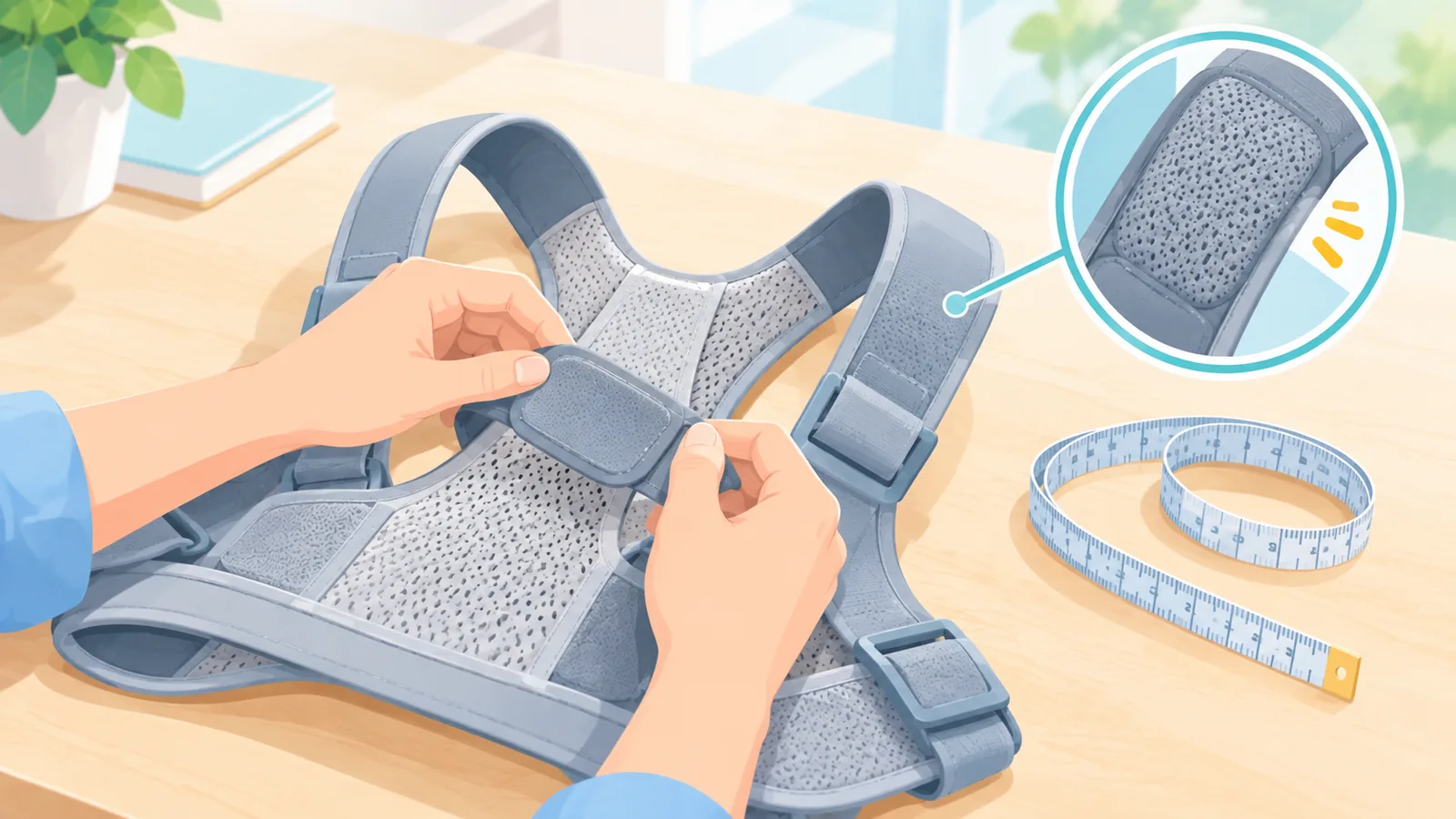
- Light cueing instead of a hard pull, such as a smart trainer or a soft, low-profile back brace.
- A slim design that does not catch on your chair back.
- Short-session use. Take it off during breaks.
What to check before you buy: sit in your usual chair and reach for your keyboard. The device should not limit your arm movement or press on your shoulders.
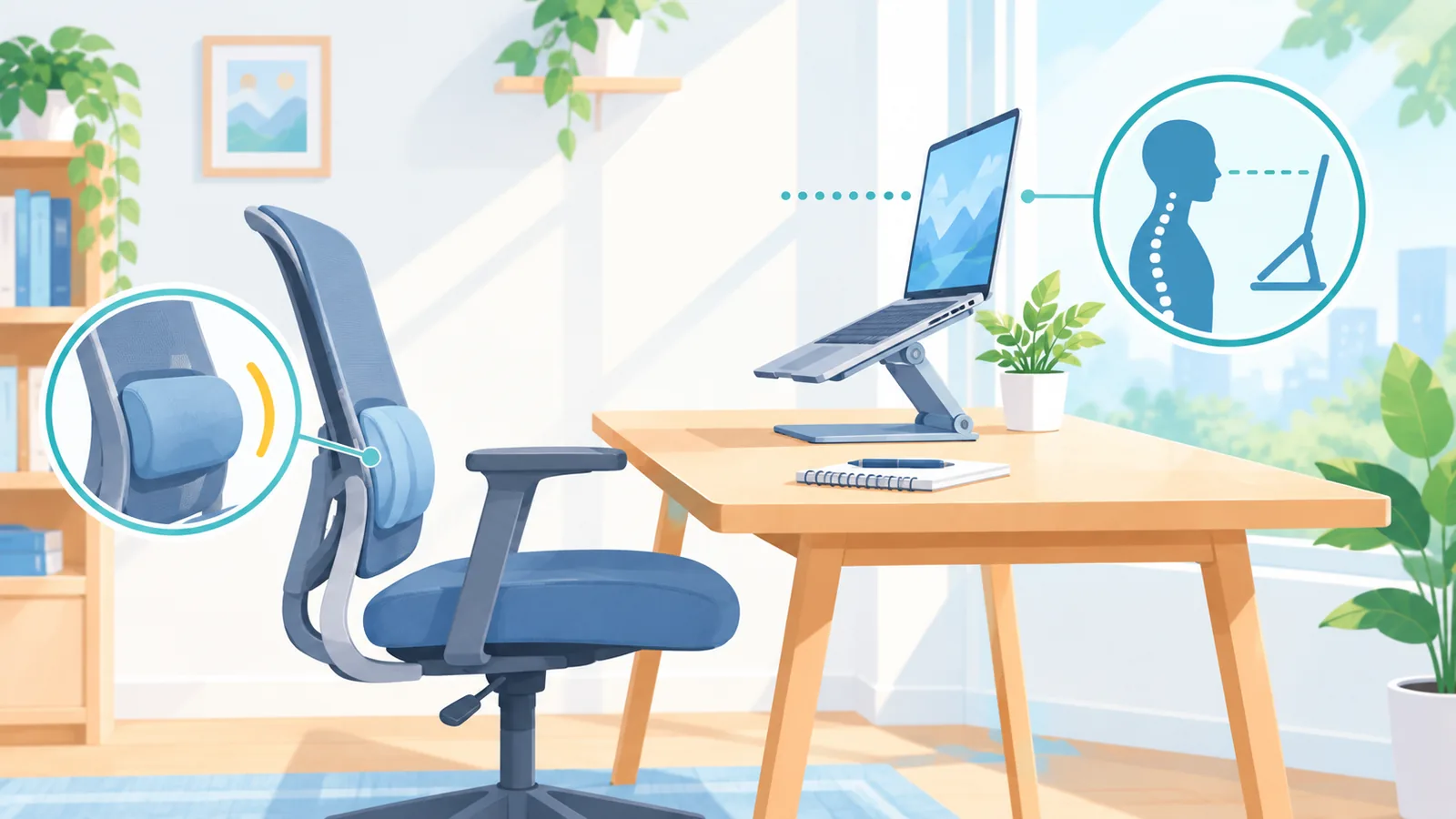
Pair it with these habits: set your monitor near eye level, support your lower back with the chair, and stand or move regularly. Research on posture and workplace setup suggests that your environment plays a large role, so adjusting your workspace may help as much as any device.
Best for Discreet Wear Under Clothing
Who it suits: women who want a posture reminder without anyone noticing it.
What to look for:
- Thin, seamless fabric that lies flat.
- Bra-integrated styles, which avoid extra straps over the shoulders.
- Flat edges and no bulky buckles at the back.
What to check before you buy: put it on under a fitted top in front of a mirror and look at your shoulders and back from the side. Visible lines or ridges mean it will show under that fabric.
Fitting under your clothes: smooth, mid-weight tops and structured blazers hide a thin corrector best. Clingy knits and thin dresses will show more. Choose a color close to your skin tone or your top.
Best for Postpartum, Nursing, and Bust-Related Comfort
Who it suits: women dealing with changes in their bust, shoulders, and upper back after pregnancy and during nursing.
🛒 Recommended Product

What to look for:
- Bust support that feels comfortable and does not squeeze.
- Nursing access, such as clips or a front opening, if you are breastfeeding.
- Soft, stretchy fabric and gentle compression instead of firm bracing.
- Easy adjustment, because your body may change over the weeks.
Safety note: check with your healthcare provider before using any posture corrector after pregnancy, during recovery from a C-section, or after breast surgery. This article cannot say whether a particular device is safe for your situation.
What to check before you buy: make sure nothing presses on a healing area, a sore chest, or nursing-related tenderness.

Best for Active Days, Workouts, and Commuting
Who it suits: women who are on the move and want a light reminder between activities.
What to look for:
- Lightweight, sweat-wicking materials.
- A secure fit that still lets your shoulders and arms move freely.
- Quick on and off, so you can remove it before a workout.
When not to wear one: avoid wearing a brace during exercise unless a clinician or trainer has recommended it, since it can restrict the movement your muscles need.

What to pair it with: strengthening work for your back, core, and shoulders does more for long-term posture habits than relying on a device. Treat the corrector as a short-term reminder.
Sizing, Wear Time, and Safe Use
How to measure and read a size chart
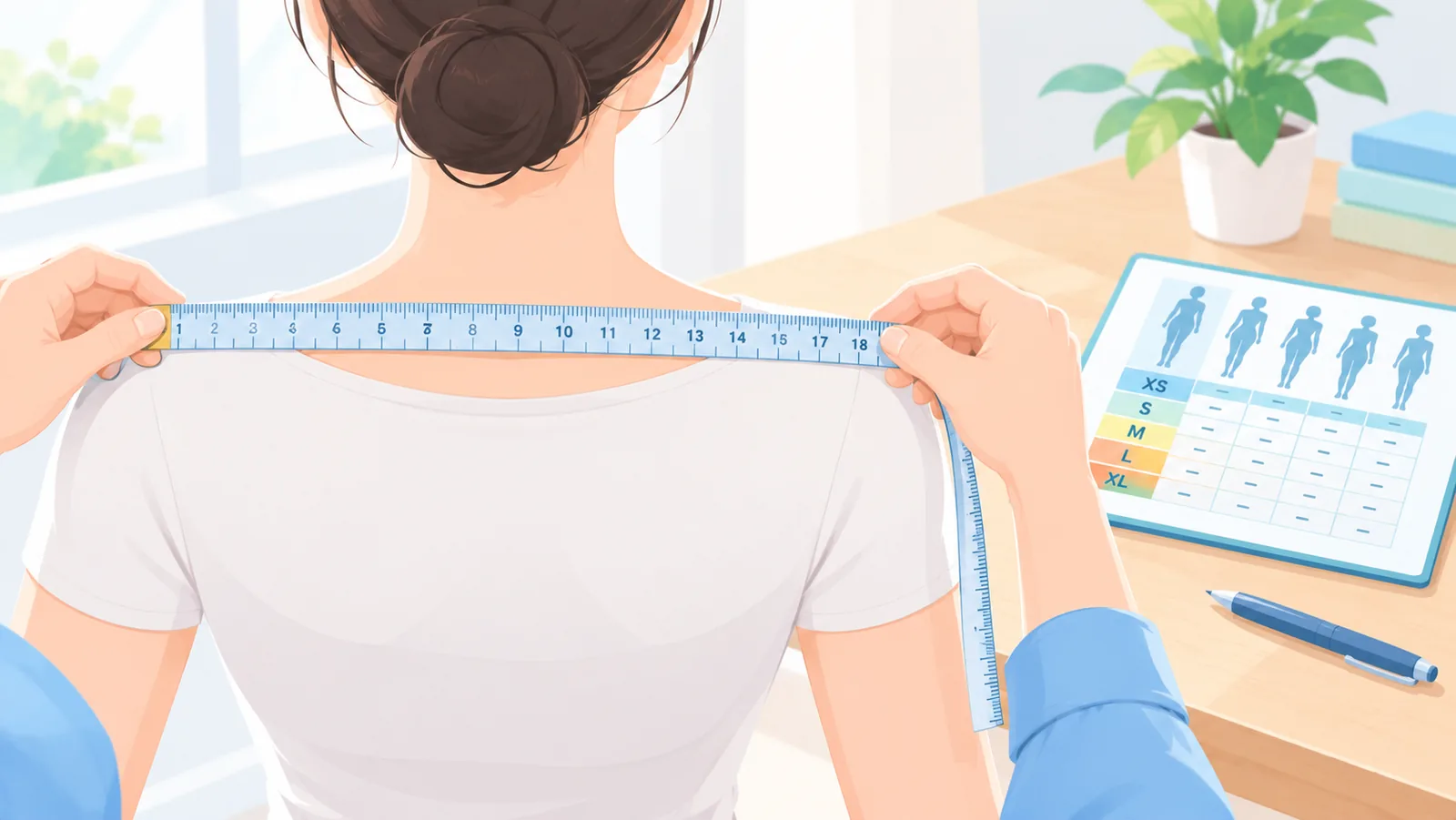
- Measure around the fullest part of your chest, and, where a chart asks for it, around your ribcage just below the bust.
- Measure across your shoulders if the chart lists a shoulder width.
- Use a soft tape measure and keep it level, snug but not tight.
- If you fall between sizes, check whether the product is adjustable. Consider the larger size if the strap range is wide.
- Read the brand’s own guidance, because charts differ between products.
Wear time
Start with short sessions and build up gradually, following the manufacturer’s instructions and your clinician’s advice. Remove it during breaks. Most manufacturers advise against sleeping in a posture corrector, so follow your product’s instructions.
Stop and get advice if you notice
- Pain that gets worse, not better.
- Numbness or tingling in your arms or hands.
- Skin irritation, redness, or rubbing.
- Restricted breathing or a feeling of tightness in the chest.
Cleaning and replacement
Follow the care label. Wash sweat-soaked straps and fabric regularly, air dry them, and replace the device if the elastic stretches out, the straps fray, or it no longer holds a comfortable fit.
When to see a clinician first
Talk with a healthcare professional, such as a physical therapist or doctor, if you have persistent pain, numbness, a diagnosed spinal condition, recent surgery, or are pregnant or postpartum. They can tell you whether a corrector makes sense and which exercises may help.
Frequently Asked Questions
Can a posture corrector fix posture permanently?
There is no good evidence that it does. Health references say it is unclear whether correctors improve posture over the long term. They are better seen as a reminder while you build strength and habits.
How long should I wear one each day?
There is no one-size-fits-all answer. Start with short sessions, increase gradually, and follow the product’s instructions. If anything hurts, stop and speak with a clinician.
Can I wear it under clothes or to sleep?
Thin, seamless styles can be worn under many outfits. Most manufacturers advise against sleeping in one, so follow your product’s instructions.
Are posture correctors safe during pregnancy?
This article cannot confirm that any corrector is safe during pregnancy. Ask your healthcare provider before using one, and do the same after delivery or surgery.
What exercises help alongside a corrector?
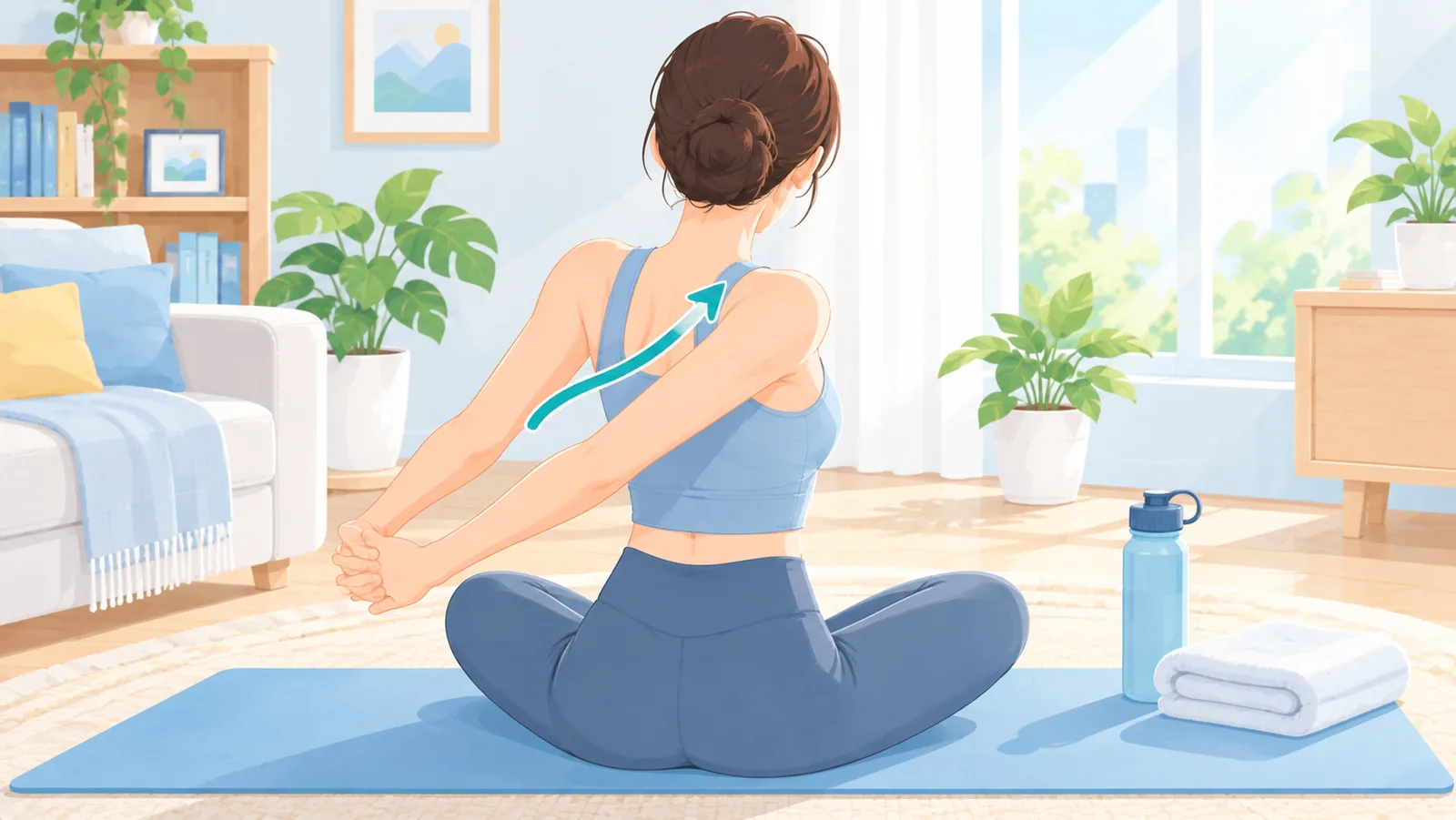
Physical therapists commonly recommend strengthening for the upper back, shoulders, and core, along with regular movement breaks and stretches. A clinician can suggest a routine for your body.
How do I know the size is right?
You should be able to breathe fully, move your arms, and wear it without pinching or rubbing. If it digs in, slips, or leaves marks, the size or style is probably wrong. Try adjusting the straps first, then check the size chart again.
Ready to compare? Browse current posture correctors by type, check the size chart carefully, and read verified customer reviews before you buy.
References
- Healthline. “Do Posture Correctors Work?” https://www.healthline.com/health/do-posture-correctors-work
- Wikipedia. “Posture corrector.” https://en.wikipedia.org/wiki/Posture_corrector
- PT Progress. “Do posture correction braces work?” (physical therapist review). https://www.ptprogress.com/?p=8823
- The Origin Way. “Can a sports bra correct your posture?” (physical therapist review). https://theoriginway.com/blog/can-a-sports-bra-correct-your-posture
This article is general information, not medical advice. Talk with a qualified healthcare professional about your own situation.
Want more comparisons and buying guides?
Citing this article
Source: Atovia (Atovia). https://atovia.kr