
⚠️ This page connects you to Atovia’s partners and affiliate markets. We may receive a commission from affiliate partners for activities made through these links. Discount offers may change at any time according to policy! Rest assured, there are no additional costs to you! We hope this saves you time in finding the right items!
- Why Most Habits Fail (and What Works Instead)
- Start Smaller Than You Think
- Anchor New Habits to Existing Routines
- Design Your Environment for Success
- Track Progress Without Obsessing
- Motivation vs. System: Which Actually Works?
- What to Do When You Miss a Day
- How Long Habit Formation Really Takes
- A Sample Weekly Checklist to Get Started
- Frequently Asked Questions
- Key Takeaways
You’ve started before. A new workout plan, a promise to read more, a resolution to drink less coffee. It worked for a week, maybe two, and then it quietly disappeared. If that sounds familiar, the problem probably isn’t your willpower — it’s the method. Healthy habits stick when they’re built on structure, not motivation, and this guide walks through exactly how to do that.
- Habits form through a cue-routine-reward loop, not sheer willpower
- Starting absurdly small (two minutes or less) beats starting big
- Attaching a new habit to an existing one makes it easier to remember
- Most habits take 2 to 8 months to become automatic — not 21 days
- Missing one day rarely breaks a habit; missing two in a row often does
Why Most Habits Fail (and What Works Instead)
Most attempts at building a healthy habit fail for three predictable reasons: they rely on motivation instead of structure, they start too ambitiously, and they have no clear trigger to prompt the behavior. Motivation fluctuates day to day, so a habit built entirely on “feeling like it” collapses the first time you’re tired or busy.
Behavioral psychologist Charles Duhigg popularized a simple framework for how habits actually form: the cue-routine-reward loop. A cue triggers the behavior, the routine is the behavior itself, and the reward reinforces it so your brain wants to repeat the loop. Instead of trying to force a new behavior through willpower alone, the goal is to deliberately design your own cue and reward.
For example, if you want to build a habit of stretching every morning, the cue might be “after I turn off my alarm,” the routine is a two-minute stretch, and the reward is the immediate feeling of being more awake. Once you see habits as a loop to design rather than a discipline to summon, the rest of this guide becomes much easier to apply.
Start Smaller Than You Think
One of the most common mistakes is starting too big — committing to an hour at the gym five days a week when you haven’t exercised in months. A useful corrective is the two-minute rule: scale any new habit down to something that takes two minutes or less to complete.
“Read every night” becomes “read one page.” “Work out daily” becomes “put on your workout shoes.” The point isn’t that two minutes is enough exercise — it’s that showing up consistently, even briefly, is what builds the neural pathway. Once the habit is automatic, you can naturally expand it.

A realistic scaling path looks like this: Week 1–2, one page of reading each night. Week 3–4, one chapter. Week 5 onward, whatever length feels natural. The habit of opening the book each night is what you’re actually training first.
Anchor New Habits to Existing Routines
Habit stacking uses a routine you already do automatically as the cue for a new one, removing the need to remember a new trigger. The formula is simple: “After [current habit], I will [new habit].”
Examples: “After I pour my morning coffee, I will write down three things I’m grateful for.” “After I brush my teeth at night, I will lay out my clothes for tomorrow.” “After I sit down at my desk, I will drink one full glass of water.”

Because the existing habit is already automatic, it acts as a reliable reminder that doesn’t depend on memory, willpower, or a phone notification you might dismiss.
Design Your Environment for Success
Willpower is unreliable, but environment is not. Making a good habit easier to start, and a bad one harder, changes behavior more consistently than trying to “want it more.”
To encourage a good habit, increase its visibility and reduce the steps needed to start it: keep a water bottle on your desk, set out running shoes the night before, or pre-portion healthy snacks so they’re grab-and-go. To discourage an unwanted habit, add friction: keep junk food out of the house, log out of social media apps, or move the TV remote to another room.
Small changes to your physical space often outperform sheer determination, because they change the default action rather than requiring a decision every time.
🛒 Recommended Product
Track Progress Without Obsessing
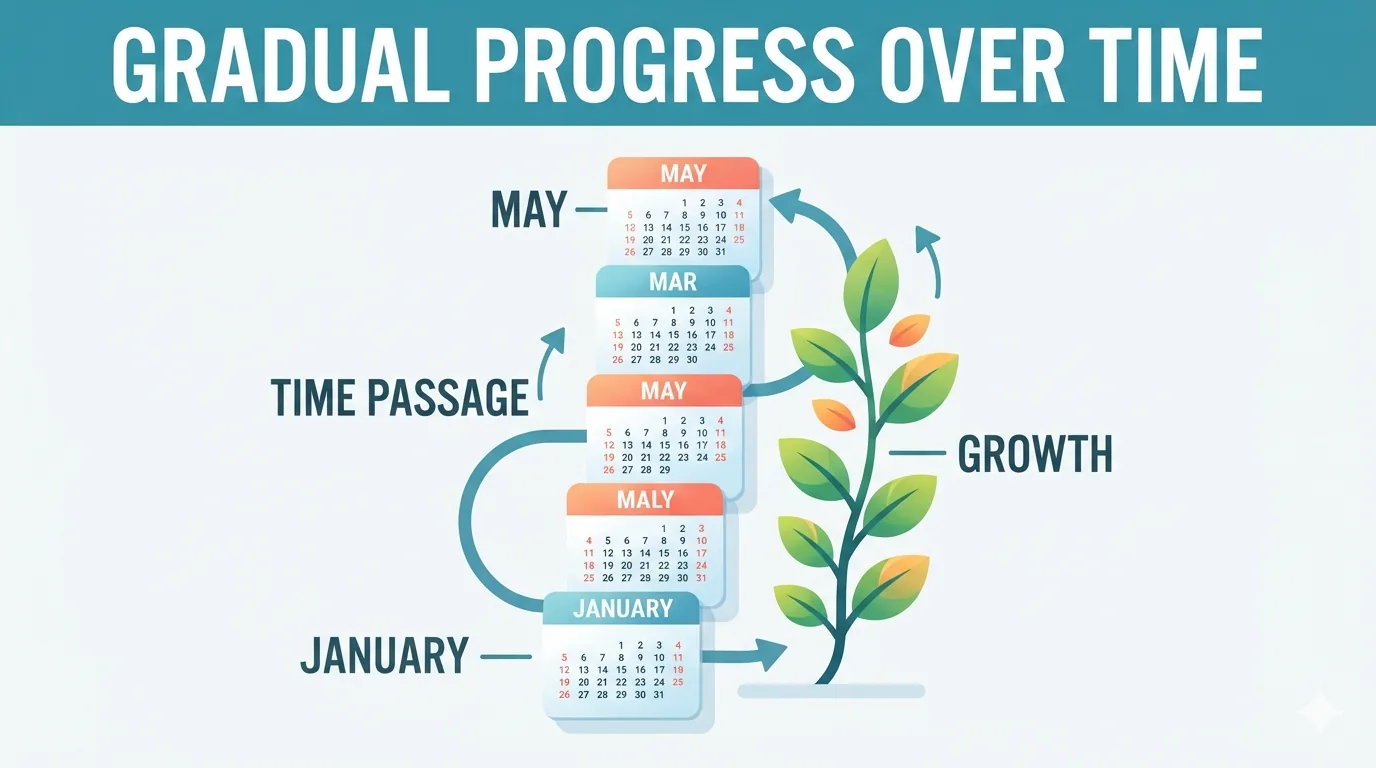
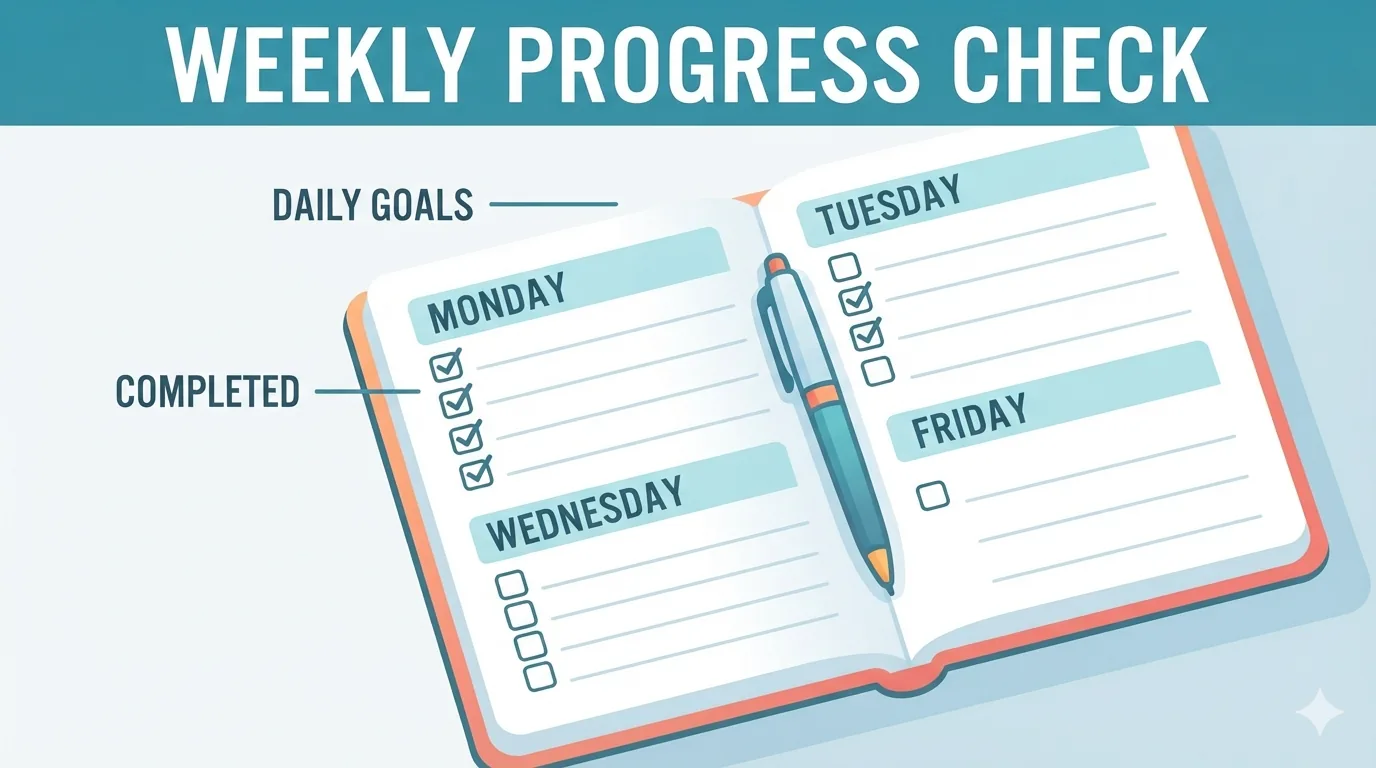
Simple tracking methods — a habit tracker app, a paper streak calendar, or a basic checklist — give you visible proof of progress, which reinforces the behavior itself. Seeing a streak grow taps into the same reward mechanism that makes the habit loop work in the first place.
The goal is light tracking, not obsessive tracking. A single checkmark per day is enough; you don’t need detailed logs, metrics, or scores unless that level of detail genuinely motivates you. If tracking starts to feel like a chore, simplify it rather than abandoning the habit itself.
| Approach | Motivation-Based | System-Based |
|---|---|---|
| What drives action | How you feel that day | A pre-built cue and routine |
| Consistency | Unpredictable, drops when tired or busy | Stable regardless of mood |
| Setup effort | Low upfront effort | Requires initial planning (stacking, environment) |
| Long-term durability | Fades within weeks for most people | Becomes automatic over months |
Motivation vs. System: Which Actually Works?
Relying on motivation means waiting to feel inspired before acting — which works occasionally but fails as soon as motivation dips, which it inevitably does. A system-based approach removes that dependency by pre-deciding the cue, the action, and the reward in advance, so the habit runs on autopilot rather than on daily willpower.
This doesn’t mean motivation is useless — it’s often what gets a habit started in the first place. But the comparison table above shows why systems, not motivation, are what keep a habit alive past the first few weeks.
What to Do When You Miss a Day
Missing one day rarely derails a habit long-term. What matters is what happens next. A widely cited principle from author James Clear is “never miss twice” — treat a single missed day as a normal variation, but treat two missed days in a row as the moment to actively re-commit.
Instead of viewing a missed day as failure, treat it as data: what got in the way? A late meeting, poor sleep, an unclear cue? Adjust the plan for next time rather than abandoning the habit altogether. Most successful habit-builders have missed days in their history — what separates them is that they resumed quickly.
How Long Habit Formation Really Takes
The commonly repeated claim that habits take 21 days traces back to a 1960s book on self-image, not a controlled study on habit formation, and it doesn’t hold up under later research.

A 2010 study from University College London found that habits took an average of 66 days to become automatic, with a wide range of 18 to 254 days depending on the complexity of the behavior. Simpler habits, like drinking a glass of water, form faster than complex ones, like a full exercise routine — so expect months, not weeks, and don’t judge the process by a three-week mark.
A Sample Weekly Checklist to Get Started
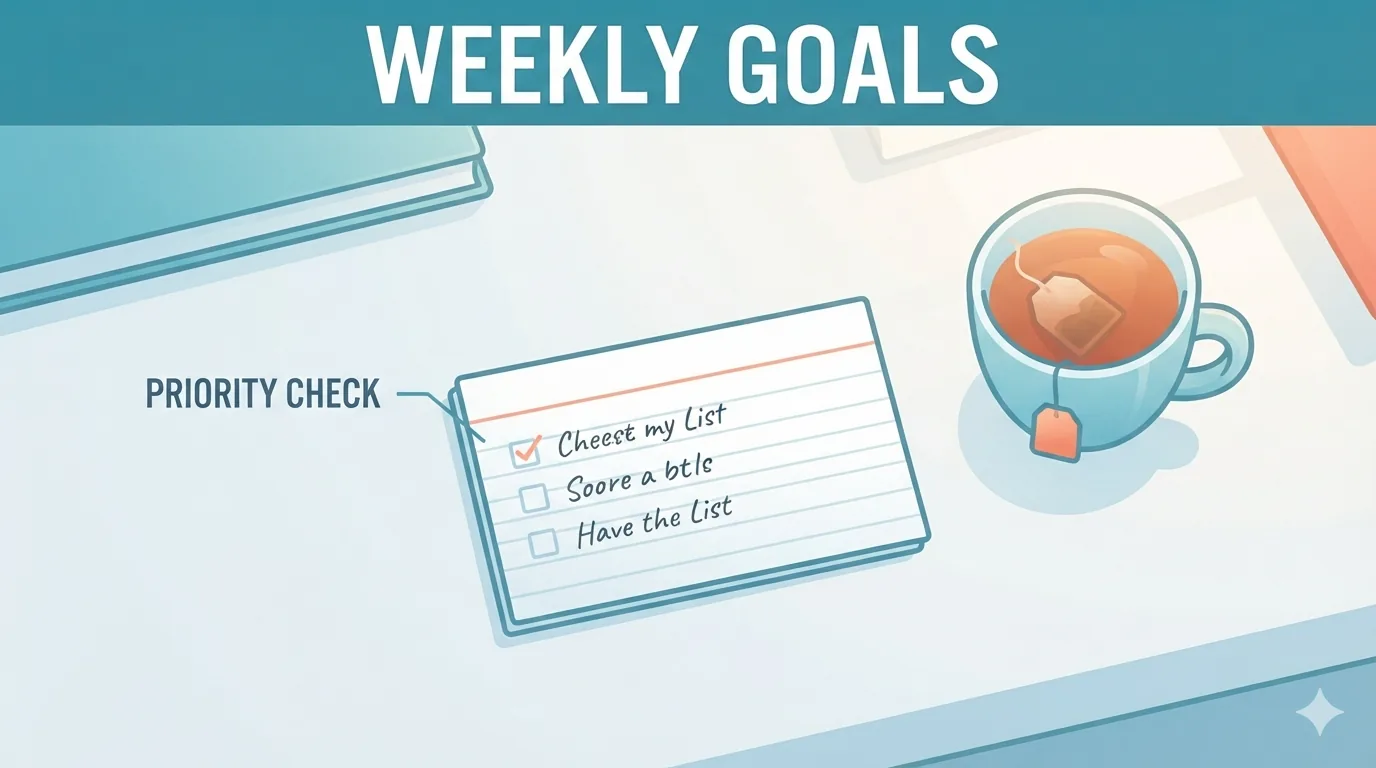
Use this as a starting template for your first week with a new habit:
- Day 1: Choose one habit and shrink it to a two-minute version
- Day 2: Pick an existing routine to stack it onto
- Day 3: Adjust your environment to make the habit easier to start
- Day 4: Set up a simple tracker (app, calendar, or checklist)
- Day 5: Complete the habit even if you skip the “ideal” version
- Day 6: If you missed a day, resume immediately — don’t skip twice
- Day 7: Review the week and decide whether to keep the habit as-is or expand it slightly
Frequently Asked Questions
How long does it really take to build a habit?
On average around two months, though it can range from about three weeks to eight months depending on how complex the behavior is and how consistently it’s repeated.
What if I have no time?
Shrink the habit to two minutes or less. The time commitment isn’t the goal early on — showing up consistently is what builds the automatic behavior.
Can I build multiple habits at once?
The evidence is mixed. Some research suggests focusing on one habit at a time is more reliable, especially if you’ve struggled before, while other studies found that closely related habits (like sleep, exercise, and diet) can reinforce each other when built together. If you’re new to habit-building, starting with one is the safer bet.
What’s the difference between a habit and a routine?
In common usage, a habit is an automatic behavior triggered by a specific cue with little conscious thought involved, while a routine is a sequence of actions you deliberately choose to follow, which may or may not become automatic over time.
Key Takeaways
- Design a cue and reward instead of relying on motivation
- Start with a two-minute version of the habit
- Stack the new habit onto something you already do
- Make good habits easy and bad habits inconvenient
- Track lightly, and never miss two days in a row
- Expect months, not weeks, before it feels automatic
- Lally, P., van Jaarsveld, C.H.M., Potts, H.W.W., Wardle, J. (2010). How are habits formed: Modelling habit formation in the real world. European Journal of Social Psychology.
- Duhigg, C. (2012). The Power of Habit: Why We Do What We Do in Life and Business.
- Clear, J. (2018). Atomic Habits: An Easy and Proven Way to Build Good Habits and Break Bad Ones.
Want more comparisons and buying guides?
Citing this article
Source: Atovia (Atovia). https://atovia.kr