
⚠️ This page connects you to Atovia’s partners and affiliate markets. We may receive a commission from affiliate partners for activities made through these links. Discount offers may change at any time according to policy! Rest assured, there are no additional costs to you! We hope this saves you time in finding the right items!
Walk down any supplement aisle and you will find dozens of vitamin D3 plus K2 products. Their doses, K2 forms, and quality claims differ widely. This guide gives you a method for comparing them instead of a ranked product list, so you can pick a product that fits your needs without overpaying or taking more than necessary.
One safety note up front: vitamin K, including K2, can interfere with blood thinners such as warfarin. If you take one, talk with your prescriber or pharmacist before starting any K2 product. This article is educational and is not medical advice.
- Why Vitamin D3 and K2 Are Often Paired
- Who May Benefit From a D3 and K2 Supplement
- D3 Dosage: What the Labels Mean (IU vs. mcg, RDA vs. Upper Limit)
- K2 Forms Compared: MK-7 vs. MK-4
- How to Read a Supplement Facts Panel
- Third-Party Testing: USP, NSF, and ConsumerLab Marks
- Capsule, Softgel, Liquid, or Gummy: Which Format Works Best
- Comparison Table: Key Features to Weigh Across Product Types
- Buyer’s Checklist: 8 Things to Verify Before You Buy
- Safety First: Blood Thinners, Calcium, and Who Should Ask a Doctor
- When and How to Take D3 and K2 (Timing, Fat, Consistency)
- Frequently Asked Questions
- Conclusion and Next Steps
- D3 tends to raise vitamin D levels more effectively than D2, and K2 is commonly added for calcium-related support.
- Check the K2 form (MK-7 or MK-4) and the amount in mcg.
- Look for USP, NSF, or similar independent third-party verification.
- K2 can interfere with warfarin, so medical guidance comes first.
Why Vitamin D3 and K2 Are Often Paired
Vitamin D3 (cholecalciferol) helps your body absorb calcium from food. Vitamin K2 is one form of vitamin K. Vitamin K-dependent proteins, such as osteocalcin and matrix Gla protein, are involved in how the body handles calcium. That is the main reason the two nutrients are sold together.
The evidence for the combination is still developing. Trials looking at bone density, fractures, and heart health have produced mixed results, so a combo product should not be treated as a guaranteed benefit. Think of it as a convenient way to get both nutrients, not as a treatment.
D3 is the form most products use because it tends to raise blood levels of vitamin D more effectively than D2 in most studies.

Who May Benefit From a D3 and K2 Supplement
Some groups are more likely to have low vitamin D and may want to discuss supplementation with a clinician:
- Older adults, whose skin makes vitamin D less efficiently
- People with limited sun exposure, including those who live at northern latitudes or spend most days indoors
- People with darker skin, which produces less vitamin D from the same amount of sunlight
- People with medical conditions that affect fat absorption or vitamin D metabolism
- Anyone whose blood test shows a low vitamin D level

This list describes who may want to ask a clinician, not who is guaranteed to benefit. A blood test is the most reliable way to learn where you stand.
D3 Dosage: What the Labels Mean (IU vs. mcg, RDA vs. Upper Limit)
Labels may list vitamin D in IU (international units), mcg (micrograms), or both. The conversion is simple: 40 IU equals 1 mcg. For example, a 2,000 IU softgel provides 50 mcg.
The U.S. reference values from the NIH Office of Dietary Supplements are:
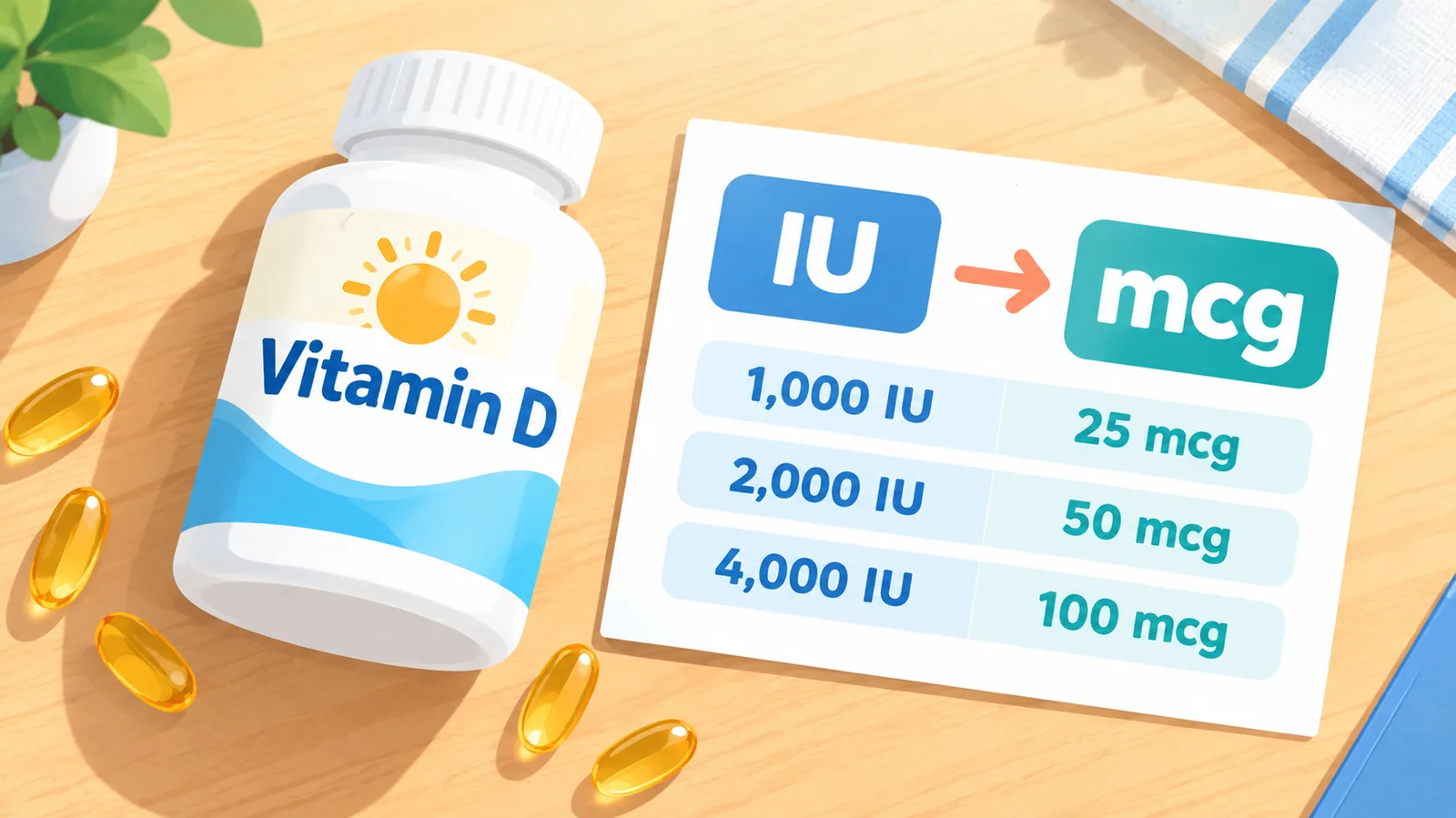
- RDA: 600 IU (15 mcg) per day for most adults through age 70, and 800 IU (20 mcg) after age 70
- Tolerable Upper Intake Level: 4,000 IU (100 mcg) per day for adults. Limits for children are lower: 2,500 IU for ages 1 to 3 and 3,000 IU for ages 4 to 8.
Combo products on the market often contain roughly 1,000 to 5,000 IU of D3 per serving. That is a pattern, not a recommendation. Some products exceed the 4,000 IU upper limit, so check the serving size carefully. Your own target dose depends on your diet, sun exposure, and blood level, and a clinician can help you set it.
K2 Forms Compared: MK-7 vs. MK-4
K2 comes in several forms called menaquinones (MK). Supplements mostly use two of them:
- MK-7: Typically made by fermenting natto (fermented soybeans). It stays in the blood for days, so it is often dosed once a day in the range of roughly 45 to 200 mcg.
- MK-4: Typically made synthetically. It clears from the blood within hours, and amounts on labels vary widely from product to product.
Neither form has its own recommended intake. The NIH sets an Adequate Intake for vitamin K overall: 90 mcg per day for adult women and 120 mcg per day for adult men. No upper limit has been set for vitamin K, but that does not mean everyone can take any amount, especially people on anticoagulants. Because MK-7 is typically derived from soy, check allergen statements if you have a soy allergy.
How to Read a Supplement Facts Panel
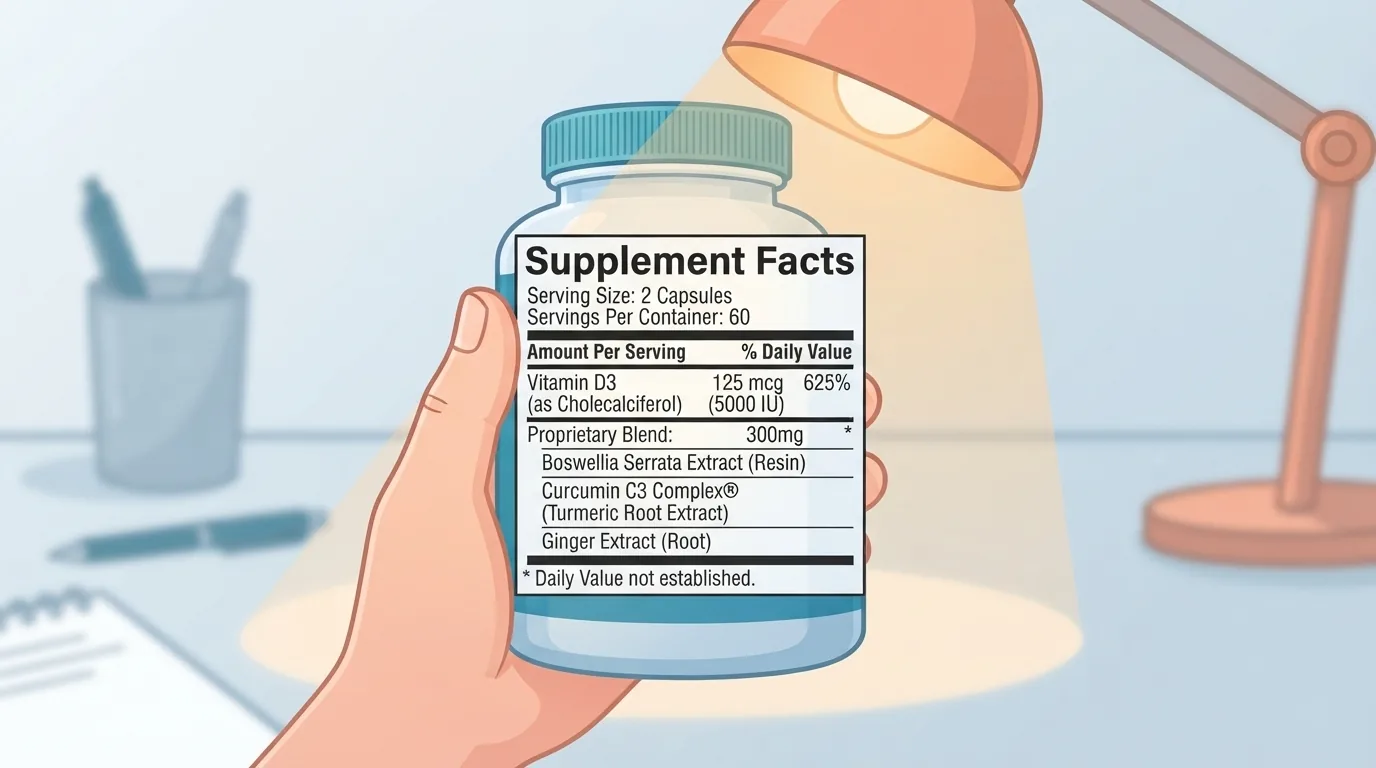
The Supplement Facts panel holds most of what you need. Check these items in order:
- Serving size: Is a serving one capsule or two? Doses on the label apply per serving.
- Vitamin D3 amount: Look for cholecalciferol, listed in IU or mcg.
- Vitamin K2 form and amount: The label should name MK-7 or MK-4 and give the amount in mcg.
- Other ingredients: Look at the carrier oil (such as olive or MCT oil), fillers, and flavorings.
- Allergens and diet fit: Check for soy, gelatin, and similar ingredients if they matter to you.
- Expiration or best-by date: Potency can fall over time.
Third-Party Testing: USP, NSF, and ConsumerLab Marks
In the United States, dietary supplements are not approved by the FDA before they are sold. Independent testing programs fill part of that gap. USP and NSF programs verify ingredient identity, that the amount matches the label, and that contaminants stay under set limits. ConsumerLab runs its own independent testing and review and awards an Approved Quality seal. That seal is a review result, not a government certification.
🛒 Recommended Product
A vague claim such as “lab tested” is weak on its own. Look for a named testing organization and a seal you can look up on that organization’s website. If a brand names its lab and publishes results, that is a good sign.
Capsule, Softgel, Liquid, or Gummy: Which Format Works Best
Vitamin D is fat-soluble, so taking it with food matters more than the format you choose. Each format still has trade-offs:
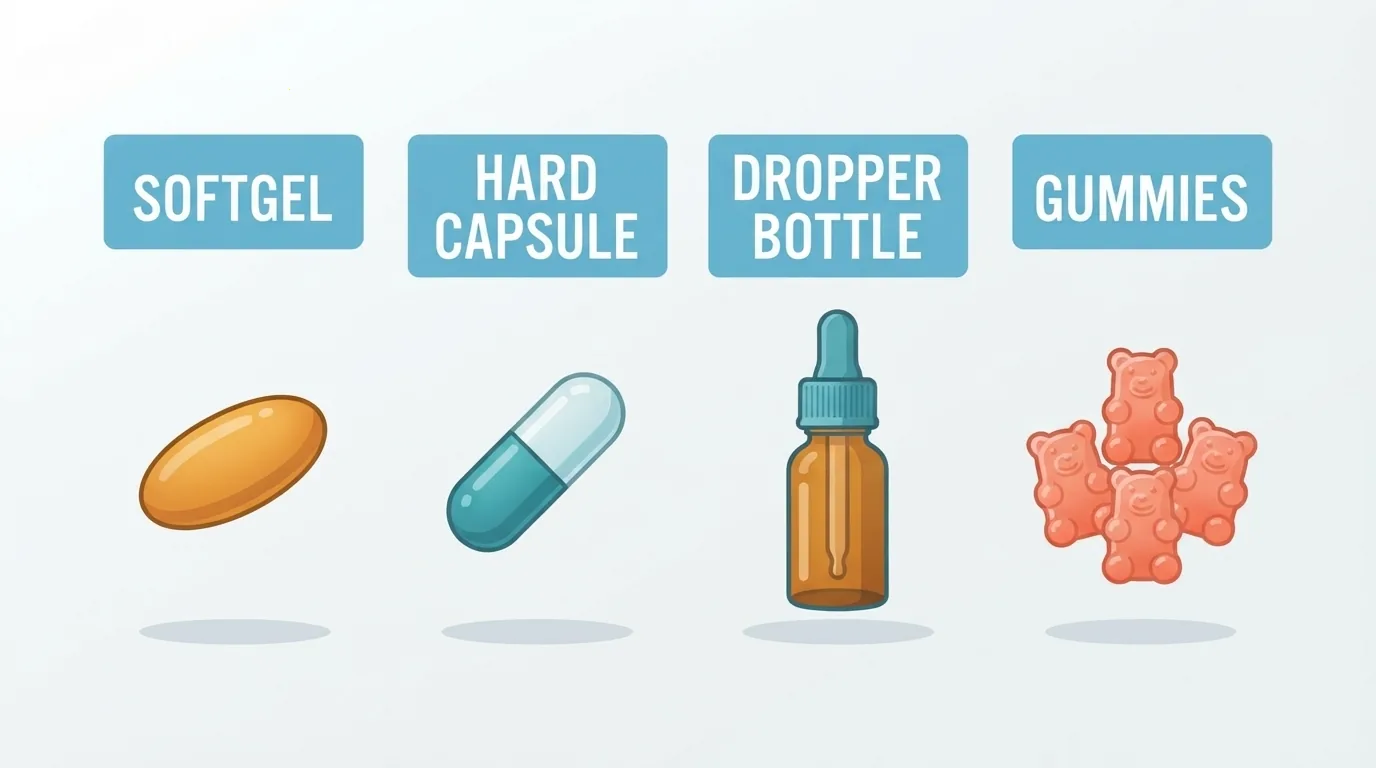
- Softgels: The oil inside can aid absorption, and they are easy to dose. They can be large for some people.
- Capsules: Often smaller, and some contain an oil-based fill. They suit people who prefer a simple pill.
- Liquid drops: Dose is flexible, which helps people who have trouble swallowing pills. Measuring takes care.
- Gummies: Easy to take, but label accuracy may vary more in some gummy products, and some contain added sugar. Check the serving size, since a serving is often more than one piece.
Comparison Table: Key Features to Weigh Across Product Types
This table describes general patterns, not specific brands or prices. Always confirm the details on the product’s own label.
| Feature | Softgel / Capsule | Liquid Drops | Gummy |
|---|---|---|---|
| Typical D3 range per serving | Often about 1,000 to 5,000 IU | Varies by drop count; check the label | Often lower per piece; check the serving size |
| Common K2 form | Usually MK-7, sometimes MK-4 | Usually MK-7 | Usually MK-7 |
| Convenience | Simple and portable | Needs careful measuring | Easy to take |
| Dose flexibility | Fixed per unit | High; adjustable by drops | Fixed per piece, often several pieces per serving |
| Typical cost tier | Lower to mid | Mid | Mid to higher |

Buyer’s Checklist: 8 Things to Verify Before You Buy
- D3 form: Look for vitamin D3 (cholecalciferol), since D3 tends to raise blood levels more effectively than D2.
- Dose fit: Compare the D3 amount per serving with your clinician’s guidance and the 4,000 IU upper limit.
- K2 form and amount: The label should name MK-7 or MK-4 and give the amount in mcg.
- Third-party seal: Look for USP, NSF, or a named independent lab you can verify.
- Minimal fillers: Fewer additives and no unnecessary sweeteners or colors.
- Allergen and diet fit: Check for soy, gelatin, gluten, or animal-derived ingredients that matter to you.
- Cost per serving: Divide the price by servings per container, not by bottle count.
- Brand transparency: Clear contact details, lot numbers, and published testing results.
Safety First: Blood Thinners, Calcium, and Who Should Ask a Doctor
If you take warfarin or a similar vitamin K antagonist, do not start a K2 supplement without your prescriber’s approval. Vitamin K can reduce how well these medicines work, and steady vitamin K intake matters for stable results.
Other situations where you should ask a clinician or pharmacist first:

- High-dose D3: Very high vitamin D intake can raise blood calcium (hypercalcemia), which can cause nausea, weakness, and kidney problems.
- Kidney stones or high calcium: Excess supplemental calcium is linked to kidney stone risk in susceptible people.
- Pregnancy or breastfeeding: Needs and safe amounts differ.
- Children: Upper limits are lower than for adults.
- Other medications and chronic conditions: Some drugs affect vitamin D or vitamin K handling.
When and How to Take D3 and K2 (Timing, Fat, Consistency)
Because both D3 and K2 are fat-soluble, take them with a meal that contains some fat, such as eggs, avocado, nuts, or olive oil. There is no strong evidence that morning beats evening, so pick a time you will stick with.

Consistency matters more than precision. Taking it at the same time each day, with the same meal, makes it easier to remember and keeps your intake steady. If you take other medicines, ask a pharmacist whether timing needs to be separated.
Frequently Asked Questions
Can I take vitamin D3 without K2?
Yes. D3 is sold on its own, and many people take it that way. Whether adding K2 provides extra benefit is still being studied, so it is a choice to discuss with your clinician.
Is it safe to take K2 every day?
No upper limit has been set for vitamin K, and typical supplement amounts are generally well tolerated by many healthy adults. It is not appropriate for everyone, particularly people on warfarin, so check with your prescriber or pharmacist first.

How much MK-7 is in a typical supplement?
MK-7 amounts commonly fall in the range of about 45 to 200 mcg per serving. That is a market pattern rather than a recommended dose.
What is the best time of day to take them?
No time of day has been shown to work better than another. Take them with a meal that contains fat, and keep the timing consistent.

How long until a blood test shows a change?
Your clinician sets the retest schedule. Retesting is commonly done several weeks to about three months after a dose change.
Conclusion and Next Steps
A good D3 and K2 supplement is one that fits your needs and is verifiably made. Use this path:
- Ask a clinician about a vitamin D blood test, and about K2 if you take blood thinners.
- Pick a D3 dose that fits your guidance and stays within the upper limit.
- Choose a K2 form (MK-7 or MK-4) and confirm the mcg amount.
- Look for a USP, NSF, or similarly verifiable independent seal.
- Take it with a fat-containing meal at a consistent time.
Want a quick reference when you shop? Download or bookmark our one-page supplement label checklist.
Get the Free Label Checklist
- National Institutes of Health, Office of Dietary Supplements. Vitamin D Fact Sheet for Health Professionals. https://ods.od.nih.gov/factsheets/VitaminD-HealthProfessional/
- National Institutes of Health, Office of Dietary Supplements. Vitamin K Fact Sheet for Health Professionals. https://ods.od.nih.gov/factsheets/VitaminK-HealthProfessional/
- U.S. Pharmacopeia (USP). Dietary supplement verification information. https://www.usp.org/
- NSF International. Supplement certification information. https://www.nsf.org/
Want more comparisons and buying guides?
Citing this article
Source: Atovia (Atovia). https://atovia.kr