⚠️ This page connects you to Atovia’s partners and affiliate markets. We may receive a commission from affiliate partners for activities made through these links. Discount offers may change at any time according to policy! Rest assured, there are no additional costs to you! We hope this saves you time in finding the right items!
Your knees ache by minute eight. Your hips feel locked. By minute ten, your lower back is slumping and all you can think about is when the timer will go off. Most people blame their discipline, but the usual culprit is simpler: the seat under you is the wrong height for your body and your posture.
As an Amazon Associate I earn from qualifying purchases.
🛒 Recommended Product
This guide gives you a criteria-based way to choose the best meditation cushion for your practice. You will learn the difference between a zafu, a zabuton, and a meditation bench, how fill materials behave, how to match height to your sitting posture, and which type of seat tends to suit beginners, long sits, tight hips, and travel. Brands and prices change often, so this guide focuses on what to look for rather than naming specific products.
- Why Your Cushion Matters More Than You Think
- Zafu, Zabuton, Bench, or Support Cushion: Types Explained
- How to Choose: A Practical Buying Checklist
- Fill Materials Compared: Buckwheat Hull, Kapok, Cotton, and Foam
- Comparison Table: Cushion Types at a Glance
- Best for Beginners
- Best for Long Sits and Back Comfort
- Best for Tight Hips and Sensitive Knees
- Best Travel and Budget Options
- Cushion Size and Height by Body Type and Posture
- Care, Cleaning, and When to Replace Your Cushion
- Common Buying Mistakes to Avoid
- Frequently Asked Questions
- Seat height: A seat that lifts your hips slightly above your knees can reduce strain for some people. Start in the 4 to 7 inch range and adjust to your body.
- Fill type: Buckwheat hulls are moldable and adjustable, kapok is softer and lighter, and foam is quiet and consistent in shape.
- Posture match: Choose the seat for the way you actually sit: Burmese, cross-legged, kneeling, or on a chair-height support.
- Budget tier: Budget, mid-range, and premium options all exist. Spend where it affects comfort: adjustability, a removable cover, and stable construction.
Why Your Cushion Matters More Than You Think
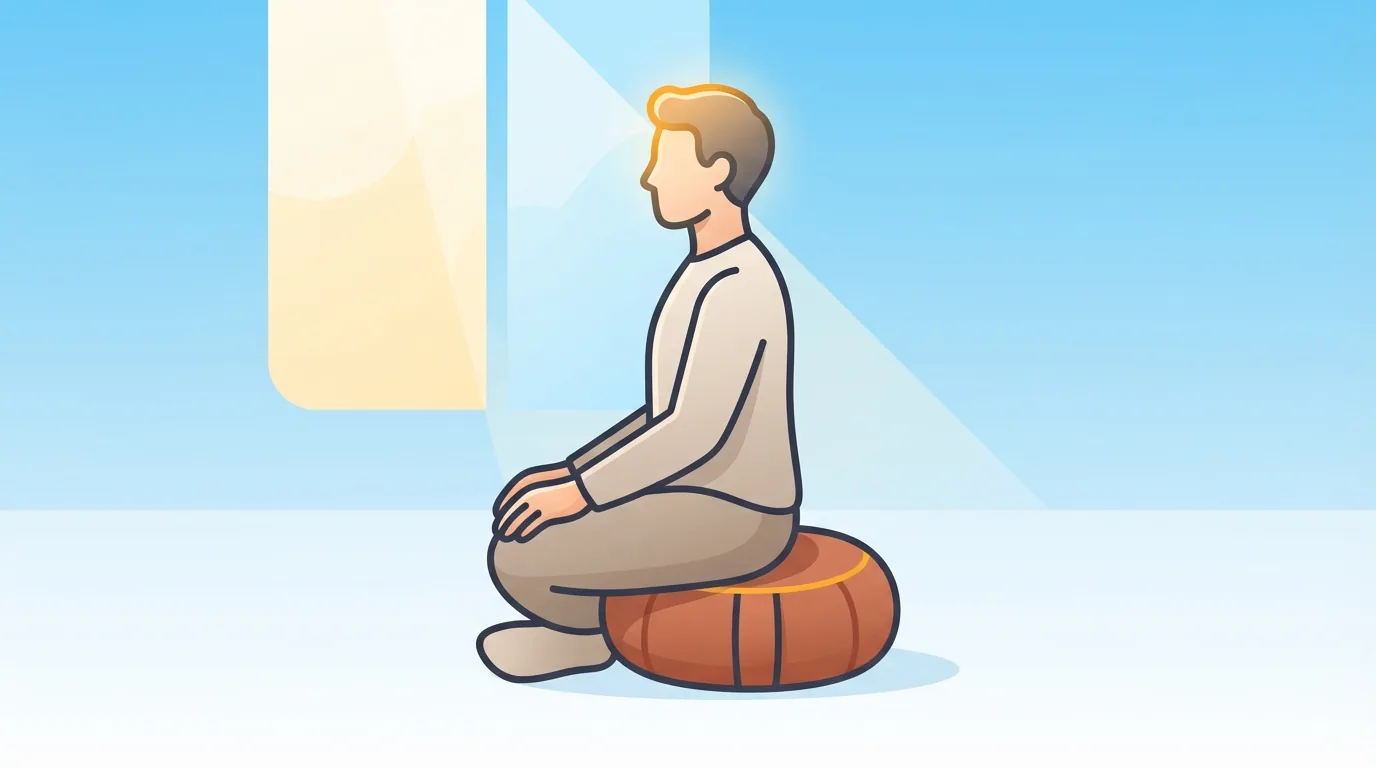
When you sit on the floor, your hips, knees, ankles, and spine all work together to hold you upright. If your hips sit lower than your knees, your pelvis tends to tilt backward and your lower back rounds. That slump can make a short sit feel long and a long sit feel impossible.
A raised seat that lets your hips rest slightly above your knees is a widely taught way to ease this. It can help your pelvis tilt gently forward so your spine stacks more naturally, and it may take pressure off your knees and ankles. Many sitters find this helps them hold a steadier posture with less effort.
Common discomfort causes a cushion can address include:
- A seat that is too low, which pulls the knees up and the back into a curve
- A seat that is too soft, which sinks and tilts you backward
- A seat that is too narrow or too high for your leg length
- No padding under the knees and ankles on a hard floor
Comfort is personal, and a cushion is not a treatment for any condition. If you have persistent pain in your back, hips, or knees, talk with a healthcare professional before changing your seated practice.
Zafu, Zabuton, Bench, or Support Cushion: Types Explained
Before comparing products, it helps to know the vocabulary. Each type below solves a slightly different problem.
Zafu
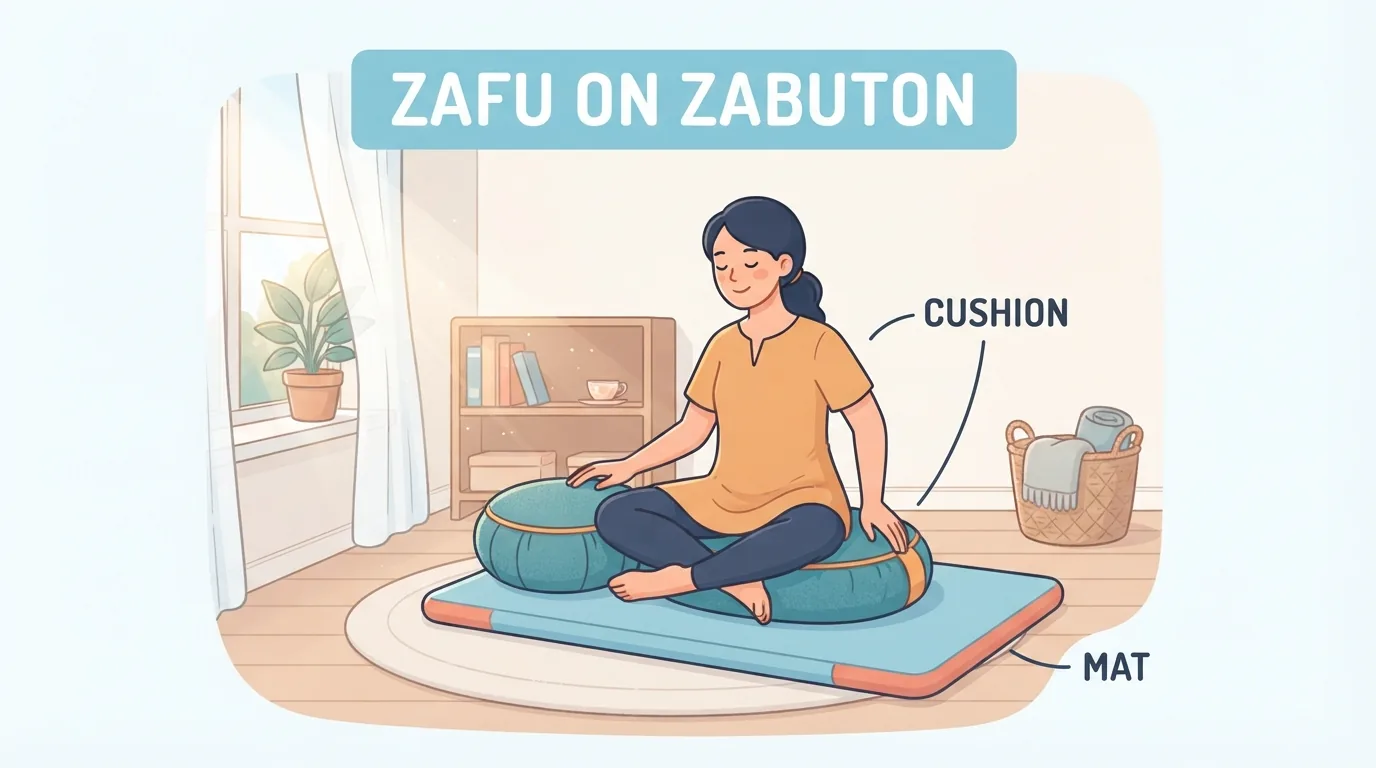
A zafu is a round, often pleated cushion that raises your hips off the floor. It is the classic choice for cross-legged and Burmese sitting. Most are filled with buckwheat hulls or kapok.
Zabuton
A zabuton is a flat, rectangular mat that sits under the zafu. It cushions your knees and ankles and protects them from a hard floor. Together, zafu and zabuton form the traditional floor-sitting setup.
Meditation bench
A meditation bench is a low, angled seat used in a kneeling posture, sometimes called seiza. Your weight rests on the seat and shins instead of through the ankles, which can feel better for people who find cross-legged sitting difficult. Some benches are fixed and some fold flat.
Support cushion or wedge
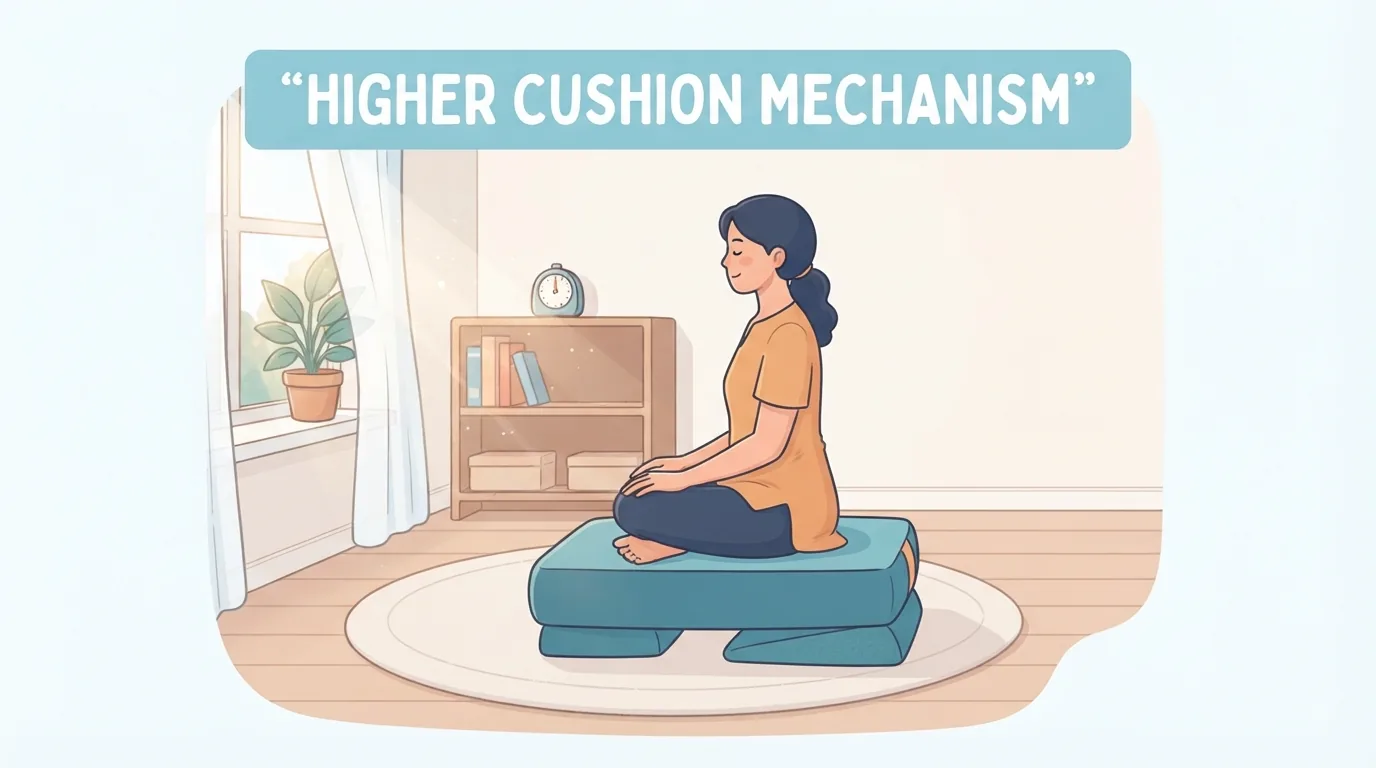
A crescent cushion, wedge, or firm rectangular support can be used on its own or stacked with a zafu. These are useful for fine-tuning height and tilt, or for sitting in a chair-adjacent posture.
How to Choose: A Practical Buying Checklist
Use this checklist to compare any cushion or bench, regardless of brand. Criteria matter more than superlatives like “most comfortable.”
- Height: Look for adjustable height or a model close to your target range. A typical starting range is roughly 4 to 7 inches when compacted. Adjust to your body.
- Diameter or seat width: A wider seat gives more room to settle your legs, while a smaller one packs away more easily.
- Firmness: Firm enough to hold your hips in place without sinking, but with enough give to feel comfortable.
- Fill access: A zipper on the inner liner or cover lets you add or remove fill to change height.
- Cover: A removable cover makes washing easier. Cotton is common.
- Handle: A sturdy carry handle matters if you move your cushion between rooms or classes.
- Stability: A cushion or bench that stays put on your floor avoids constant readjusting.
- Price tier: Decide whether you are shopping budget, mid-range, or premium, and compare features within that tier.
- Return policy: Check the seller’s return policy before buying, since fit is hard to judge without sitting on it.
Fill Materials Compared: Buckwheat Hull, Kapok, Cotton, and Foam
Fill changes how a cushion feels, how stable it is, and how much you can customize it. Here is how the common options compare.
- Buckwheat hulls: The most common zafu fill. They mold to your body, hold their shape well, and let you add or remove fill to change height. They make a soft rustling sound when you shift and are heavier than other fills.
- Kapok: A plant fiber that feels softer and springier. It is lighter than buckwheat but tends to compress over time, so it may need fluffing or refilling.
- Cotton: Often used for covers and sometimes for batting or zabuton fill. It is soft and breathable but less supportive for raising the hips on its own.
- Foam: Lighter and quiet, with a consistent shape. It is less adjustable than loose fill and can feel firmer or bouncier depending on density.
What tends to suit you depends on how you sit and how sensitive you are to noise, weight, and firmness. Some trial and adjustment is normal.
Comparison Table: Cushion Types at a Glance
Use this table as a quick starting point. Heights are typical starting ranges, and price tiers are general rather than exact.
| Type | Best Posture | Fill | Typical Height (Starting Range) | Price Tier | Best For |
|---|---|---|---|---|---|
| Buckwheat zafu | Burmese, cross-legged | Buckwheat hulls | About 4 to 7 inches, adjustable | Mid-range | Custom height and a stable seat |
| Kapok zafu | Cross-legged | Kapok fiber | About 4 to 6 inches, softens over time | Mid-range | A softer, lighter feel |
| Foam cushion | Cross-legged, supported sitting | Foam | Fixed, varies by model | Budget to mid-range | Quiet, low-maintenance use |
| Zabuton mat | Any floor posture | Cotton or kapok batting | Low and flat | Budget to mid-range | Padding for knees and ankles |
| Meditation bench | Kneeling (seiza) | Wood, often with a padded seat | Varies by leg length | Mid-range to premium | Taking weight off ankles and shins |
| Travel or inflatable seat | Cross-legged, short sits | Air or compact foam | Varies, often adjustable | Budget | Portability and storage |
Best for Beginners
Best for: New sitters who do not yet know their ideal height or posture.
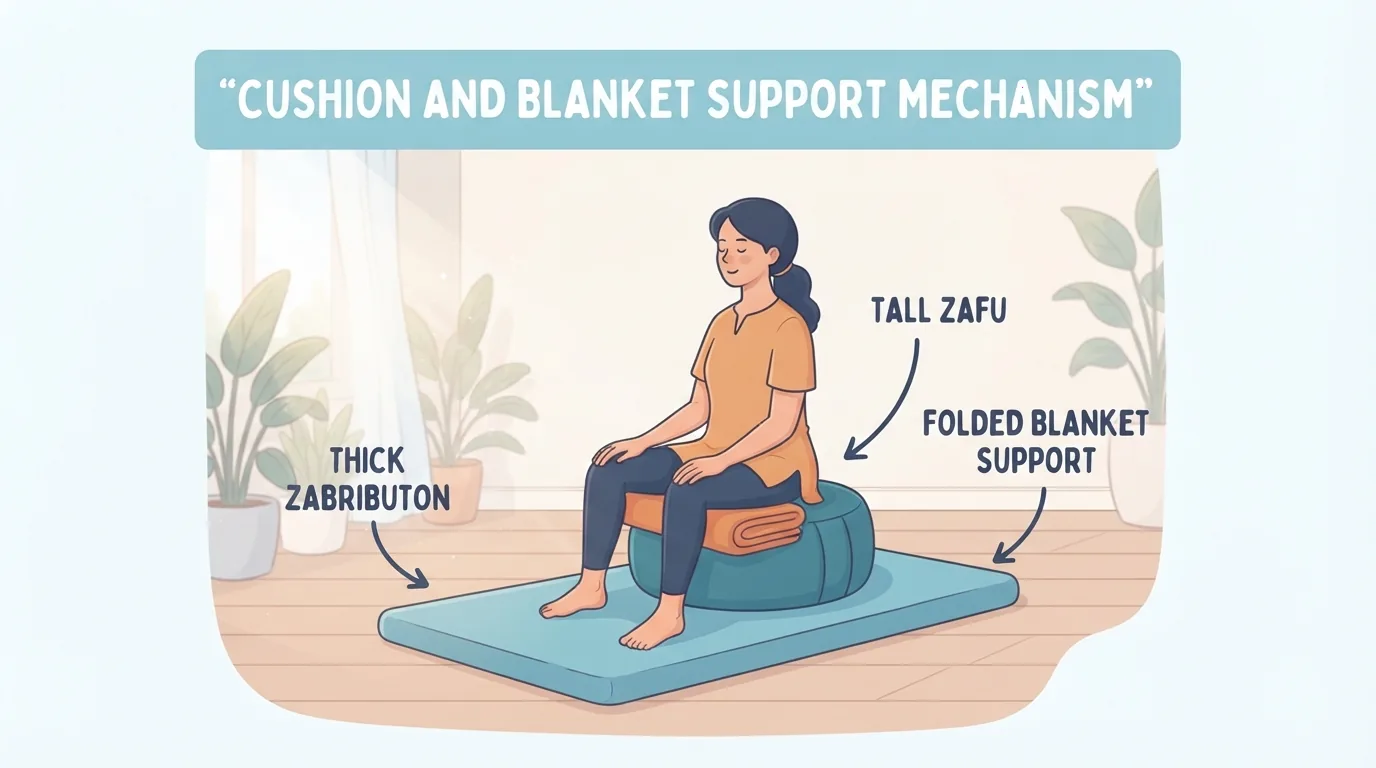
What to look for: An adjustable-fill buckwheat zafu paired with a zabuton. Adjustability lets you start higher or lower and fine-tune as your hips and knees get used to sitting.
What to skip: Very soft pillows that sink under your weight, and cushions with no way to change height.
Trade-off: Adjustable cushions can be heavier and slightly noisier, and a two-piece setup takes more floor space.
Best for Long Sits and Back Comfort
Best for: Sitters who hold a posture for 30 minutes or more and notice their lower back tiring first.
What to look for: A higher, firm seat that helps your pelvis tilt slightly forward, or a meditation bench for kneeling. A stacked setup, such as a zafu on a zabuton with a small wedge, can also help you fine-tune tilt.
What to skip: Seats that compress quickly over a long session, and anything that leaves your knees well above your hips.
🛒 Recommended Product
Trade-off: A higher seat can feel less stable until you are used to it, and benches take time to adapt to if you are new to kneeling.
Remember, a cushion may feel more comfortable, but it is not a substitute for medical guidance if you have ongoing back pain.
Best for Tight Hips and Sensitive Knees
Best for: Sitters whose knees float above their hips or ache after a few minutes.
What to look for: A taller zafu or stacked support so your knees can rest lower, plus a thick zabuton or extra padding under the knees. Small wedges or folded blankets can fill gaps beneath the knees. A bench or a chair-height support can be gentler if floor sitting is uncomfortable.
What to skip: Low, flat cushions that force the hips to sit lower than the knees.
Trade-off: A taller setup can reduce strain for some people, but it takes more space and may need regular readjusting as your flexibility changes.
Best Travel and Budget Options
Best for: Short sits away from home, occasional practice, or anyone testing the habit before investing.
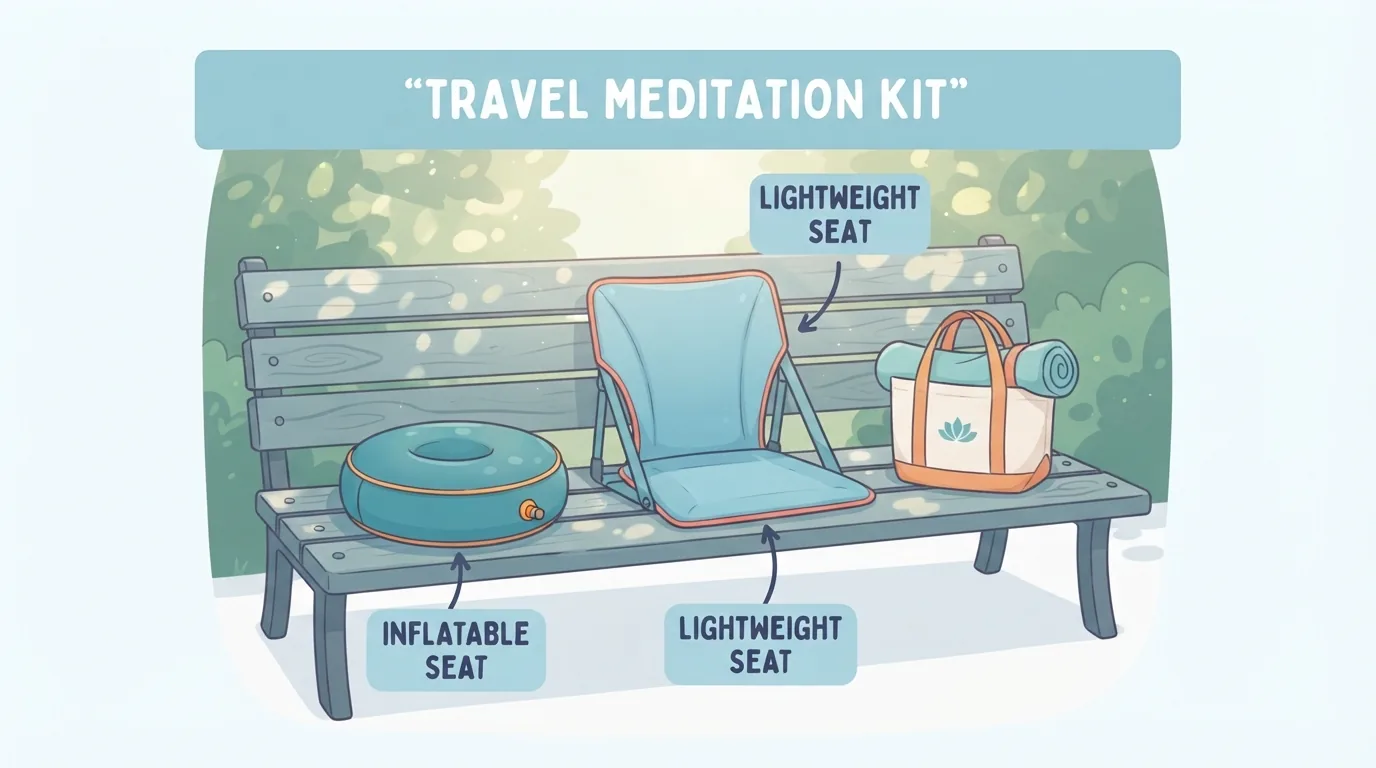
What to look for: Inflatable, foldable, or lightweight foam seats that pack small, and simple foam cushions or entry-level zafus for home use. A carry handle or storage bag is helpful for travel.

What to skip: Very thin pads that offer no lift, and seats that slide easily on smooth floors.
Trade-off: Travel models pack small and weigh little, but they are usually less stable and may be less comfortable for long sits. Budget options often skip adjustability, so check the return policy if the height turns out to be wrong.
Cushion Size and Height by Body Type and Posture
There is no single correct height. Hip flexibility, leg length, and torso length all change what feels right. Use these as starting points, then adjust by adding or removing fill or stacking supports.
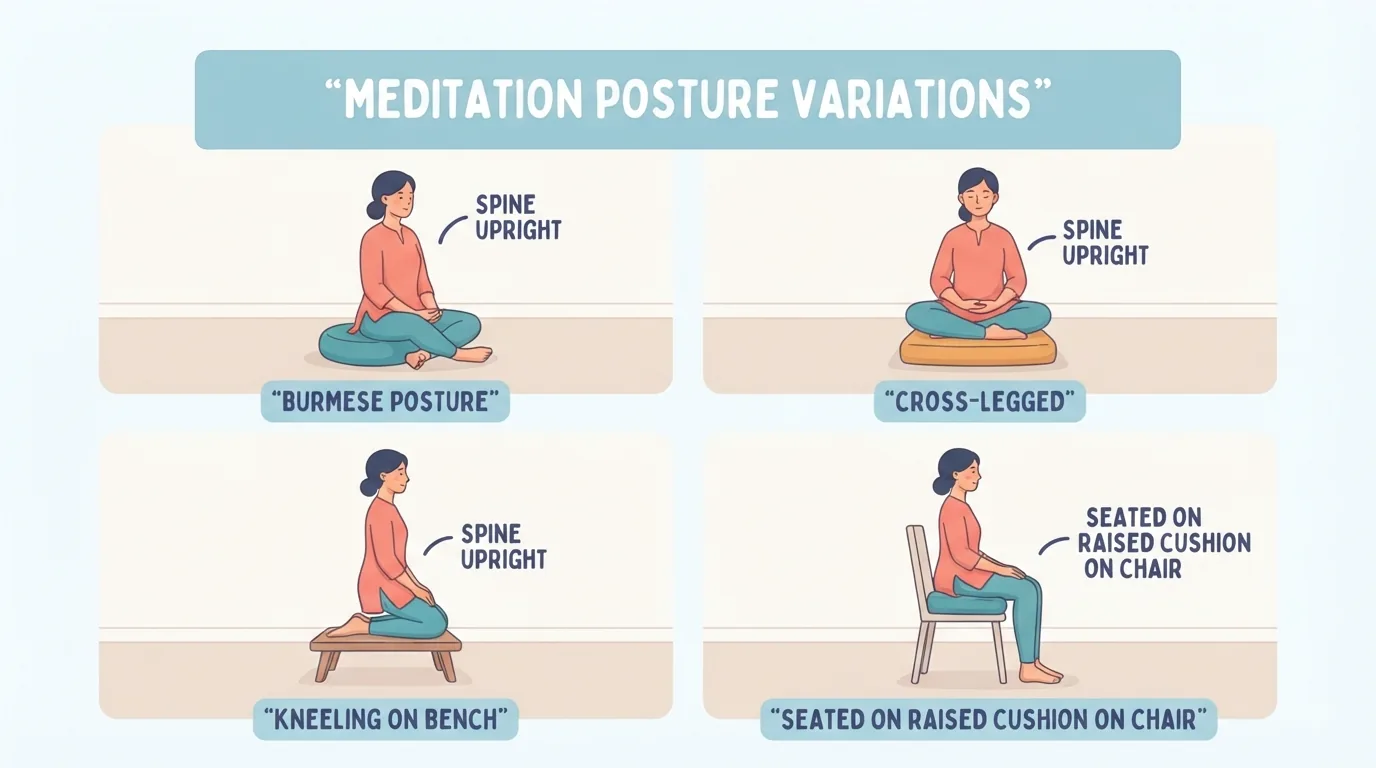
- Burmese posture: Legs are folded with one foot in front of the other, both resting on the floor. A moderate height, often toward the middle of the 4 to 7 inch range, is a common starting point. Zabuton padding under the knees helps.
- Cross-legged posture: Feet are tucked under opposite thighs or knees. Tighter hips usually benefit from a higher seat so the knees can drop.
- Kneeling (seiza): You sit on your heels or, more comfortably for many, on a bench or a cushion placed between or over your calves. Choose a bench height that fits your leg length so your shins are not pinched.
- Chair-adjacent or raised support: If the floor is not comfortable, a firm cushion on a chair or a taller support lets you sit with feet flat and hips slightly higher than knees.
Quick fit check: Sit for several minutes. Your hips should sit slightly above your knees, your spine should feel upright without effort, and your legs should not tingle or go numb quickly. If they do, adjust the height or switch posture.

Care, Cleaning, and When to Replace Your Cushion
- Remove the cover to wash. Follow the maker’s care label for temperature and drying.
- Do not machine-wash hull fill. Machine-washing buckwheat hulls is generally not advised. Spot clean the liner and air the fill instead.
- Refresh the fill. Open the liner, spread hulls on a tray to air out, and top up if the cushion has gone flat.
- Store it dry. Keep cushions away from damp areas, and avoid long periods in direct sun to protect fabric and fill.
Instead of counting years, watch how the cushion behaves. Replace or refill it when it flattens, loses its shape, or no longer holds your hips at a comfortable height.
Common Buying Mistakes to Avoid
- Choosing a seat that is too low. If your knees sit above your hips, the cushion likely is not doing its job.
- Choosing a seat that is too soft. A cushion that sinks tilts you backward and tires your back.
- Ignoring posture. A zafu built for cross-legged sitting may not suit kneeling, and the reverse is also true.
- Skipping the return policy. Fit is personal, so check the seller’s return policy before buying.
- Overlooking cover and fill access. A cushion you cannot adjust or wash becomes a problem later.
- Buying on price alone. Compare features inside your budget tier instead of picking the cheapest option.
Frequently Asked Questions
What height should my meditation cushion be?
A common starting range is roughly 4 to 7 inches when compacted. The right height lets your hips sit slightly above your knees. Adjust based on hip flexibility and leg length.

Is buckwheat or kapok better?
Neither is better for everyone. Buckwheat is moldable, adjustable, and stable, but heavier and a little noisy. Kapok is softer and lighter but tends to compress over time. What tends to suit you depends on your preferences.
Do I need a zabuton?
Not always, but it helps on hard floors. A zabuton cushions your knees and ankles and gives the zafu a slip-resistant base. On carpet or a thick rug, you may not need one.
How long do meditation cushions last?
It depends on the fill, how often you sit, and how you store it. Replace or refill it when it flattens, loses its shape, or no longer holds your hips at a comfortable height.
Can I use a meditation cushion for yoga?
Yes. Many people use a zafu or firm cushion as a seat or prop for seated poses and breathing practice. Check that the height and firmness suit the pose you are doing.
Conclusion
The best meditation cushion is the one that fits your body and the way you sit. Start with posture, pick a height in the right starting range, choose a fill that matches your preferences, and favor adjustability while you are still learning what works. Use the checklist and comparison table above to narrow your choices, and check the seller’s return policy before you commit. If you have persistent pain in your back, hips, or knees, talk with a healthcare professional before changing your seated practice.
Ready to find a seat that fits your practice? Browse our recommended cushions, benches, and supports.
Want more comparisons and buying guides?
Citing this article
Source: Atovia (Atovia). https://atovia.kr