
⚠️ This page connects you to Atovia’s partners and affiliate markets. We may receive a commission from affiliate partners for activities made through these links. Discount offers may change at any time according to policy! Rest assured, there are no additional costs to you! We hope this saves you time in finding the right items!
- Why Do Under-Eyes Look Bagged or Hollow?
- Bag or Hollow? A Simple Way to Tell
- Self-Care First: What May Help Puffiness
- Can Eye Cream Fix Bags or Hollows?
- Under-Eye Filler for Tear-Trough Hollows
- Filler Risks and What Off-Label Means
- Laser Resurfacing and Chemical Peels
- Skin Tone and Laser Safety
- Eyelid Surgery for Fat Bulges
- Side-by-Side: Which Option Fits Which Problem
- How to Choose a Clinician
- When Swelling Needs a Medical Visit
- FAQ
You slept a full night, yet the mirror says otherwise. Puffy lower lids, a hollow groove, or a dusky shadow can all make you look tired.
As an Amazon Associate I earn from qualifying purchases.
🛒 Recommended Product
Here’s the catch: those look-alike problems have different causes, so they need different fixes. There is no single best treatment, only the one that fits your cause.
This guide follows the order most people explore: self-care first, then fillers, lasers and peels, and finally surgery.
Key takeaways
- Bags can come from loose skin, protruding fat, pigment, or natural shadow.1
- Cold compresses, less salt, sleep, and a raised head may ease puffiness, but they do not correct structural bulges or deep hollows.2
- Under-eye filler adds volume to tear-trough hollows, is used off-label, and carries rare but serious risks.3
- Choose a clinician with real experience in eyelid procedures.4
Why Do Under-Eyes Look Bagged or Hollow?
Several different problems can look alike. What reads as an under-eye “bag” may be loose skin, fat that has moved forward, pigment, or a natural shadow.1
With age, the tissue around the eyes weakens. Fat can shift forward, and fluid can collect, which makes the area look swollen.12

Under-eye swelling is usually a cosmetic concern rather than a medical one.2 Not every case needs treatment.
Bag or Hollow? A Simple Way to Tell
A bag tends to sit out from the lower lid, while a hollow is a groove beneath it. Use this as a way to describe what you see, not as a diagnosis.
- Puffiness that bulges outward from the lid suggests a bag.
- A groove or dip running under the eye suggests a hollow.
- A dusky or colored area may involve pigment or shadow.
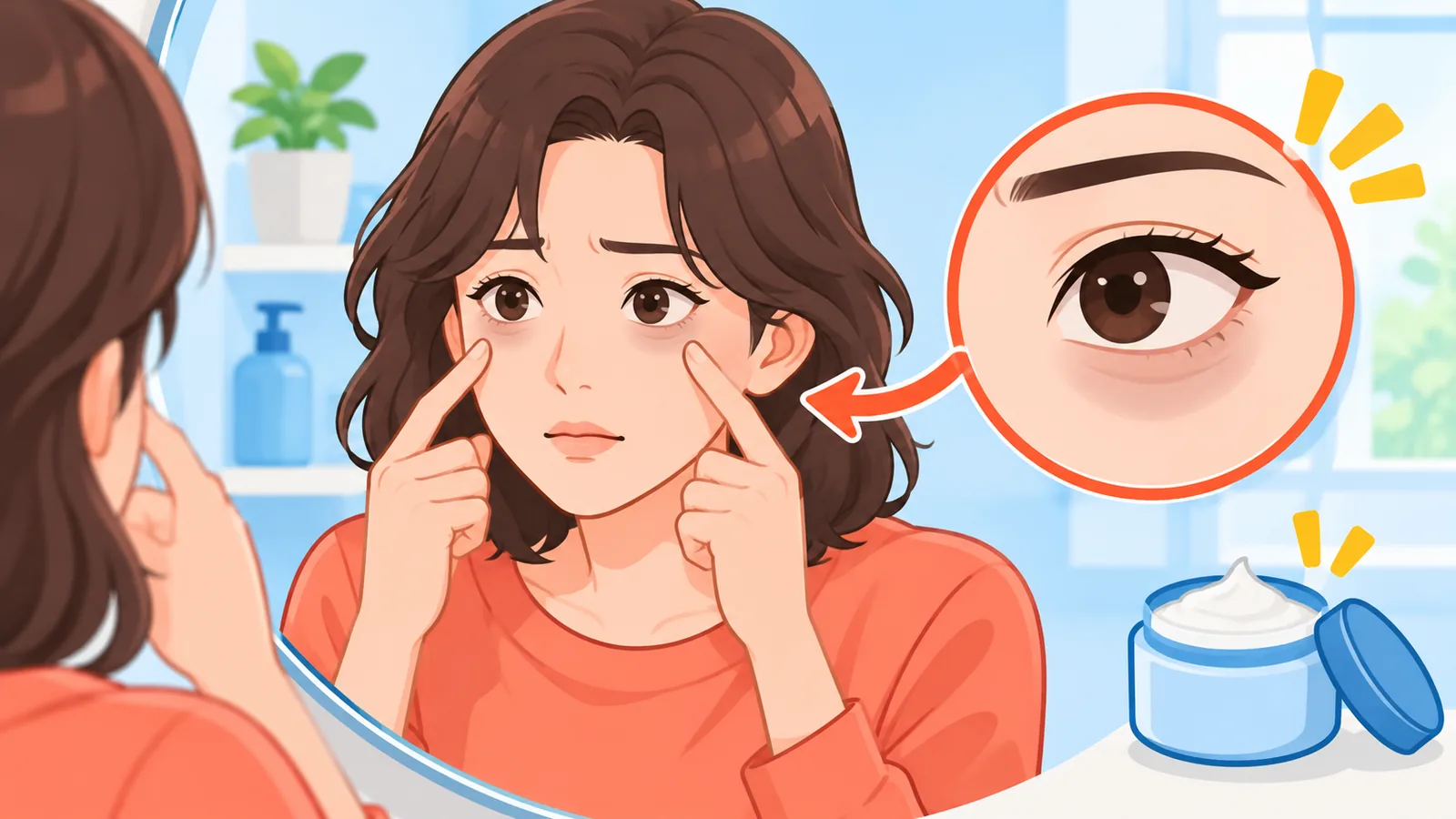
Many people have more than one of these at once. A clinician’s exam is the reliable way to tell them apart.
Self-Care First: What May Help Puffiness
Simple home steps may help with puffiness, but they do not remove fat bulges or fill deep hollows. They cost little and carry little risk, which is why they come first.
Cold compress, salt, sleep, and pillow height
Mayo Clinic lists a few habits that can ease swelling.2 These include a cold compress, cutting back on salt and on fluids close to bedtime, getting enough sleep, and sleeping with your head slightly raised.

If you wake up puffy and it settles by midday, this is the group of changes worth trying first.
When allergies may be involved
If allergies seem to play a role, Mayo Clinic suggests talking with a clinician about allergy treatment.2 Itching or irritation along with swelling is a good reason to raise it.
Can Eye Cream Fix Bags or Hollows?
The sources reviewed for this guide do not show that eye creams correct structural fat bulges or hollowing. Treat a cream as optional skin care rather than a treatment for either problem.

If you enjoy a gentle routine, that is fine. Just set your expectations accordingly, and be cautious of any product that promises to erase bags or fill hollows.
Under-Eye Filler for Tear-Trough Hollows
Filler is used to add volume to the hollow groove under the eye, known as the tear trough.3 It targets hollowing, not puffiness from protruding fat.
What filler is used for
The idea is simple: add volume where the groove has formed so the area looks smoother. AAO EyeWiki describes this as the purpose of tear-trough filler.3

Why a full eye and orbit exam comes first
Each patient needs an individual evaluation, including an exam of the eye and the surrounding orbit.3 That step helps decide whether filler suits your anatomy at all.
No source used here supports promising how long results last or how they will look, so be wary of anyone who does.
Filler Risks and What Off-Label Means
Off-label means a clinician is using a product around the eyes in a way that is not formally approved for that area. AAO EyeWiki describes eyelid filler injection as off-label use and lists a range of possible complications.3

Reported issues: lasting swelling, lumpiness, bluish tint
Reported problems include swelling that lingers, an uneven or lumpy surface, and a bluish discoloration.3 These are worth asking about before you agree to treatment.
Rare but serious: blood vessel blockage, vision loss
Rarer complications include blocked blood vessels and, in the most serious cases, blindness.3 They are uncommon, but they are the reason experience matters so much here.
Laser Resurfacing and Chemical Peels
Laser resurfacing and chemical peels are used to improve the look of the skin under the eyes. Whether they suit you depends on what is causing the problem.2
They work on the skin surface, so they are not a fix for a fat bulge or a deep hollow. If crepey texture or fine lines bother you most, they may be worth discussing. Whether either one helps your case is something a clinician has to judge.
🛒 Recommended Product

Skin Tone and Laser Safety
People with brown or Black skin should discuss a specific risk before booking laser resurfacing. Mayo Clinic notes the skin can end up permanently darker or lighter afterward.2
Ask the clinician how often they treat your skin tone and what they do to lower that risk. A clear answer before you book is a good sign.
Eyelid Surgery for Fat Bulges
Eyelid surgery is the option that physically addresses protruding fat. Depending on the cause and your anatomy, the surgeon may remove excess fat, among other approaches.2

What the procedure does and how it is done
It can be done as an outpatient procedure under local anesthesia.2 The plan is tailored to what is causing your bags.
Recovery and risks
After surgery, some people have dryness, tearing, pain, swelling, bruising, or blurred vision.2 Rarely, more serious problems such as vision loss, bleeding, or infection are reported.
That is why surgery is usually weighed after simpler options, and only with a well-qualified surgeon.
Side-by-Side: Which Option Fits Which Problem
This table sums up what each option is for and where it falls short. No cost figures are listed because none were verified.
| Option | Best suited for | Main limits | Key risks | Practical note |
|---|---|---|---|---|
| Self-care | Mild puffiness | Does not fix fat bulges or deep hollows | Very low | Free and easy to try first |
| Eye cream | General skin care | No verified effect on bulges or hollows | Possible irritation | Optional, not a treatment |
| Filler | Tear-trough hollows | Needs an exam; off-label | Swelling, lumps, bluish tint; rarely vision loss | Choose an eyelid-experienced clinician |
| Laser resurfacing | Skin texture and appearance | Not for fat bulges | Skin color change in brown and Black skin | Discuss skin tone first |
| Chemical peel | Surface skin appearance | Not for fat bulges | Varies by individual | Needs a personal assessment |
| Eyelid surgery | Fat bulges | Surgical recovery | Dryness, bruising; rarely vision loss | Often outpatient, local anesthesia |
How to Choose a Clinician
Look for someone with solid experience in eyelid procedures. Johns Hopkins Medicine warns that treatment around the eyes can cause serious complications when it is done improperly.4
- Real experience with eyelid procedures
- Training in eyelid anatomy, such as ophthalmology or oculoplastic surgery
- A thorough exam before any plan is made
- A candid talk about risks and alternatives
- Willingness to tell you a treatment is not right for you

The last point is a practical sign rather than a rule, but a clinician who never says no deserves a second look.
When Swelling Needs a Medical Visit
Get evaluated if the swelling is severe or does not go away. Most under-eye puffiness is cosmetic, but some signs call for an exam.
- Severe or persistent swelling
- Pain
- Itching or redness
- Any change in vision

These can point to something beyond ordinary bags, so do not wait them out.
FAQ
How do I tell fat bulge from hollowing?
A bulge sits out from the lower lid, while a hollow is a groove beneath it. Many people have both. A clinician’s exam is the reliable way to know.
Will cold compresses or lifestyle changes help?
They may ease puffiness, according to Mayo Clinic.2 They will not remove a fat bulge or fill a deep hollow.

Can eye cream fix this?
The reviewed sources do not show that it can. Think of it as optional skin care.
What do filler, laser, peel, and surgery each treat?
Filler adds volume to tear-trough hollows. Laser and peels aim at skin appearance, and surgery addresses fat bulges. Which one fits depends on your cause.
What are the main filler complications?
Reported issues include lasting swelling, lumpiness, and a bluish tint. Rare but serious ones include blocked blood vessels and vision loss.3
Your next step: Look at your eyes in natural light today and note whether the issue is puffiness, a groove, or color. Bring that note to a consultation with an experienced eyelid specialist.
References
- American Academy of Ophthalmology, How to Get Rid of Bags Under the Eyes
- Mayo Clinic, Bags under eyes: Diagnosis and treatment
- AAO EyeWiki, Eyelid Filler Injection
- Johns Hopkins Medicine, How to Get Rid of Bags Under Your Eyes
General information only, not a diagnosis or personal treatment advice.
Try Atovia’s free tool for this topic →
Want more comparisons and buying guides?
Citing this article
Source: Atovia (Atovia). https://atovia.kr