
⚠️ This page connects you to Atovia’s partners and affiliate markets. We may receive a commission from affiliate partners for activities made through these links. Discount offers may change at any time according to policy! Rest assured, there are no additional costs to you! We hope this saves you time in finding the right items!
You run a few times a week, your watch gives you a heart rate number, and you are not sure you can trust it when the pace picks up. A dedicated sensor can help, but the choice between a chest strap and an optical armband is where most people get stuck. This guide compares four well-known options and shows how to match one to your watch, your phone and the way you run.
As an Amazon Associate I earn from qualifying purchases.
Contents
- Should you choose a chest strap or an optical armband for running?
- What should you check before buying a running heart rate monitor?
- How do the Polar H10, Garmin HRM 200, Wahoo TRACKR and Polar Verity Sense compare?
- Will a heart rate monitor work with your watch or phone app?
- What about battery, sweat, rain and data storage?
- How should you use heart rate zones when running?
- Which running heart rate monitor should you buy?
- Frequently asked questions
Key takeaways
- Chest straps tend to follow fast changes in effort best, according to Wareable and TechRadar.
- Confirm Bluetooth or ANT+ support on your watch or app before you buy.
- The Polar H10 uses a replaceable CR2025 battery, while the Wahoo TRACKR is rechargeable.
- Heart rate zones are a training guide, not a medical measurement.
Should you choose a chest strap or an optical armband for running?
For intervals and hill repeats, a chest strap is usually the safer choice, and an optical armband can suit easy, comfort-first runs. A chest strap reads the heart’s electrical signal directly, and Wareable notes that its accuracy is a strength when intensity rises. TechRadar likewise says straps and optical armbands can react to changes in effort faster than wrist-based measurement.
An optical armband shines light into the skin of your arm or forearm and reads the changes. It can feel more comfortable than a strap. Polar points out, however, that movement and ambient light can affect optical readings.
So here is a simple rule of thumb. If your key workouts are short, hard efforts with quick recoveries, lean toward a strap. If most of your runs are steady and easy, and a strap bothers you, an armband is a reasonable trade.
What should you check before buying a running heart rate monitor?
Check six things: sensor type, wireless connections, battery, water resistance, onboard memory and compatibility with your watch or app. Those six points decide whether a monitor fits your routine far more than a star rating does.
- Sensor type: electrical chest strap or optical arm sensor.
- Connections: Bluetooth, ANT+, and how many devices can connect at once.
- Battery: replaceable coin cell or rechargeable, and the rated life.
- Memory: whether it can store a session without a watch or phone.
- Compatibility: whether your watch or app supports it.

One caution on “best” labels. Runner’s World picked the Polar H10 as its overall choice and Powr Labs as its value pick, while Wareable and REI publish their own lists. These are editorial picks that depend on each outlet’s test method and on personal fit, so treat them as a starting point rather than a verdict.
How do the Polar H10, Garmin HRM 200, Wahoo TRACKR and Polar Verity Sense compare?
Each of the four has a clear trade-off, and the table below puts them side by side. The short profiles come first so the numbers have some context.
Polar H10
The H10 is an electrical chest strap with Bluetooth and ANT+, plus two simultaneous Bluetooth connections. Polar lists battery life at up to 400 hours on a CR2025 coin cell, and memory for one session of up to 30 hours. It is not rechargeable, and Polar advises wetting the electrode areas before you put it on.
Garmin HRM 200
Garmin announced the HRM 200 with two strap sizes, Bluetooth and a replaceable battery rated for up to a year. If you want running dynamics or offline memory, check the feature range first. REI found that some metrics on the pricier HRM 600 appear only with compatible Garmin watches, so support varies by device.
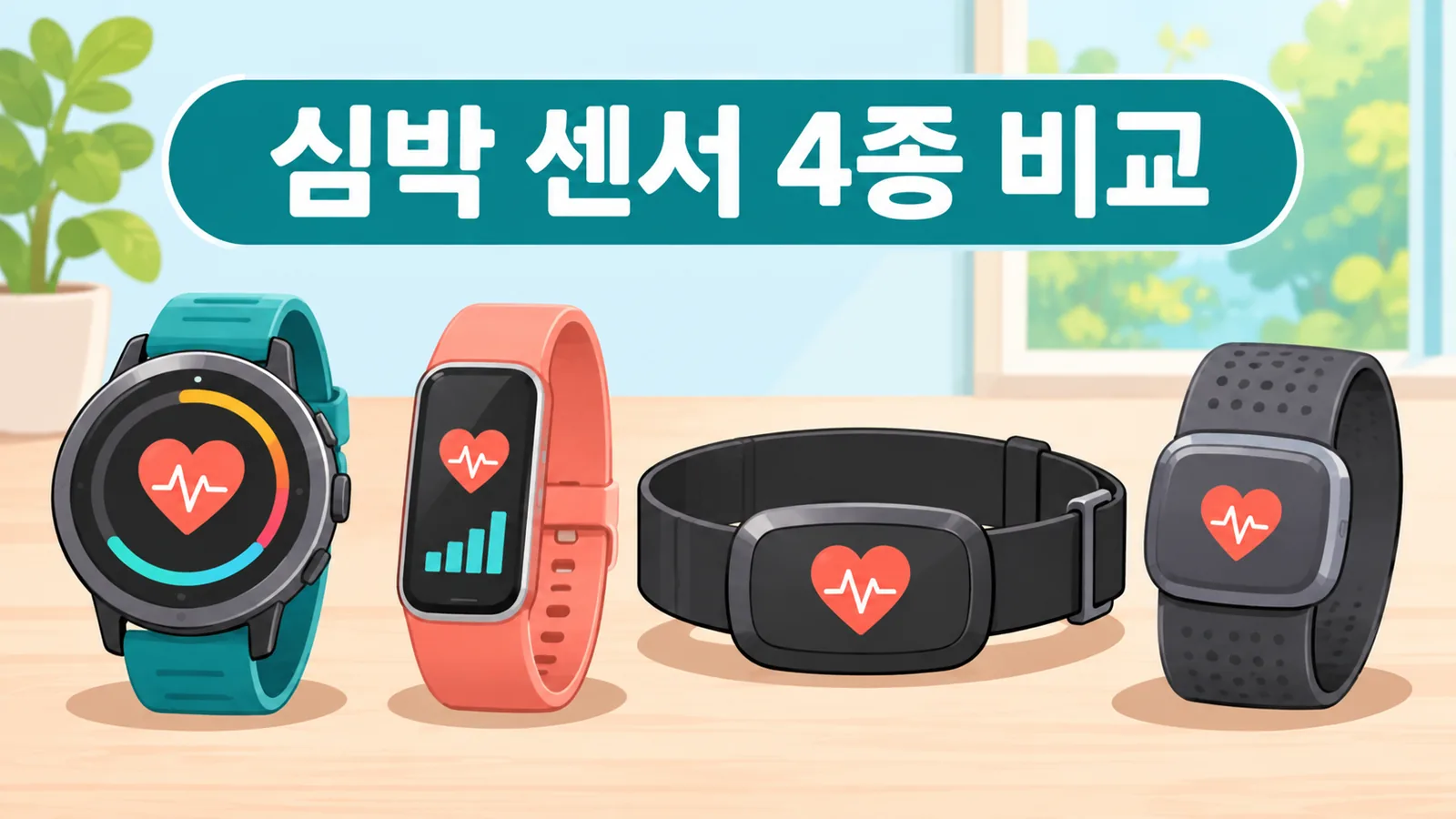
Wahoo TRACKR
The TRACKR weighs 39 g and has a rechargeable battery rated above 100 hours. It carries an IPX7 rating and connects over ANT+ and Bluetooth, with up to three simultaneous connections. The catch is that it streams live only and does not store heart rate data offline.
Polar Verity Sense
The Verity Sense is an optical sensor worn on the arm or forearm, and it is rechargeable. Polar’s comparison lists up to 30 hours of use and 16 MB of memory. It suits runners who dislike chest straps, though motion and ambient light can affect readings.
| Attribute | Polar H10 | Garmin HRM 200 | Wahoo TRACKR | Polar Verity Sense |
|---|---|---|---|---|
| Type | Electrical chest strap | Chest strap | Chest strap | Optical arm sensor |
| Connections | Bluetooth, ANT+ | Bluetooth | ANT+, Bluetooth | Check Polar’s specs |
| Battery | CR2025, up to 400 hrs | Replaceable, up to 1 year | Rechargeable, 100+ hrs | Rechargeable, up to 30 hrs |
| Memory | One session, up to 30 hrs | Check before buying | None offline | 16 MB |
| Notable limit | Not rechargeable | Feature range varies | No offline storage | Motion and light affect it |
Will a heart rate monitor work with your watch or phone app?
Check the connection type before you look at the brand, because a sensor only helps if your watch or app speaks the same wireless language. Bluetooth is what most phones and many watches use, while ANT+ is common on sports watches and bike computers.

Two simultaneous Bluetooth connections, as on the H10, let one sensor feed a watch and a phone app together. The TRACKR goes up to three connections across ANT+ and Bluetooth.
Here is the catch with advanced metrics. REI’s testing found that some HRM 600 running dynamics appear only when it is paired with compatible Garmin watches. Before buying, run through these steps:
- Find your watch’s supported sensor types in its manual or settings.
- Match them to the sensor’s Bluetooth or ANT+ support.
- Decide whether you need a second connection for a phone app.
- Check which metrics your watch can actually display from that sensor.
What about battery, sweat, rain and data storage?
The everyday details come down to how the sensor is powered, how it handles moisture and whether it can record on its own. A coin cell like the H10’s CR2025 is swapped when it runs out, while the TRACKR is recharged and Garmin rates the HRM 200’s replaceable battery for up to a year.
🛒 Recommended Product
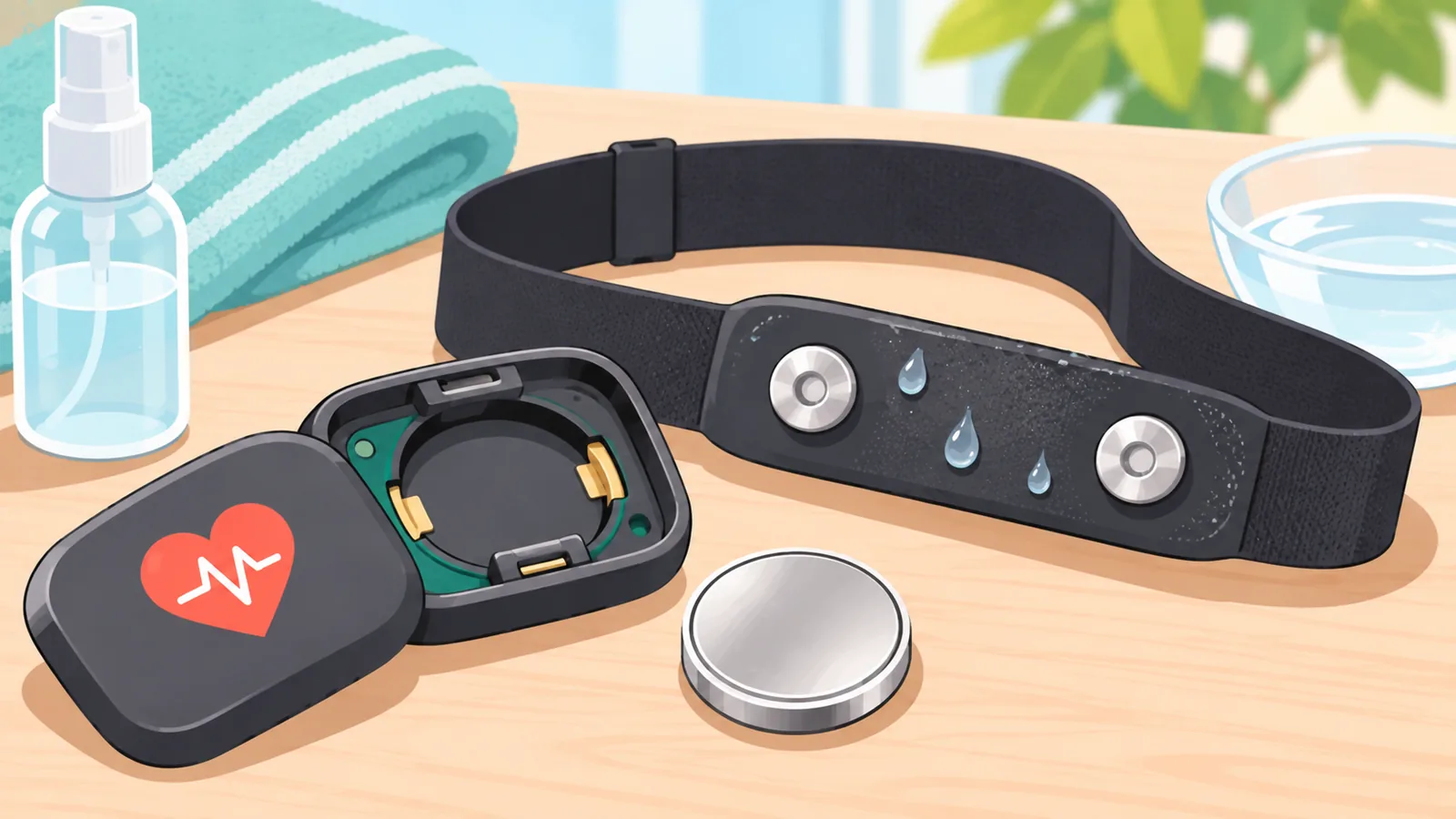
For sweat and rain, Polar’s guidance for the H10 is to wet the electrode areas before wearing it. The TRACKR is rated IPX7, but Wahoo’s support page says it does not support recording heart rate while swimming.
Storage matters if you sometimes run without a watch or phone. The H10 can hold one session of up to 30 hours, while the TRACKR streams live only. If you always carry a device, memory is a bonus. If you do not, it can be the deciding factor.
How should you use heart rate zones when running?
Treat heart rate zones as one signal rather than the final word. An exercise physiologist quoted by Runner’s World explains that heat, hydration, location and medication can all shift your heart rate, which is why zones are not an absolute rule.
On a hot day your numbers may run high at an easy pace. So pair them with how the effort feels and what your pace is doing, and adjust from there.
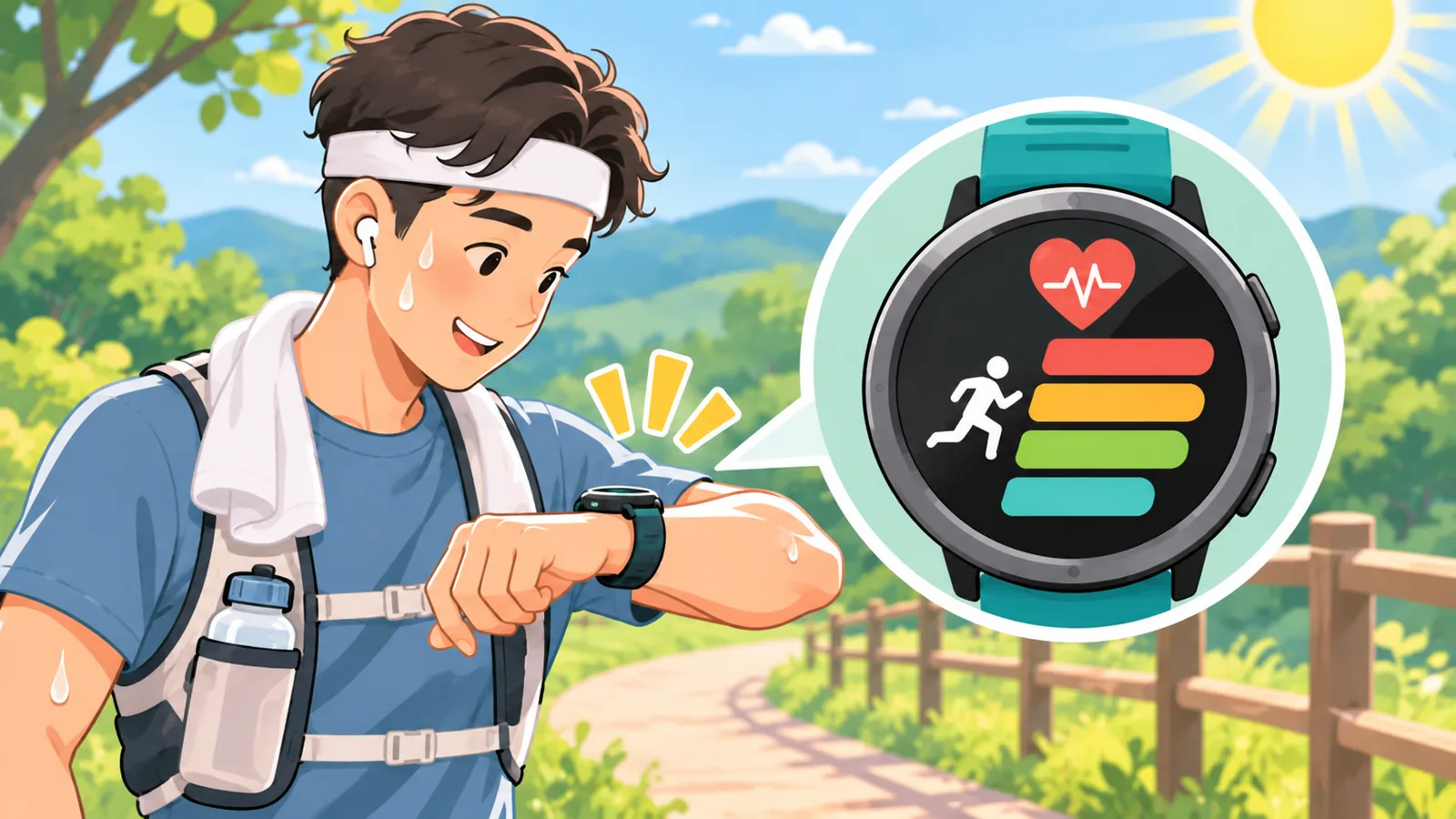
One more boundary. These sensors are fitness tools, and Wahoo states that the TRACKR is not designed as a medical device. Do not use a reading to diagnose anything, and see a doctor if you have health concerns.
Which running heart rate monitor should you buy?
The right pick depends on how you run and what you already own. Match your situation to one of these:
- Interval and accuracy-focused runners: the Polar H10, which Wareable and Runner’s World both recommend and which offers dual Bluetooth.
- Garmin owners who want a replaceable battery: the Garmin HRM 200, after you confirm the features you need.
- Rechargeable convenience: the Wahoo TRACKR, if you do not need offline storage.
- Comfort-first easy runners: the Polar Verity Sense, accepting that motion and light can affect optical readings.
In short, your next step today is small. Check which connection types your watch supports and decide where you would rather wear the sensor, then shortlist two models. What does your current watch support?

Want more fitness guides like this one? Explore training and gear resources at Atovia.
Frequently asked questions
Is a chest strap better than a wrist watch for running?
For fast changes in intensity, TechRadar says chest straps and optical armbands can respond more quickly than wrist-based measurement. For easy runs, many runners find a wrist watch is enough. Results differ from person to person.
How often does a chest strap battery need attention?
It depends on the model. The H10’s CR2025 is rated up to 400 hours, the HRM 200’s battery up to a year, and the TRACKR is rechargeable at 100+ hours.
Can one sensor connect to my watch and phone at the same time?
Some models can. The H10 supports two simultaneous Bluetooth connections, and the TRACKR supports up to three across ANT+ and Bluetooth.
Can I use a chest strap for swimming?
Check the specific model. Wahoo’s support page says the TRACKR does not support recording heart rate while swimming, even though it has an IPX7 rating.
References
- Wareable, Best heart rate monitor for running: Chest vs. wrist picks (2026) – compared products by workout type and described chest strap accuracy at higher intensity.
- Runner’s World, Best Heart Rate Monitors of 2026 – named the Polar H10 overall pick and Powr Labs value pick, and explained what shifts heart rate zones.
- TechRadar, The best heart rate monitors 2026 – said straps and optical armbands react faster than wrist sensors to effort changes.
- REI Expert Advice, The 6 Best Heart Rate Monitors of 2026: Tested – found that some HRM 600 metrics depend on compatible Garmin watches.
- Polar, Polar H10 – confirmed H10 connections, CR2025 battery, 30-hour memory, and Verity Sense optical limits.
- Garmin, Garmin unveils the new HRM 200 – confirmed two strap sizes, Bluetooth and a battery rated up to a year.
- Garmin, HRM 200 – product page for strap sizes and chest range.
- Wahoo Fitness, TRACKR Heart Rate Monitor Chest Strap – confirmed weight, 100+ hour rechargeable battery, IPX7 and up to three connections.
- Wahoo Support, TRACKR Heart Rate FAQ – confirmed no offline storage, no swim recording, and that it is not a medical device.
This article is for general fitness information and does not replace professional medical advice. Heart rate sensors are not diagnostic tools, so please see a doctor if you have health concerns.
Try Atovia’s free tool for this topic →
Citing this article
Source: Atovia (Atovia). https://atovia.kr