
⚠️ This page connects you to Atovia’s partners and affiliate markets. We may receive a commission from affiliate partners for activities made through these links. Discount offers may change at any time according to policy! Rest assured, there are no additional costs to you! We hope this saves you time in finding the right items!
- What reverse dieting without counting means
- Does it work? What the research says
- Before you start: who should check with a pro
- Step 1: Log what you eat for one week
- Step 2: Use portion cues instead of numbers
- Step 3: Track a weekly weight trend
- Step 4: Add food slowly
- What to do if the scale climbs
- Beyond the plate: activity and sleep
- Common mistakes
- FAQ
- Final thoughts and your next step
You finished your diet, and now you’re staring at a bigger plate with no idea how much more to eat. You also don’t want to log every calorie again. Here’s a calmer way to ease back up using food notes, portion cues and a weekly weight trend.
Key takeaways
- The no-counting version swaps calorie numbers for a food log, portion cues and a weekly weight average.
- A 2021 Today’s Dietitian piece said research showing reverse dieting prevents regain was limited at the time.
- The CDC says you don’t need to count calories all the time, and it advises eating a variety of foods rather than cutting whole food groups.
- Step-by-step amounts you see online are one writer’s advice, not official medical standards.
What reverse dieting without counting means
[IMAGE_1]
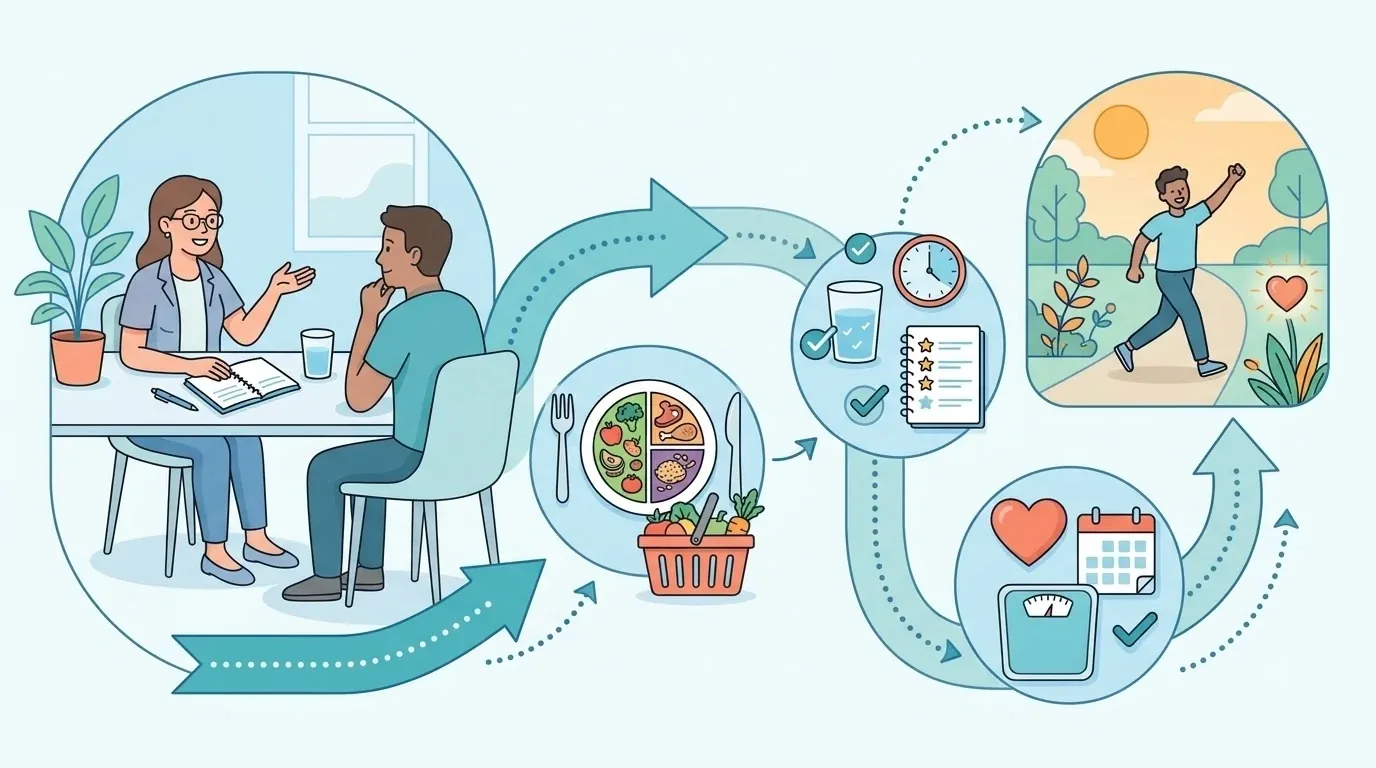
It means eating a little more food after a diet, one small change at a time, without logging calories. Instead of numbers, you watch what you eat, how much, and where your weight trend goes.
The idea behind reverse dieting is to raise intake slowly after weight loss so you don’t rebound. The no-counting version swaps the spreadsheet for a food log, portion cues and a weekly weight average. That approach is laid out in a popular FeastGood guide, which is one practical take, not a clinical protocol.
Does it work? What the research says
[IMAGE_2]
The honest answer is that nobody knows for sure. A 2021 Today’s Dietitian column noted that research on whether reverse dieting helps maintain weight was limited at the time.
Two ideas often get mixed together. One is that energy use can change after weight loss. The other is that slowly adding food prevents regain. The first is a described phenomenon, while the second is a claim that still needs stronger proof.
So treat this as a cautious, practical way to ease out of a diet, not a guaranteed fix. I didn’t find an ideal speed for adding food in the official guidance I checked, and none gives a standard calorie-free procedure either.
Before you start: who should check with a pro
[IMAGE_3]
Some situations call for a registered dietitian or your doctor first. That includes pregnancy or the postpartum period, a history of an eating disorder, being underweight, a chronic condition, or medications that affect weight.

The same goes if you just came off a very restrictive plan. Rebuilding intake after severe restriction is easier with someone keeping an eye on your health. The CDC also notes that personal factors like medications and medical conditions can influence weight.
If food logging or weighing yourself tends to spiral into anxiety, say so to a professional. A method that stresses you out isn’t a good method.
Step 1: Log what you eat for one week
[IMAGE_4]
Start by writing down what you eat, not the calories. Note the foods and rough portion sizes at each meal and snack for a week.
That’s the starting point FeastGood suggests. It gives you a baseline, so later changes are real changes and not guesses. A notes app or a photo of each plate works fine.
- Record meals, snacks and drinks.
- Note portions in plain terms, like one palm of chicken or a bowl of rice.
- Don’t change anything yet. You’re only collecting data.
Step 2: Use portion cues instead of numbers
[IMAGE_5]
Your own hand is a handy measuring tool. FeastGood suggests a palm for protein, a cupped hand for carbs, a fist for fruit and vegetables, and a thumb for fats.

These are rough cues from that guide, not official standards. Hands differ, and so do needs. Use them to keep portions consistent from day to day, not to hit a perfect target.
| Food group | Hand cue (FeastGood example) | How to use it |
|---|---|---|
| Protein | Palm | Keep the same count per meal |
| Carbs | Cupped hand | Your usual dial for adding food |
| Fruit and vegetables | Fist | Keep these steady |
| Fats | Thumb | Easy to overshoot, so watch it |
Variety matters too. The CDC encourages a mix of vegetables, fruits, protein foods and whole grains, and it suggests keeping added sugars, sodium and saturated fat low.
Step 3: Track a weekly weight trend
[IMAGE_6]
One weigh-in tells you very little, while a trend tells you more. FeastGood suggests weighing at least three times a week and looking at the average.
Weigh at the same time of day under similar conditions. Compare this week’s average to last week’s. Short-term swings alone don’t prove fat gain or a metabolic problem, so don’t react to a single number.
🛒 Recommended Product
What if weighing myself stresses me out?
Then skip it or keep it light. You can lean on other signals instead, like how your clothes fit, your energy and your hunger. Pick the tool you can stay calm with.
Step 4: Add food slowly
[IMAGE_7]
Change one thing at a time, then wait and watch. After your baseline week, make one small addition, such as a bit more starch at one meal.
Hold that change for a week or two and check your weight average. If it’s steady, you can add another small step. FeastGood describes adjusting portions in stages, but its specific numbers come from that guide and aren’t universal recommendations.
- Pick one meal and one food to increase.
- Keep everything else the same for one to two weeks.
- Check the weekly weight average and how you feel.
- If it’s steady, add another small step. If it’s climbing fast, pause.
What to do if the scale climbs
[IMAGE_8]
Don’t panic, and don’t slash portions right away. First check whether it’s a real trend across the week or a one-day bump.
If the average keeps rising over a couple of weeks, hold your portions where they are, or step back to the last level that kept your weight steady. Then try a smaller increase. A small rise right after adding food doesn’t mean the whole plan failed.
Beyond the plate: activity and sleep
[IMAGE_9]
Food isn’t the only lever. The CDC says weight management also involves physical activity and sleep, along with personal factors.
For adults, CDC guidance points to 150 minutes a week of moderate aerobic activity, or the equivalent, plus muscle-strengthening activity on at least two days. Keeping those habits steady while you add food makes your weight trend easier to read.
Common mistakes
[IMAGE_10]
Most problems come from moving too fast or changing too much at once. Here’s what to watch for.
- Adding several foods in the same week, so you can’t tell what caused a change.
- Reacting to a single weigh-in instead of the weekly average.
- Cutting out entire food groups, like carbs, when the CDC advises variety.
- Treating blog numbers as medical rules.
- Ignoring hunger, energy or mood, which matter as much as the scale.
FAQ
[IMAGE_11]
Can I really reverse diet without tracking calories?
You can try a no-counting version using food logs, portion cues and weight trends. The CDC says you don’t have to count calories all the time. Just remember the research on reverse dieting itself is limited.

Will this stop me from regaining weight?
There’s no solid proof either way. A 2021 Today’s Dietitian column said evidence for preventing regain was limited at the time. It’s a careful approach, not a guarantee.
How fast should I add food?
I couldn’t find an official ideal pace. Small, single changes held for a week or two are a sensible, cautious way to go.
Should I cut back if my weight goes up?
Not right away. Check the weekly average first, then pause or step back to the last steady level if the trend keeps rising.
Final thoughts and your next step
[IMAGE_12]
In short, reverse dieting without counting is about slow changes and steady observation. It’s a practical habit, not a proven protocol, so keep your expectations modest and your approach flexible.
Today, start writing down everything you eat for the next seven days. That one week of notes is all you need to begin.
Want help tailoring this? A registered dietitian can turn these ideas into a plan that fits your body, your history and your health needs.
References
Try Atovia’s free tool for this topic →
Want more comparisons and buying guides?
Citing this article
Source: Atovia (Atovia). https://atovia.kr
This article was written by Atovia with the help of AI tools. If you spot an error, please let us know via Contact and we will review and fix it.
Health, money and legal content here is general information and is not a substitute for advice from a qualified professional.