⚠️ This page connects you to Atovia’s partners and affiliate markets. We may receive a commission from affiliate partners for activities made through these links. Discount offers may change at any time according to policy! Rest assured, there are no additional costs to you! We hope this saves you time in finding the right items!
You walk into the gym, see a wall of treadmills, bikes and rowers, and wonder which one deserves your next 30 minutes. The best gym cardio workout is the one that fits your goal, your joints and your schedule, and that you will actually repeat. This guide compares six common machines, shows sample sessions by goal, and ends with a simple first-week plan.
As an Amazon Associate I earn from qualifying purchases.
🛒 Recommended Product
Table of Contents
- How do you choose the right gym cardio for your goal?
- What does each cardio machine do?
- Which cardio machine is best for you?
- What are the best cardio workouts by goal?
- What can you do with only 20 minutes?
- What does a simple first-week cardio plan look like?
- What is the best low-impact cardio for sore knees?
- What mistakes should you avoid at the gym?
- Frequently asked questions
- Conclusion: Pick one machine and start this week
How do you choose the right gym cardio for your goal?
Choose by matching four things: your goal, your joint comfort, how easy the machine is to learn, and how much time you have. Everything else is secondary.
Start with the weekly target. The CDC says adults should aim for at least 150 minutes of moderate-intensity activity a week, or 75 minutes of vigorous activity, or an equivalent mix of the two. You do not have to do it all at once. Thirty minutes on five days is one common way to get there.
Key Takeaways
- Weekly target: 150 minutes of moderate or 75 minutes of vigorous activity for adults (CDC).
- Effort check: if you can talk but not sing, you are at moderate intensity.
- Gentler on joints: the stationary bike, elliptical and rowing machine tend to be lower impact than running.
- Progression rule: build time first, then add intensity.
Here is the catch with goals. Heart health and general fitness reward consistency. Fat loss depends on your overall routine and eating habits, and calorie burn varies a lot from person to person. So pick a machine you can repeat three to five times a week.
What does each cardio machine do?
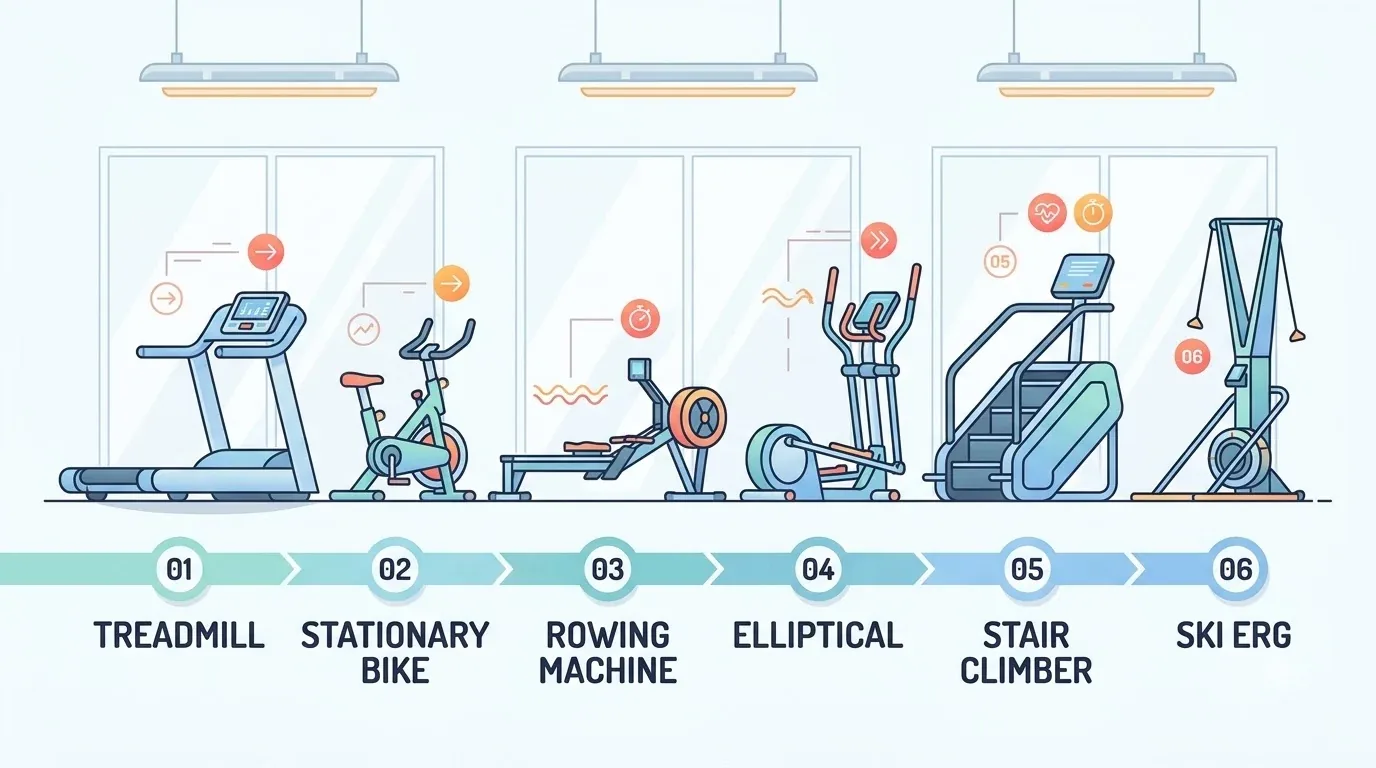
Each machine trains your heart and lungs, but each loads your body differently. A treadmill is the most familiar, and the rest offer ways around its pounding or its monotony.
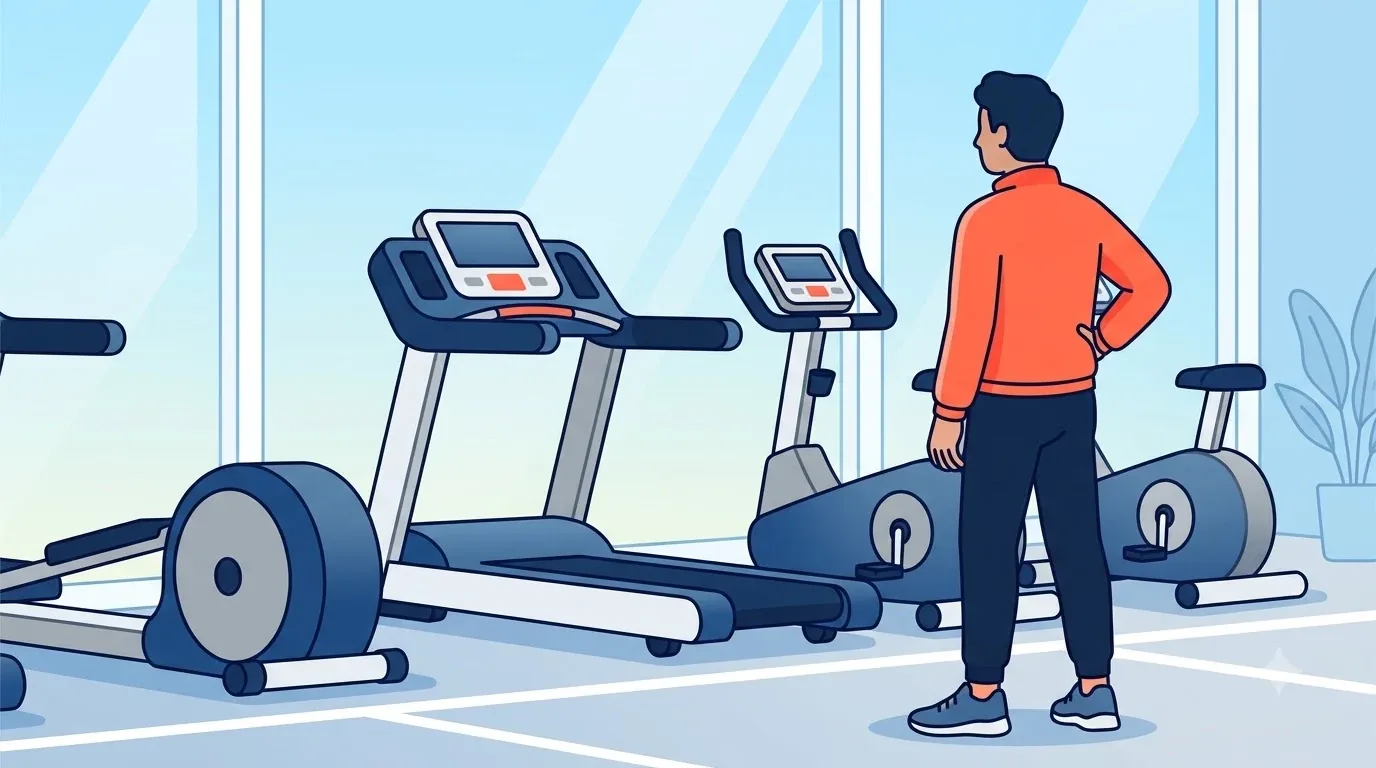
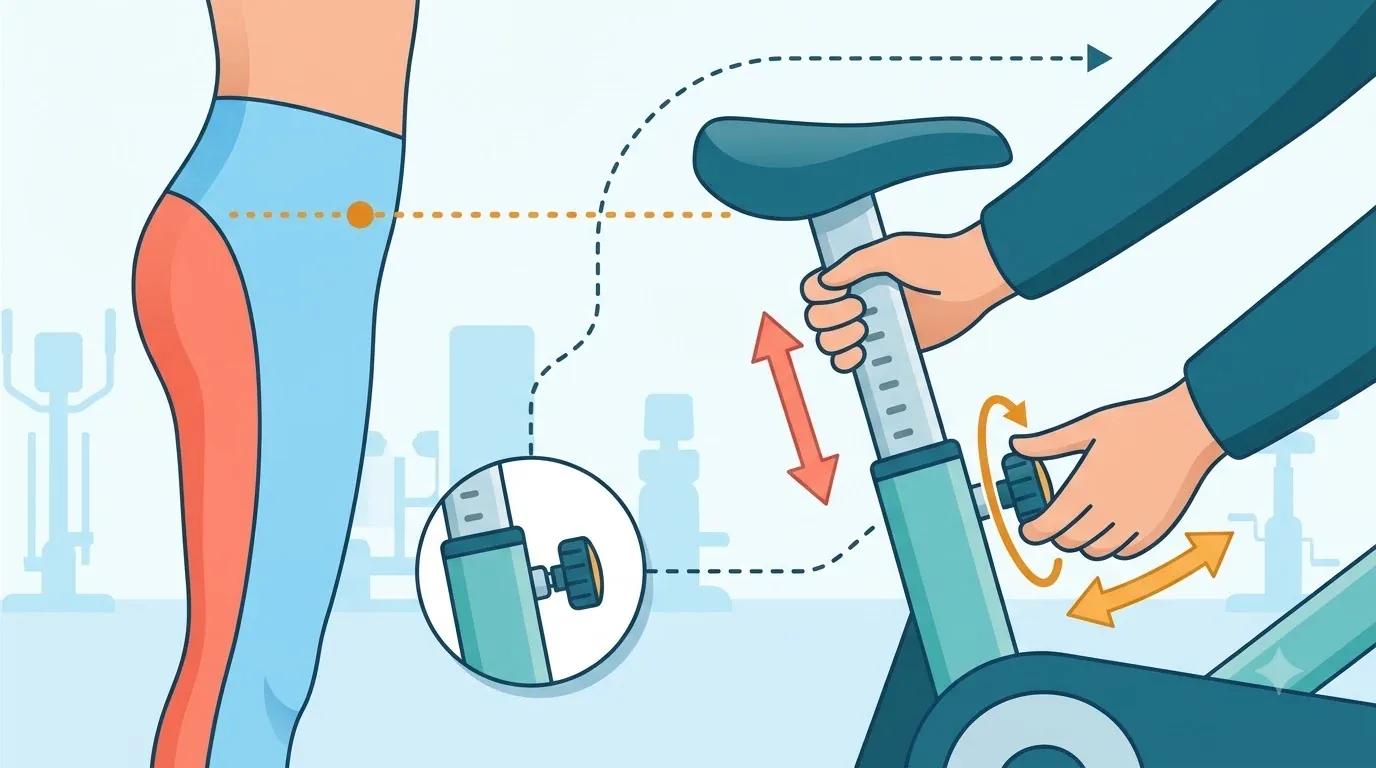
The treadmill lets you walk, jog or run with speed and incline you control. It suits beginners who like walking, and the common mistake is holding the handrails, which cuts the effort and throws off your posture. The stationary bike works mostly the legs from a seated position with little impact. Check that the seat is not set too low or too high.
The rowing machine uses legs, back and arms in one stroke. Push with your legs first instead of pulling with your arms. The elliptical gives a gliding motion with no foot strike, so avoid leaning on the moving handles. The stair climber works glutes and thighs hard in short sessions, and the ski erg is a pulling motion for upper body and core, where you should hinge at the hips instead of using only your arms.
Which machine is easiest on the knees?
The stationary bike and the elliptical are usually the most comfortable choices, since your feet do not strike the ground. The rower is also low impact, though the leg drive can bother some knees. If a movement hurts, switch machines and talk to a professional.
Which cardio machine is best for you?
No single machine wins for everyone, so the right pick depends on your joints, your experience and what you enjoy. The table below keeps the comparison general, since individual results differ.
| Machine | Joint impact | Muscles used | Beginner friendly | Best use |
|---|---|---|---|---|
| Treadmill | Higher | Legs, glutes | Very | Walking, jogging, intervals |
| Stationary bike | Low | Legs | Very | Steady sessions, intervals |
| Rowing machine | Low | Full body | Needs technique | Full-body conditioning |
| Elliptical | Low | Legs, some arms | Very | Smooth, steady cardio |
| Stair climber | Moderate | Glutes, thighs | Moderate | Short, tough sessions |
| Ski erg | Low | Upper body, core | Needs technique | Variety, upper-body effort |
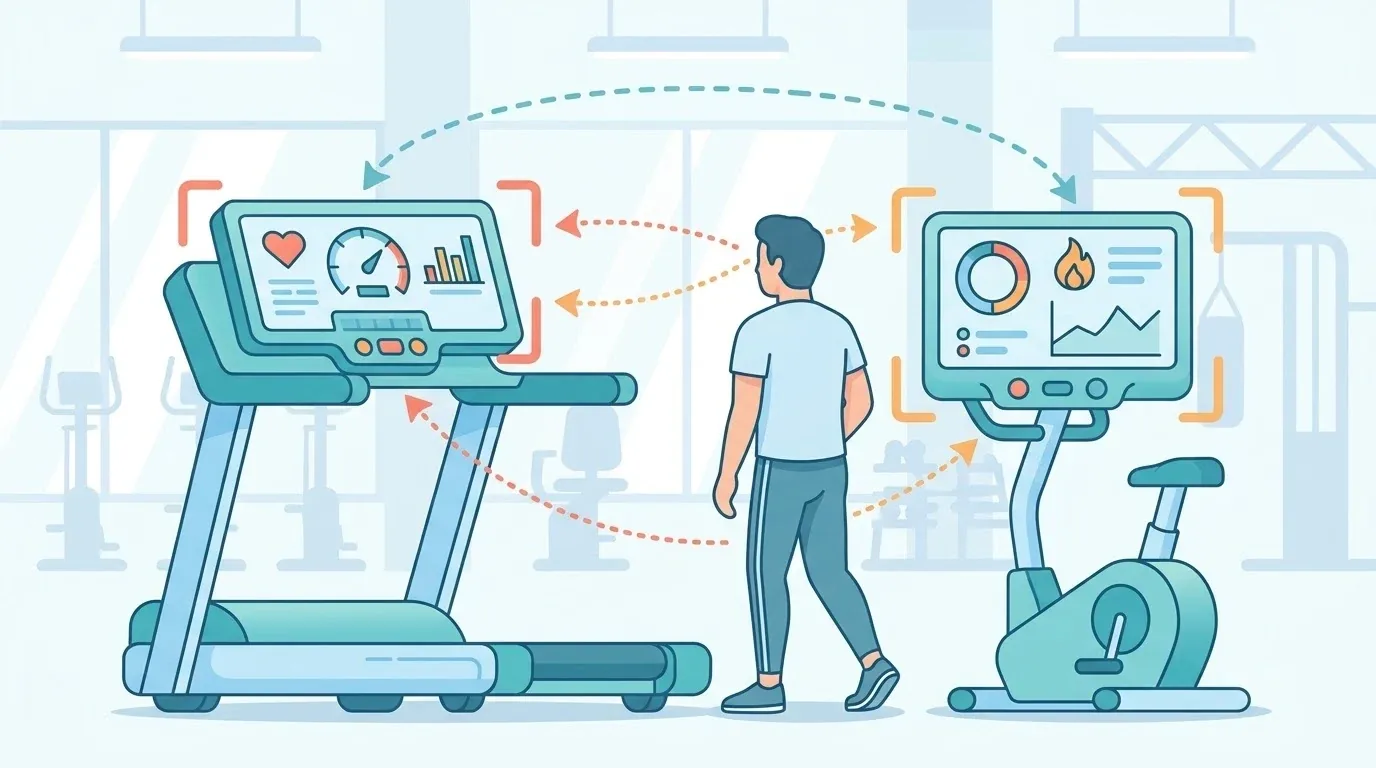
In short, if you are brand new, start with the treadmill, bike or elliptical. Add the rower or ski erg once you have had a quick form lesson from a trainer.
What are the best cardio workouts by goal?
The best format depends on what you want from it, and any machine above can deliver it. Use the talk test or a simple 1-to-10 effort scale to stay honest about intensity.
For heart health and general fitness
Go steady. Aim for 30 minutes at a moderate pace, where you can talk but not sing. Repeat it several days a week until it feels easy, then add a few minutes.

For fat loss
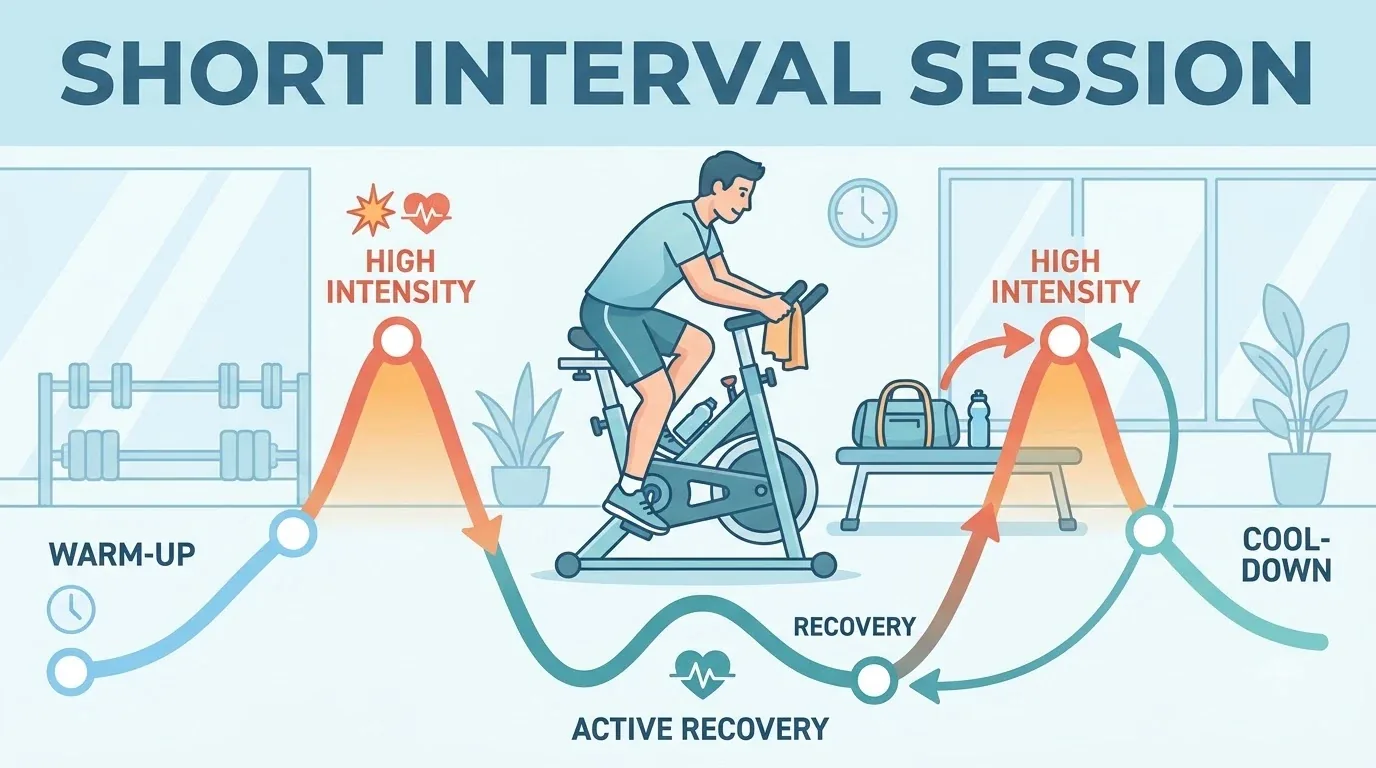
Mix steady sessions with one or two interval days. A sample is 5 minutes easy, then 1 minute hard and 2 minutes easy, repeated six times, then a 5-minute cool-down. Calorie burn varies by person, so treat any number on the screen as a rough estimate.
For endurance
Use a longer, easier session once a week and extend it by five minutes at a time. Later, you can add a tempo effort in the middle, comfortably hard for 10 to 15 minutes.
What can you do with only 20 minutes?
Twenty minutes still counts toward your week. Vigorous effort also stretches your total further, since the CDC counts 75 vigorous minutes as equal to 150 moderate ones.
- Treadmill hill walk: 20 minutes at a brisk pace with a moderate incline.
- Bike intervals: 2 minutes steady, 30 seconds hard, repeated for about 20 minutes.
- Rower ladder: alternate 2 minutes easy with 1 minute firmer, for 18 to 20 minutes.
Keep the hard parts hard but controlled. If you can say only a few words at a time, you are at vigorous effort.
🛒 Recommended Product
What does a simple first-week cardio plan look like?
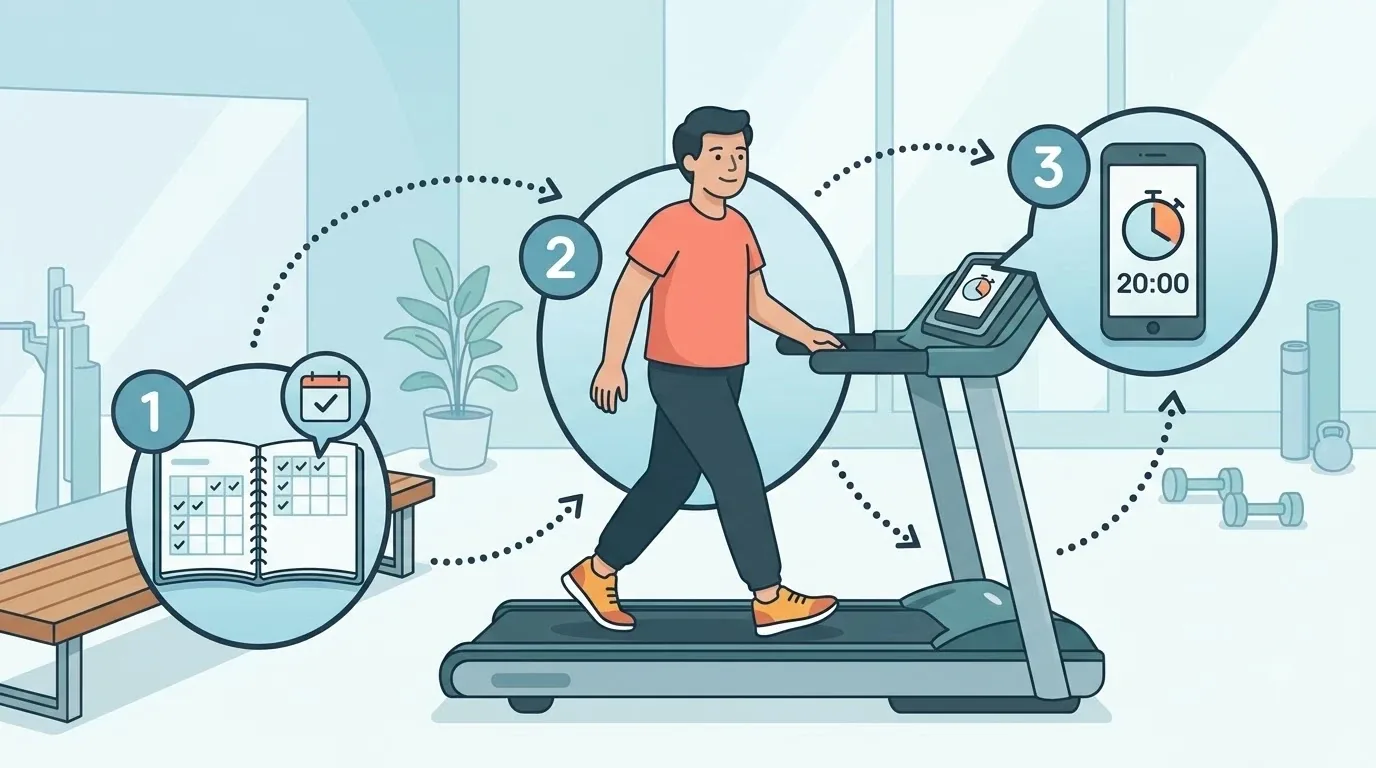
A good first week has three short sessions and plenty of rest, and it starts easier than you think you need. Here is one version for beginners.
- Day 1: 20 minutes on the machine you like most, at an easy, talkable pace.
- Day 2: rest or an easy walk.
- Day 3: 20 to 25 minutes on a different machine, still easy to moderate.
- Day 4: rest.
- Day 5: 25 minutes, with three short 1-minute pickups at a slightly harder effort.
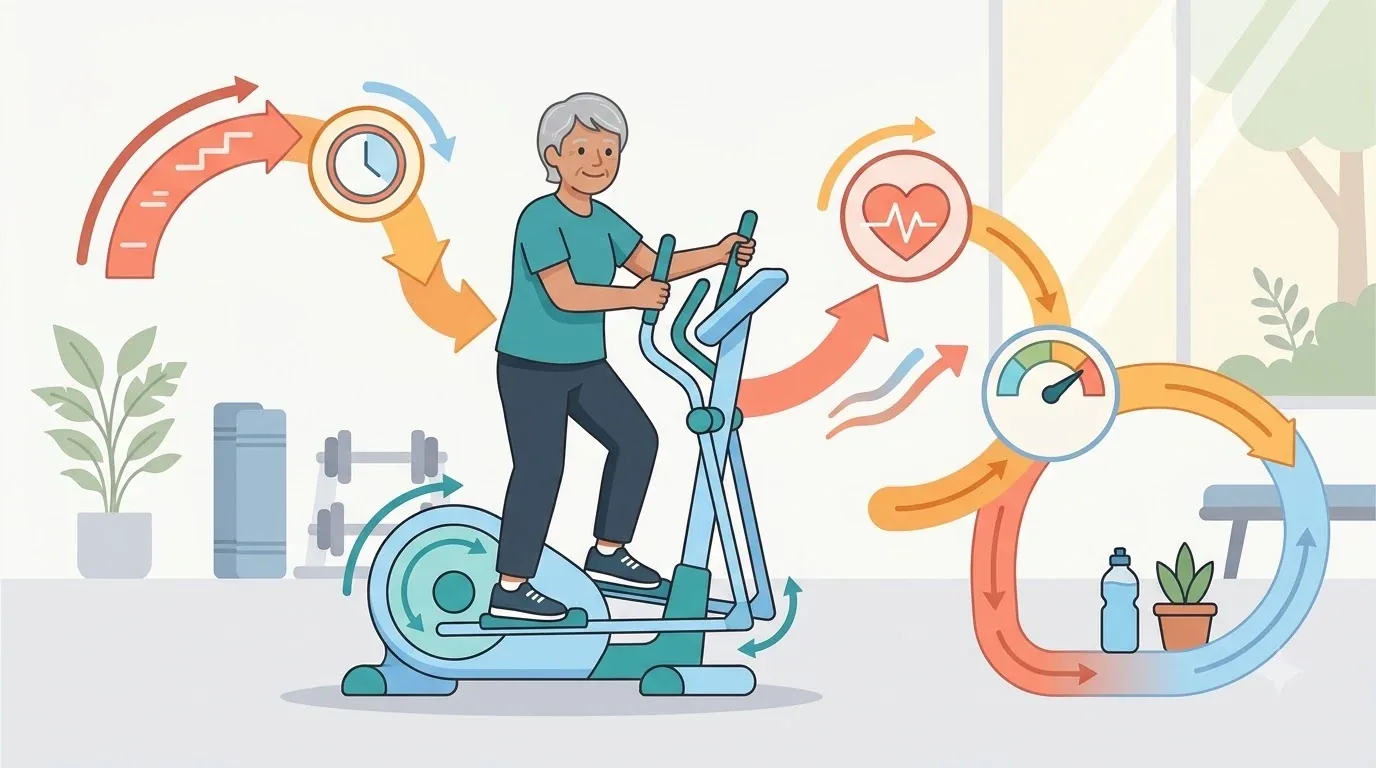
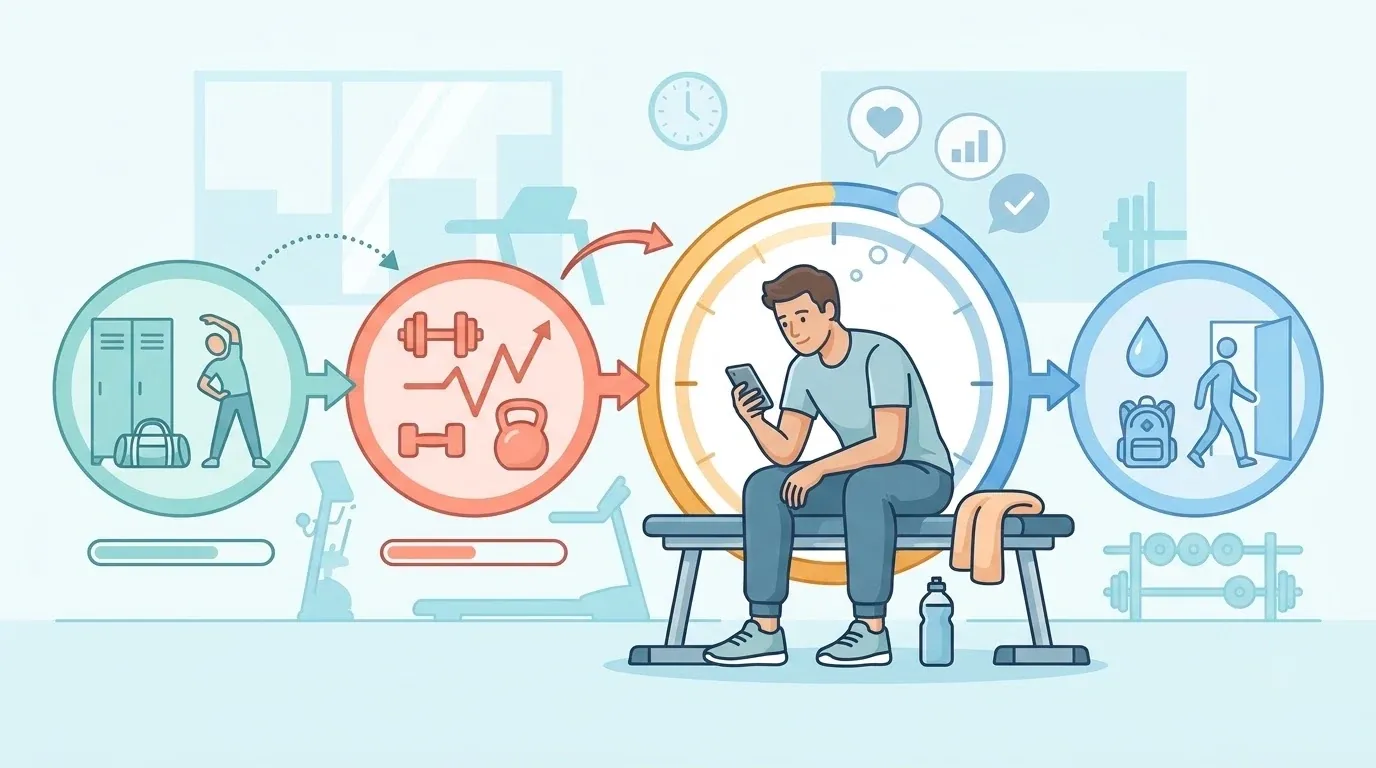
Begin each session with 5 minutes of easy movement and end with a 5-minute cool-down. Next week, add a few minutes before you add speed or resistance. The CDC also recommends muscle-strengthening activity on two or more days a week, so leave room for that.
What is the best low-impact cardio for sore knees?
The stationary bike, elliptical and rower are the usual first picks when your knees complain. Lower the resistance and keep the pace smooth.
Set your bike seat so your knee has a slight bend at the bottom of the pedal stroke. On the elliptical, stand tall and keep your feet flat. If pain continues, ask a doctor or physical therapist before you push on.
What mistakes should you avoid at the gym?
The most common mistake is doing too much, too soon. A few habits fix most problems.
Do not lean on the handrails, and let your arms swing naturally. Check your bike seat height before you start pedaling. Never skip the warm-up and cool-down, and do not jump from zero to daily hard sessions. Results differ from person to person, so progress at the pace your body allows.
Health note: this article is general information and does not replace professional medical advice. If you have a heart condition or a joint injury, or you are new to exercise, see a doctor first. Stop and seek help if you feel chest pain, dizziness or unusual shortness of breath.
Frequently asked questions
Is the treadmill or the elliptical better for weight loss?
Neither is clearly better for everyone. The better choice is the one you will use consistently at an effort you can sustain.
Is rowing better than cycling for cardio?
Rowing uses more of your body, while cycling is simpler and gentler to learn. Both build cardio fitness, so choose by comfort and enjoyment.
How long should a beginner do cardio?
Start with about 20 minutes at an easy pace. Then build toward the weekly target in the CDC guidance over several weeks.
Conclusion: Pick one machine and start this week
Choose by comfort first, then by goal. Build time before intensity, and use the talk test to check your effort.
Your next step today: book a 20-minute easy session on the machine that felt most comfortable, and note how you feel afterward. Which machine will you try first?
Ready to start? Print the first-week plan above and take it to the gym with you.
References
- CDC, Physical Activity Guidelines for Adults – confirmed the 150-minute moderate or 75-minute vigorous weekly target and the muscle-strengthening recommendation.
- CDC, Measuring Physical Activity Intensity – confirmed the talk test as a way to gauge moderate and vigorous effort.
Try Atovia’s free tool for this topic →
Citing this article
Source: Atovia (Atovia). https://atovia.kr
This article was written by Atovia with the help of AI tools. If you spot an error, please let us know via Contact and we will review and fix it.
Health, money and legal content here is general information and is not a substitute for advice from a qualified professional.