
⚠️ This page connects you to Atovia’s partners and affiliate markets. We may receive a commission from affiliate partners for activities made through these links. Discount offers may change at any time according to policy! Rest assured, there are no additional costs to you! We hope this saves you time in finding the right items!
Table of Contents
- What is self muscle testing for supplements?
- How do you prepare before you muscle test?
- What are the three ways to muscle test yourself?
- How do you test a supplement step by step?
- Does muscle testing for supplements work?
- What are safer ways to decide which supplements to take?
- Conclusion
- Frequently asked questions
- References
You are standing in your kitchen with a new bottle of magnesium and a nagging question: is this right for me? Plenty of people reach for self muscle testing to answer it. This guide walks you through three home methods, then shows how much weight the result deserves.
What is self muscle testing for supplements?
Self muscle testing is a home practice in which you judge a yes/no question by how your body moves or feels in response. It comes from applied kinesiology (an alternative-medicine approach that links muscle strength to the body’s supposed reaction to substances). It is popular in wellness circles, but it has not been shown to work as a way to choose supplements.
So treat this guide as a how-to for a practice, not an endorsement of its accuracy. You will learn the steps first, then see why the results can feel convincing without being reliable.
Key takeaways
- Muscle testing is unproven for picking supplements, and controlled studies point to chance-level results.
- Three home methods exist: the sway test, the finger-ring test, and the arm-hold test.
- Calibrate first with one true and one false statement.
- Confirm any supplement choice with a doctor, pharmacist, or registered dietitian.
How do you prepare before you muscle test?
Find a calm, quiet spot, drink a glass of water, and set a baseline before you test anything. Rushing, distraction, and thirst can all change how your body feels, which makes any response harder to read.
A baseline means testing a statement you know is true, then one you know is false. If your “yes” and “no” responses do not feel clearly different, stop and try again another day.

How do I know my baseline is reliable?
Say your real name and notice the response. Then say a wrong name, such as “My name is Alex” if that is not yours, and compare the two. Repeat each statement three times.
A steady pattern means you can repeat a response. It does not mean the response carries real information about your body.
What are the three ways to muscle test yourself?
The three most common self-tests are the sway test, the finger-ring test, and the arm-hold test. Each one turns a yes/no question into a physical signal. Pick one and stick with it, so you are not switching methods until you get the answer you want.

| Method | Equipment | Difficulty | Can you do it alone? |
|---|---|---|---|
| Sway test | None | Easy | Yes |
| Finger-ring (O-ring) test | None | Medium | Yes |
| Arm-hold test | None | Harder alone | Easier with a partner |
How does the sway test work?
The sway test is the usual starting point for beginners because it needs only your balance. Stand with your feet hip-width apart and your eyes closed or softly focused. Say a true statement and notice which way your body drifts, then say a false one and notice the drift again.
Forward is commonly read as “yes” and backward as “no.” Repeat until the pattern holds steady.
How does the finger-ring (O-ring) test work?
The finger-ring test compares the strength of a ring made with your fingers. Touch the thumb and index finger of one hand together, then hook the index finger of your other hand through that ring. Ask your question and try to pull the ring apart with steady, moderate pressure.
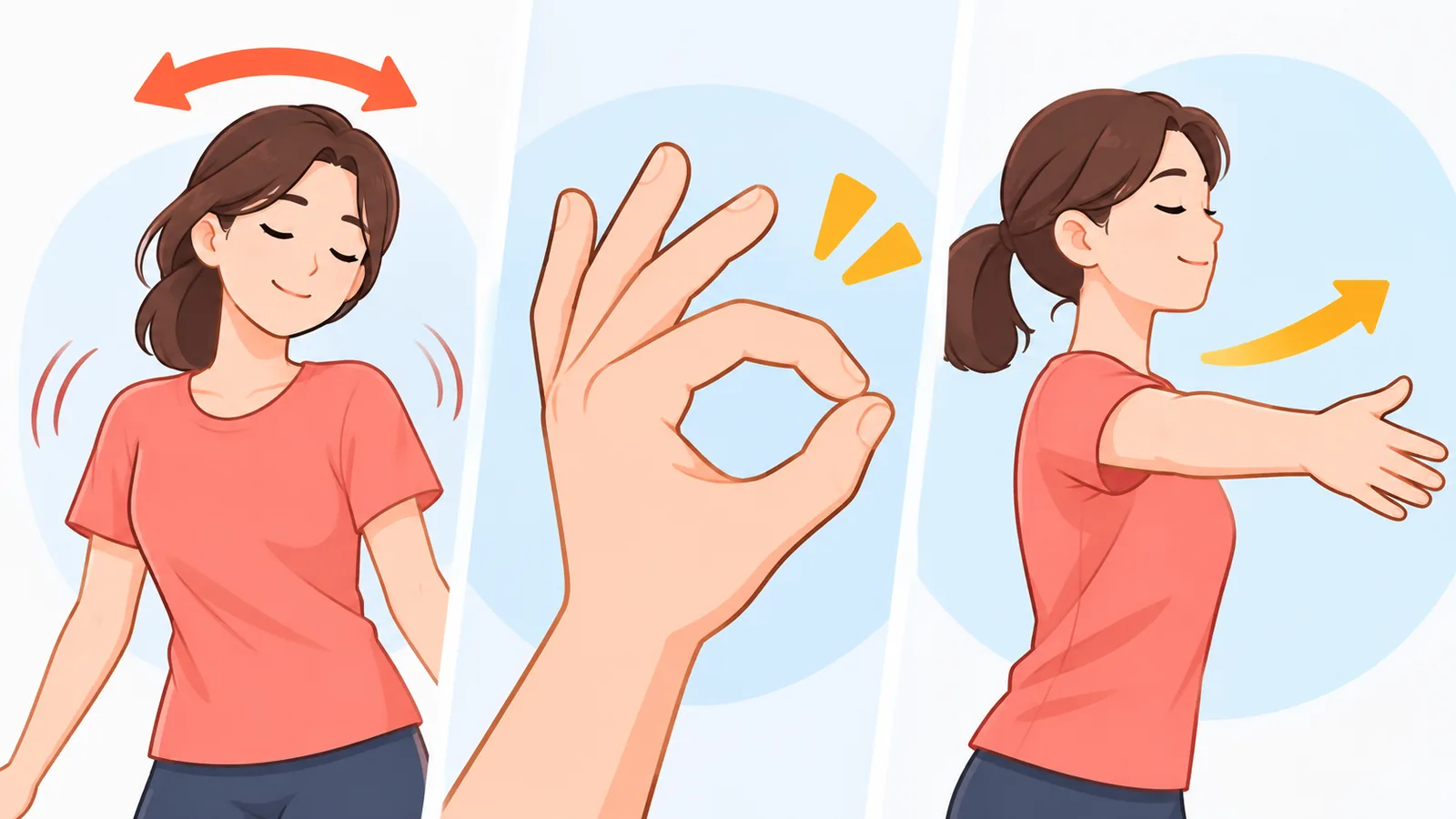
A ring that holds is commonly read as “yes,” and one that opens as “no.” Use about the same force every time so the comparison stays fair.
How does the arm-hold test work?
The arm-hold test is the classic version, and it is awkward without a helper. Raise one arm straight out to the side at shoulder height. Ask your question, then press down gently on that wrist with your other hand.
An arm that holds firm is read as “yes,” and one that gives way as “no.” Keep the pressure light, and stop if your shoulder feels strained.

🛒 Recommended Product
How do you test a supplement step by step?
You test a supplement the same way you tested your name: hold it near your body, ask one clear question, and read the response. Do this only after your baseline pattern has been steady for a few rounds.
- Hold the bottle or a single serving near your chest.
- Ask one specific question, such as “Is this magnesium good for me to take?”
- Run your chosen test and note the response.
- Put the product down, reset, and repeat two more times to check consistency.
Test one product at a time, and keep your questions specific rather than broad. Watch for expectation bias too. If you already want a supplement to be a “yes,” you may nudge the result without noticing.

Does muscle testing for supplements work?
No reliable evidence shows that muscle testing can tell you which supplements your body needs. A literature review on manual muscle testing by Cuthbert and Goodheart (Chiropractic & Osteopathy, 2007) examined the reliability and validity of the technique, and the broader research on applied kinesiology has not backed its use for detecting what the body needs. In controlled studies where neither tester nor subject knows what is being tested, results are described as no better than chance.
Two plain-language effects help explain why it still feels real. The ideomotor effect (tiny, unconscious muscle movements that follow your thoughts) can steer the result. Expectation bias (reading unclear signals the way you hoped) does the rest.
Here’s the catch: muscle testing cannot detect a nutrient deficiency, an allergy, or a drug interaction. A “strong” response to a supplement says nothing about whether it is safe alongside your medications.

What are safer ways to decide which supplements to take?
The most reliable approach is to start with information about you, not a body signal. A clinician can order bloodwork to check specific levels, such as vitamin D or iron, so you are not guessing.
- Review your diet first, since food often covers what a pill would add.
- Ask a registered dietitian or doctor which nutrients matter for you.
- Look for third-party testing seals, such as USP or NSF, on the label.
- Check every product against your medications with a pharmacist.
One firm rule: never stop or change a prescribed medication because of a muscle test. That decision belongs to you and your prescriber.
Conclusion
You now have three ways to try self muscle testing: the sway test, the finger-ring test, and the arm-hold test. Calibrate first, test one product at a time, and keep your expectations in check. In short, treat any result as a prompt to reflect, not a verdict.

Your next step for today is simple. Write down the supplements you are considering and your questions about them, then bring that list to a clinician or registered dietitian. How about you: which supplement are you curious about first?
Results and experiences differ from person to person. This article is general information and does not replace professional diagnosis or medical advice, so please see a doctor or other qualified health professional before starting or changing any supplement.
Planning to start a new supplement? Write down your questions and bring them to your doctor or dietitian.
Frequently asked questions
Can I muscle test supplements without a partner?
Yes, the sway test and the finger-ring test are both designed for solo use. The arm-hold test is easier with a partner.

Is self muscle testing accurate for vitamins?
No reliable evidence shows that it is. Controlled studies describe results no better than chance, so it should not guide your choices on its own.
Why do my answers change from day to day?
Hydration, stress, posture, and expectation can all affect how your body responds. Shifting answers are a sign the method may be picking up noise.
References
- Cuthbert SC, Goodheart GJ, Chiropractic & Osteopathy (2007) – a literature review of the reliability and validity of manual muscle testing.
- NIH Office of Dietary Supplements (ods.od.nih.gov) – fact sheets on dietary supplement use and safety.
- USP and NSF (usp.org, nsf.org) – descriptions of third-party supplement verification programs.
Try Atovia’s free tool for this topic →
Citing this article
Source: Atovia (Atovia). https://atovia.kr
This article was written by Atovia with the help of AI tools. If you spot an error, please let us know via Contact and we will review and fix it.
Health, money and legal content here is general information and is not a substitute for advice from a qualified professional.