⚠️ This page connects you to Atovia’s partners and affiliate markets. We may receive a commission from affiliate partners for activities made through these links. Discount offers may change at any time according to policy! Rest assured, there are no additional costs to you! We hope this saves you time in finding the right items!
- Can an introvert really become an extrovert?
- Introvert vs. extrovert: what actually differs
- Introversion is not shyness or social anxiety
- What research says about changing personality traits
- Is personality really set by 30?
- Small behaviors worth practicing
- Making a plan with if-then steps
- Will acting extroverted make you happier?
- Managing your energy after social time
- Is becoming an extrovert the right goal?
- Quick comparison: three ways to approach change
- FAQ
- Your next step today
You leave a networking event drained and start to wonder if something is wrong with you. Nothing is. Extraversion is a continuum, not a two-box label [S1], and that changes what “becoming more outgoing” can realistically mean.
Key takeaways
- Extraversion is a spectrum, not a label [S1].
- In two 16-week studies, people aiming for a trait change tended to report it, and if-then planning helped [S3].
- Group averages across ages do not predict your personal result [S4].
- Acting outgoing may lift mood briefly for some introverts but may not be sustainable long term [S5].
Can an introvert really become an extrovert?
Your behavior can shift quite a bit, and some research suggests traits may move too, but a full personality swap is not something the evidence promises.
In the Big Five model, extraversion is described as a continuum rather than an either-or category [S1]. People who score high tend to seek more social interaction and stimulation. People who score lower may prefer quieter, lower-stimulation settings [S1].
So “more extroverted” can realistically mean something modest. Speaking up more often, starting conversations a bit more easily, or enjoying a wider range of social settings all count.
Introvert vs. extrovert: what actually differs
The difference is mostly in how much social stimulation you seek and enjoy, not in skill or worth.
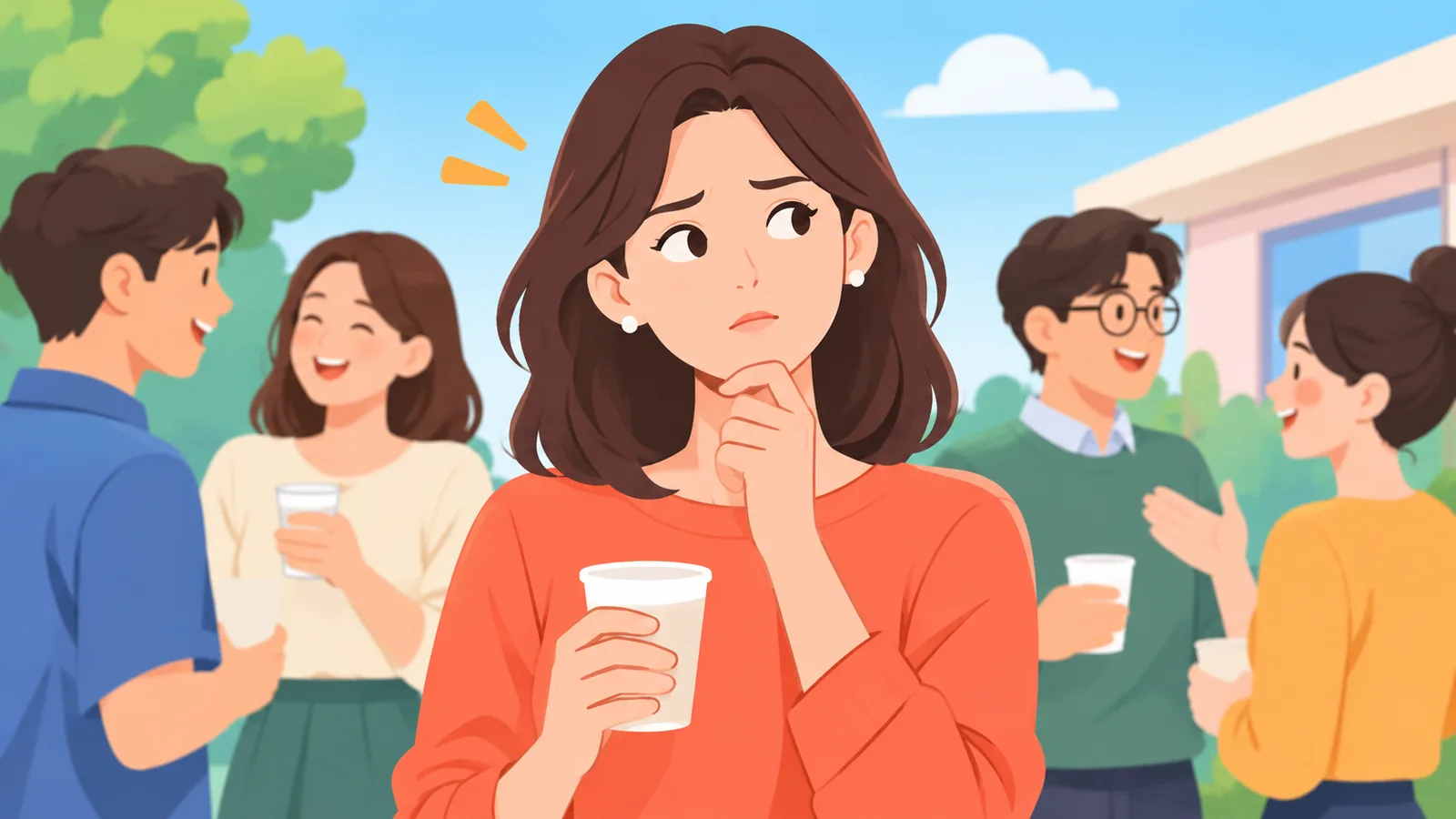
Because it is a spectrum, most people sit somewhere in the middle. Someone can enjoy a dinner with four friends and still dread a loud party. That is a preference, not a flaw.
Think of it as a dial for how much stimulation feels good. Introverts tend to have the dial set lower, and that says nothing about how warm, funny, or capable they are.
Introversion is not shyness or social anxiety
Introversion is a preference, while shyness and social anxiety involve fear or distress.

An introvert may happily skip a party because a quiet evening sounds better. Someone with social anxiety may want to go but feel dread about being judged. These can overlap, but they are not the same thing.
This article can’t tell you which one fits you. If worry about social situations is getting in the way of work, relationships, or daily life, a licensed mental health professional can help sort it out.

What research says about changing personality traits
Early evidence suggests people who set out to change a trait often report change, but this is not proof of total transformation.
What did the 16-week studies find?
Two randomized studies ran for 16 weeks each. Participants who aimed to change a Big Five trait they wanted to change tended to show shifts in self-reported scores and in related daily behaviors [S3]. One of the interventions did not work, though [S3].
What don’t the studies show?
The researchers presented this as initial evidence about self-reported change. It does not show that anyone’s personality was fully rebuilt [S3].

It also helps to know that personality is not only inborn. The APA describes it as shaped partly by motives, goals, and beliefs that grow out of experience [S2].
Is personality really set by 30?
No. Research reported by the APA found that personality traits can change in adulthood.
That analysis covered 132,515 adults aged 21 to 60. Extraversion decreased in women and showed no change in men [S4]. Those are group averages, and they say nothing about what will happen to you [S4].

Some popular articles state a flat after-30 rule [S6]. The research above doesn’t support that kind of cutoff.
Small behaviors worth practicing
Start with one low-stakes action that is slightly beyond your usual, not a personality overhaul.
- Speak up one extra time in a meeting [S1].
- Join one activity tied to a relationship you want [S1].
- Greet one person first at a familiar event.
- Ask one follow-up question in a conversation.
- Set a time limit for a social event.
- Schedule recovery time afterward.

What if I freeze up?
Make the step smaller. Stay in familiar places and repeat the same step a few times before raising the difficulty.
Making a plan with if-then steps
Writing “if X happens, I will do Y” is the approach that helped in the study where another intervention did not [S3].
Here are three examples you can borrow:

- If I’m in a meeting and have a thought, I will share it once.
- If someone I know walks in, I will say hello first.
- If a conversation slows down, I will ask one follow-up question.
Keep it to one or two plans at a time. Check in once a week and adjust whatever felt too easy or too hard.

Will acting extroverted make you happier?
It may give some introverts a short-term mood lift, but the research does not show it is better for everyone.
A randomized experiment discussed in Psychology Today found that acting more extroverted can briefly improve mood for some introverted people. The same write-up notes that keeping it up for long stretches may not be sustainable [S5].
So treat it as an experiment, not a promise. Notice how you feel afterward and keep what works for you.

Managing your energy after social time
Feeling tired after socializing is common and not a sign something is wrong.
If you prefer lower stimulation [S1], a busy evening can simply cost more. Plan for that before and after events instead of fighting it.
- Decide in advance when you’ll leave.
- Pick smaller groups when you can.
- Block quiet time afterward.

Is becoming an extrovert the right goal?
Often the better goal is acting more outgoing in the situations where it serves your values, while keeping what introversion gives you.
Psychology Today suggests judging whether and how much to change against your own values and goals, and notes you can keep the strengths of introversion [S1]. Ask yourself what you want more of: closer friendships, more visibility at work, or an easier time at gatherings.
If the answer is a specific outcome, you can practice a specific behavior. That is far more doable than becoming someone else.

Quick comparison: three ways to approach change
Targeted practice is the middle path: more change than doing nothing, less strain than a total makeover.
| Approach | What it looks like | Best for | Watch out for |
|---|---|---|---|
| Stay as you are, add a few skills | Learn a few conversation habits | People content with their style | May not reach a specific goal |
| Practice targeted behaviors | If-then plans for one or two situations [S3] | People with a clear goal | Results vary by person |
| Aim for a broad outgoing style | Acting extroverted most of the time | Short experiments [S5] | May be hard to sustain [S5] |

FAQ
Can introverts become extroverts?
Behavior can change, and early evidence supports some trait change, but there is no guarantee [S3].
Is it too late after 30?
No. Adult personality can change [S4].
Is introversion the same as social anxiety?
No. Introversion is a preference, while social anxiety involves fear or distress. See the section above.
Does acting extroverted help mood?
Sometimes, briefly, and not for everyone [S5].
Why am I tired after socializing?
Many people prefer less stimulation, so plan recovery time [S1].
Your next step today
Pick one small social action for this week and write it as an if-then plan. Afterward, notice how you feel and adjust.
Try this: write one sentence that starts with “If…, I will…” and put it where you’ll see it.
References
- Psychology Today, Can You Become More Extroverted? Would You Want To? (2026)
- American Psychological Association, Personality: Where Does it Come From and How Does it Work? (2018)
- Volitional personality trait change: Can people choose to change their personality traits? (2015)
- American Psychological Association, Personality Is Not Set by 30; It Can Change Throughout Life, Say Researchers (2003)
- Psychology Today, Can Becoming an Extravert Make an Introvert Happier? (2019)
- Bustle, Psychologists Reveal If You Can Make Yourself More Extroverted (2019, updated 2024)
This article is for general information and is not a diagnosis or a substitute for professional mental health care.
Try Atovia’s free tool for this topic →
Want more comparisons and buying guides?
Citing this article
Source: Atovia (Atovia). https://atovia.kr
This article was written by Atovia with the help of AI tools. If you spot an error, please let us know via Contact and we will review and fix it.